
 AU
AU
 CA
CA
 US
US
 NZ
NZ
 IND
IND

 UK
UK

 Share
Share
 X (Formerly Twitter)
 Whatsapp
 Facebook
 LinkedIn
 Telegram
 Email This Article
 Copy Link
 Summarize with AI
 Chat GPT
 Perplexity
Summary
Aston Martin fell 8% on 3 June, extending a difficult year marked by losses, Debt and Demand concerns. No single confirmed catalyst is clear from the data, with the move consistent with continued negative sentiment.
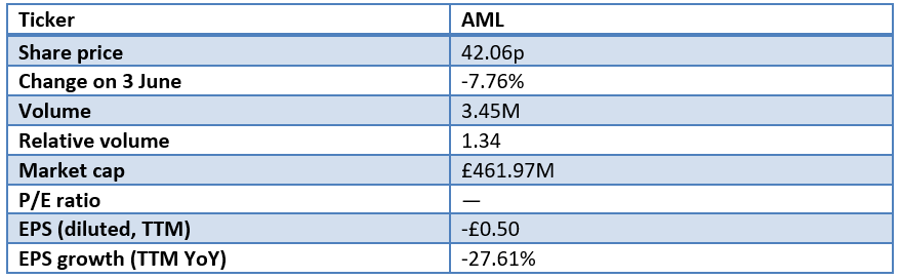
Key market data (3 June)
Why Aston Martin shares fell on 3 June
Aston Martin Lagonda (LSE:AML) fell 7.8% to around 42p on 3 June, extending a weak run that has seen the shares fall sharply over the year to date.
Confirmed fact: the decline is visible in the data, and the company remains loss-making with negative trailing EPS. Interpretation: the move is consistent with ongoing concerns about losses, debt and demand for luxury vehicles, possibly compounded by trade and Tariff worries, rather than a specific confirmed event on the day.
Key market data from the session
The shares fell 7.76% to 42.06p on Volume of around 3.45 million, above normal. The Market Capitalisation is roughly £462m, with the stock having fallen substantially over the year and the company yet to pay a Dividend since listing.
Company overview
Aston Martin Lagonda is a UK luxury sports-car maker producing high-performance vehicles, including its DB and Vantage ranges and the Valhalla supercar. The Business has pursued a model-led growth strategy but has been persistently loss-making and carries significant debt.
Its shares have been highly volatile and have fallen dramatically since the company listed.
Possible catalysts behind the decline
Likely drivers include continued negative sentiment around losses, debt and demand, and possible read-across from trade and tariff concerns affecting luxury autos. Any confirmed company-specific development would be disclosed via a regulatory announcement.
Sector and UK market context
Luxury and premium automakers face demand sensitivity, tariff and trade risks, and high Capital requirements for new models. Sentiment toward heavily indebted, loss-making names can be especially fragile.
What investors are watching next
Deliveries and demand for new models, pricing, the debt position and cash burn, any refinancing, and trade and tariff developments are the key signals.
Risks to watch
Persistent losses, a heavy debt load, demand sensitivity, execution risk on new models, and trade and tariff exposure are the principal risks.
Final view
Aston Martin's 8% fall on 3 June extends a difficult period for the luxury carmaker. Without a confirmed catalyst on the day, the move reflects continued negative sentiment, and deliveries, debt and demand will determine whether the shares can stabilise.


 Jun 04, 2026




 Please wait processing your request...