
 AU
AU
 CA
CA
 US
US
 NZ
NZ
 IND
IND

 UK
UK

 Share
Share
 X (Formerly Twitter)
 Whatsapp
 Facebook
 LinkedIn
 Telegram
 Email This Article
 Copy Link
 Summarize with AI
 Chat GPT
 Perplexity
Key Takeaways
Ticker: AERI, listed in the UK and trading as a penny stock.
Share price: €0.154, placing it firmly in low-priced territory.
Daily move: -2.22% on the session covered here.
Sector or theme: Renewable energy income.
Possible upside rests on news flow and sentiment; the offsetting risk is wide spreads, thin trading and the chance of steep losses.
Why Is Aquila European Renewables (AERI) on the Penny Stock Watchlist?
Traders keep Aquila European Renewables (AERI) on their lists because low-priced shares can move fast. A price of €0.154 and a market value of £51.38M mean the stock can swing sharply on relatively modest order flow, which is exactly what short-term speculators look for, and exactly what makes the name risky.
Watchlist inclusion for AERI is a function of its profile as a low-priced, actively traded share, not an endorsement of its prospects or valuation.
For context, Aquila European Renewables (AERI) is the kind of name where a single announcement, or even a single large order, can reset the €0.154 share price quickly. That sensitivity is the double-edged sword that defines trading at this end of the market.
What Does Aquila European Renewables Do?
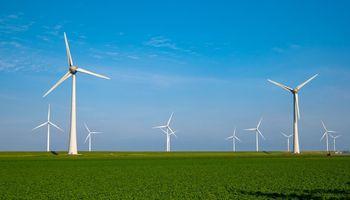
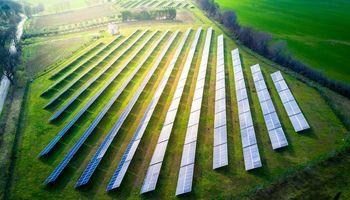
Aquila European Renewables is an investment company associated with renewable-energy income assets such as wind and solar across Europe.
The specifics of Aquila European Renewables’s operations can evolve, and small companies sometimes change direction, so readers should confirm the current position directly from the company’s filings.
Today’s Market Snapshot
On the session covered here, Aquila European Renewables (AERI) was quoted at €0.154, a daily change of -2.22%. Trading volume was heavy, with roughly 113.48K shares changing hands, and the relative-volume reading of 2.99 suggests activity ran well above this stock's usual pace.
The market capitalisation stands at £51.38M. No meaningful price-to-earnings ratio is available, which is common for early-stage or pre-profit companies of this type. Earnings per share are indicated at -0.22, with an earnings-per-share growth figure of -217.41% on the measure shown. A dividend yield of around ~24% is indicated, which is unusually high and should be scrutinised carefully.
On valuation, the £51.38M market capitalisation is the figure to anchor on rather than the €0.154 share price. A low price per share says nothing about whether a company is cheap; the total value placed on the business is what counts.
Treat the figures above as a single frame from a fast-moving picture. Quotes on shares this small can shift within minutes, so live data should always take precedence over any static summary.
Sector Context
Rising interest rates can also reduce the appeal of income vehicles and pressure the valuations of long-life renewable assets, a dynamic that has affected the sector broadly.
For smaller renewable-energy companies, the key questions are usually about funding, project delivery and the path to sustainable cash flow. Those factors tend to matter more than headline themes.
It is worth separating the theme from the stock: a favourable sector narrative can help sentiment, but Aquila European Renewables still has to deliver on its own to create lasting value.
Why Traders Are Watching This Stock
Short-term traders often follow unusual activity rather than fundamentals, and the recent combination of price action and turnover in AERI is the kind of signal that gets a micro-cap shared across watchlists and message boards.
The fall of -2.22% to €0.154 is part of the draw. Sharp declines can attract bargain-hunters hoping for a bounce, but they can equally mark the start of a longer move lower, and there is no way to know in advance which it will be.
Momentum and message-board chatter can play an outsized role in a name like Aquila European Renewables (AERI). Sentiment-led buying can lift the €0.154 quote temporarily, yet it offers no protection if the mood turns and holders rush for the exit.
How to Research Aquila European Renewables (AERI) Before Acting
A sensible research checklist for Aquila European Renewables would include cash runway, recent placings, director dealings and the terms of any outstanding instruments. At a £51.38M valuation, those details often matter more to the share price than the headline business story.
None of this guarantees a good outcome, but it does help an investor understand what they are buying. With a stock like AERI, the difference between informed risk-taking and a blind gamble usually comes down to how much of this groundwork has been done.
Possible Growth Drivers
The points below are possibilities the market may be weighing, not confirmed developments. They should be treated as things to monitor rather than reasons to act.
The market may be focused on asset valuations or delivery.
One catalyst to monitor is any strategic announcement.
Traders may be watching interest rates and sector sentiment.
Possible drivers include project and funding updates.
Future upside may depend on a clear path to sustainable cash flow.
These factors should be weighed sceptically. For a company this small, even a genuine positive can be overshadowed by funding needs or broader sentiment.
Risks and Challenges
No discussion of a penny stock is complete without a clear look at the risks, and for Aquila European Renewables (AERI) those risks are significant.
Penny-stock volatility: low-priced shares can swing violently, and a large percentage loss can happen in a single session.
Liquidity risk: it may be difficult to buy or sell at the quoted price, especially in size, when turnover is thin.
Funding risk: small companies often need fresh capital, and there is no certainty it can be raised on acceptable terms.
Dilution risk: raising money by issuing new shares can dilute existing holders and weigh on the price.
Execution risk: plans can slip, and delivering on strategy is far harder than describing it.
Interest-rate and valuation risk can weigh on renewable vehicles, while developers face execution and funding risk.
Wide bid-ask spreads: the gap between buying and selling prices can be large, adding a real cost to trading.
Speculative trading risk: prices can be driven by sentiment and momentum rather than fundamentals, and sentiment can reverse fast.
Further downside risk: there is no floor under a penny stock, and shares can keep falling toward zero.
The combined effect of these factors is that Aquila European Renewables should be regarded as a high-risk, speculative holding, not a stable investment, and treated accordingly.
What Investors Should Watch Next
The sensible next step for anyone following AERI is to watch for hard information, since that is what ultimately moves the underlying story.
Interest-rate and sector sentiment.
Asset valuation news.
Management commentary.
Project and funding updates.
Any capital raisings.
Strategic announcements.
Monitoring these signals is no guarantee of a good result, yet it keeps the focus on what the company actually reports instead of what the market merely hopes.
Does Aquila European Renewables (AERI) pay a dividend?
A dividend yield of around ~24% is indicated, which is unusually high for a company of this size and warrants careful scrutiny of its sustainability.
Context also helps: Aquila European Renewables (AERI) is one of dozens of UK penny stocks competing for speculative attention. Standing out on a screen for a day does not change the underlying need for the £51.38M company to deliver real progress.
It is worth repeating that Aquila European Renewables (AERI) is a speculative penny stock, not a core holding. At €0.154 and a market value of £51.38M, the shares can move sharply on limited news, and that volatility cuts both ways for anyone involved.
Risk management is especially important with Aquila European Renewables (AERI). Because there is no floor under a penny share, sizing any position so that a total loss would be survivable is the kind of discipline experienced traders apply to names like this.
Cash position is often the single most important factor for a company like Aquila European Renewables. If the £51.38M business needs to raise money, the terms it can secure may matter more to the share price than any operational news, so funding updates deserve close attention.
The -2.22% change attached to AERI also highlights how headline percentages can mislead at low prices. A move that looks dramatic on a €0.154 share may represent only a fraction of a penny, so the figure should be read in that light.
Another point for AERI holders to keep in mind is timing. Penny stocks can stay quiet for long stretches and then move suddenly, so patience and a clear plan tend to serve investors better than chasing the €0.154 quote intraday.
Diversification is another angle worth mentioning. Concentrating a portfolio in volatile names like Aquila European Renewables (AERI) magnifies risk, which is why many experienced investors treat penny shares as a small, contained part of a wider strategy rather than a central bet.
It also bears emphasis that past moves in Aquila European Renewables (AERI) are not a guide to the future. A previous rise or fall says little about what comes next for a £51.38M company whose fortunes can turn on a single announcement.
For balance, it should be stressed that the -2.22% move discussed here is just one session in the life of Aquila European Renewables (AERI). Single-day figures rarely tell the full story for a micro-cap, and trends matter more than any one print.
A practical reminder applies to AERI: the spread between the buying and selling price on a €0.154 share can be wide in percentage terms, so the cost of getting in and out is itself a factor to weigh before trading.
Conclusion
To wrap up, the interest in Aquila European Renewables (AERI) reflects the usual penny-stock mix of a low price at €0.154, a modest £51.38M valuation and shifting sentiment, rather than a proven catalyst.
The balanced view is that Aquila European Renewables offers speculative interest alongside substantial risk. Following the facts, rather than the hype, is the most sensible way to approach it.

 Jun 26, 2026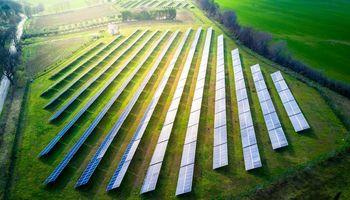

 Please wait processing your request...