
 AU
AU
 CA
CA
 US
US
 NZ
NZ
 IND
IND

 UK
UK

 Share
Share
 X (Formerly Twitter)
 Whatsapp
 Facebook
 LinkedIn
 Telegram
 Email This Article
 Copy Link
 Summarize with AI
 Chat GPT
 Perplexity
Summary
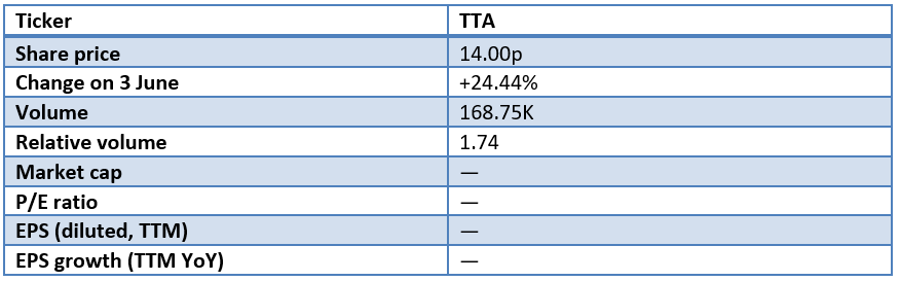
Time To ACT jumped 24% on 3 June on above-average Volume, consistent with renewed interest in the clean-energy engineering group. No single confirmed catalyst is clear from the data.
Key market data (3 June)
Why Time To ACT shares rose on 3 June
Time To ACT (LSE:TTA) advanced 24.4% to 14p on 3 June, with trading running about 1.7 times its normal level.
Confirmed fact: the share price gain and elevated volume are clear from the data. Interpretation: with no specific announcement to point to, the move looks like a blend of speculative buying and positioning around the company's energy-transition focus, a theme that periodically draws investor attention.
Company overview
Time To ACT is a UK-quoted engineering and technology group oriented toward the energy transition. It develops engineering and hardware solutions intended to support decarbonisation and clean-energy applications across industrial markets.
As an earlier-stage company, its valuation is closely linked to commercial progress and order momentum.
Possible catalysts behind the gain
Plausible drivers include anticipation of a contract or project update, positive sector sentiment toward clean-energy engineering, or renewed retail interest. Any concrete development would be confirmed via a regulatory announcement.
Sector and UK market context
Energy-transition and decarbonisation themes have attracted episodic investor enthusiasm, supported by policy backing for clean energy. This can lift sentiment toward exposed small-caps, though it is a backdrop rather than a confirmed catalyst.
What investors are watching next
Order wins, project milestones, partnerships and the funding runway are the key items to monitor, along with whether the 3 June gain is sustained.
Risks to watch
Commercialisation and execution risk are central for a growth-stage engineer, alongside potential dilution from fundraising and the variable pace of energy-transition Investment.
Final view
Time To ACT's 24% rise on 3 June reflects renewed appetite for an energy-transition engineering story on above-average volume. Absent a confirmed catalyst, the move appears sentiment-driven, and investors will want to see commercial progress to underpin the gain.


 Jun 04, 2026




 Please wait processing your request...