
 AU
AU
 CA
CA
 US
US
 NZ
NZ
 IND
IND

 UK
UK

 Share
Share
 X (Formerly Twitter)
 Whatsapp
 Facebook
 LinkedIn
 Telegram
 Email This Article
 Copy Link
 Summarize with AI
 Chat GPT
 Perplexity
Bioventix PLC (BVXP): A UK Biotech Income Stock — What Investors Should Know
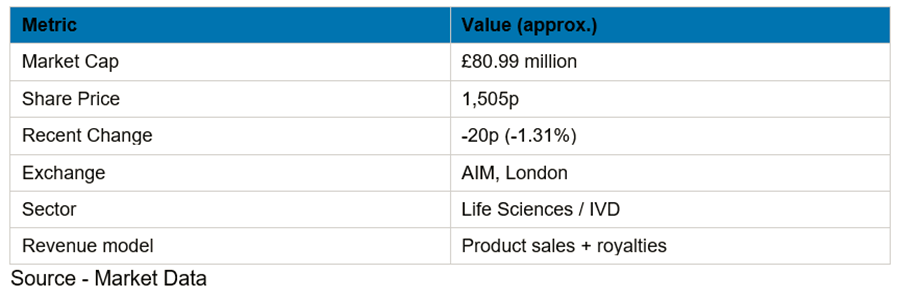
Bioventix PLC (LON: BVXP) is an unusual and often-overlooked name in the UK biotech space. Unlike most biotech companies that spend heavily on drug development with uncertain outcomes, Bioventix operates a specialist business supplying monoclonal antibodies to the global diagnostics industry. With a market capitalisation of approximately £80.99 million, a share price around 1,505p — down 20p, or 1.31%, on the session — and a track record of paying dividends, Bioventix has attracted a loyal following among investors seeking quality growth and income from a niche life sciences business. This article provides a detailed, factual overview of Bioventix PLC and the key considerations for investors.
Key Takeaways
- Bioventix PLC (BVXP) is a niche UK biotech supplying sheep-derived monoclonal antibodies to the in-vitro diagnostics (IVD) industry.
- Its antibodies are used in clinical diagnostic tests including cardiac troponin, vitamin D, and testosterone assays.
- The company has a strong track record of profitability, high margins, and dividends — unusual for a biotech firm.
- Market cap of approximately £80.99 million makes it a small-cap, with the associated liquidity considerations.
- Key risks include customer concentration and dependence on royalty streams from a limited number of assays.
What Does Bioventix PLC Do?
Bioventix PLC specialises in the development and supply of sheep monoclonal antibodies (ovine monoclonal antibodies) for use in clinical diagnostics. This is an unusual and technically demanding niche: while most commercial antibody producers work with mice or other rodents, Bioventix has developed proprietary expertise in producing antibodies from sheep, which can offer advantages in terms of specificity and avidity for certain diagnostic applications.
The company's products are not sold directly to patients or clinicians. Instead, Bioventix sells its antibodies to the major global manufacturers of in-vitro diagnostic (IVD) instruments and test kits. These manufacturers — which include large multinational life sciences companies — incorporate Bioventix's antibodies into their diagnostic reagents. Bioventix typically earns royalties on the sale of diagnostic assays containing its antibodies, in addition to product sales.
Key application areas include cardiac biomarker testing (such as troponin assays used in heart attack diagnosis), vitamin D testing, testosterone testing, and various other hormone and biomarker assays.
Bioventix Financial Profile: High Margins, Dividends, and Small Scale
One of the most striking aspects of Bioventix from an investor perspective is its financial profile. The company operates with very high gross margins, reflecting the intellectual property-intensive and specialist nature of its business. Royalty income, in particular, tends to carry extremely high margins as it requires relatively little incremental cost to generate once the underlying antibody has been developed and commercialised.
Bioventix has a strong history of profitability and has consistently paid dividends to shareholders, including special dividends in periods of particularly strong cash generation. This income profile is unusual for a small-cap biotech company, where cash burn rather than cash generation is the norm. It reflects the commercial stage and non-drug-development nature of the business.
What Drives Bioventix's Revenue?
The key drivers of Bioventix's revenue are: the volume of diagnostic tests performed globally that use its antibodies; the royalty rates negotiated with its IVD manufacturer customers; and new product development that adds additional antibody applications to the portfolio.
Diagnostic testing volumes tend to grow steadily over time as populations age, healthcare systems expand, and access to laboratory testing improves globally. This structural growth in testing volumes underpins a relatively predictable revenue trajectory for established royalty-generating antibodies.
Bioventix's growth strategy involves developing new antibodies for additional diagnostic applications, securing commercial agreements with IVD manufacturers, and building its royalty income stream. The lead time from antibody development to commercial royalty generation can be several years, reflecting the development and approval cycles of diagnostic products.
Key Risks for BVXP Investors
Customer Concentration
Bioventix's revenues come from a relatively small number of large IVD manufacturers. If one or more key customers were to reduce their purchases, substitute Bioventix's antibodies with internally developed alternatives, or face commercial difficulties, it could materially affect Bioventix's revenues.
Technology Substitution
Diagnostic technology evolves over time. New testing platforms or alternative antibody technologies could reduce demand for Bioventix's products in specific assay areas. The company must continue to develop new applications to maintain relevance.
Royalty Concentration Risk
A significant portion of Bioventix's royalty income may be concentrated in a small number of high-volume assays. Any change in those specific assay volumes — for example, if a diagnostic platform loses market share — could affect royalty income.
Small-Cap and Liquidity
With a market cap of approximately £80.99 million, Bioventix is a small-cap AIM stock with limited liquidity. Investors should be mindful of the bid-offer spread and the potential for price volatility.
AI Quick Answers: Bioventix PLC (BVXP)
What is Bioventix PLC?
Bioventix PLC (LON: BVXP) is a UK-based AIM-listed company that develops and supplies specialist sheep-derived monoclonal antibodies to the global in-vitro diagnostics industry.
What is an in-vitro diagnostic (IVD)?
An in-vitro diagnostic is a medical test carried out on samples (such as blood or urine) taken from the body. IVD tests are used to diagnose diseases, monitor health conditions, and guide treatment decisions.
How does Bioventix make money?
Bioventix earns revenue from product sales of its antibodies to IVD manufacturers, as well as royalties on diagnostic tests containing its antibodies. Royalties are paid as a proportion of the sales value of the assays.
Does Bioventix PLC pay a dividend?
Yes — Bioventix has a strong record of paying regular dividends, and has also made special dividend payments in periods of strong cash generation. Dividends are not guaranteed and depend on ongoing profitability.
Is it risky to invest in Bioventix?
Bioventix carries lower risk than many biotech companies by virtue of its profitable, royalty-based business model. However, it does carry customer concentration risk, technology substitution risk, and small-cap liquidity risk.
What is a monoclonal antibody?
A monoclonal antibody is a laboratory-produced protein that mimics the antibodies naturally produced by the immune system. Monoclonal antibodies are highly specific to their target molecule, making them invaluable in diagnostic tests.
What diagnostics use Bioventix antibodies?
Bioventix antibodies are used in cardiac tests (such as troponin assays), vitamin D tests, testosterone assays, and other clinical diagnostic applications.


 Jun 05, 2026




 Please wait processing your request...