
 CA
 NZ
 US
 AU
 IND

 UK

 Share
 X (Formerly Twitter)
 Whatsapp
 Facebook
 LinkedIn
 Telegram
 Email This Article
 Copy Link
 Summarize with AI
 Chat GPT
 Perplexity

Dividend investors closely track ex-dividend dates because they determine eligibility for receiving the next dividend payment. Investors who own a stock before the market opens on the ex-dividend date will receive the declared dividend, while those buying on or after the ex-dividend date will not qualify for that payout.
The FTSE 250, representing the mid-cap segment of the UK equity market, contains companies ranked roughly 101–350 by market capitalization on the London Stock Exchange. These firms often combine growth potential with attractive dividend yields, making them a key hunting ground for income-focused investors.
As of early March 2026, the FTSE 250 continues to offer competitive dividend opportunities with an average yield around 3–3.4%, slightly above many global mid-cap indices.
Below is a detailed look at selected FTSE 250 stocks approaching ex-dividend dates, along with an analysis of what their payouts reveal about the broader income landscape in UK mid-caps.
FTSE 250 Upcoming Ex-Dividend Stocks (March 2026)
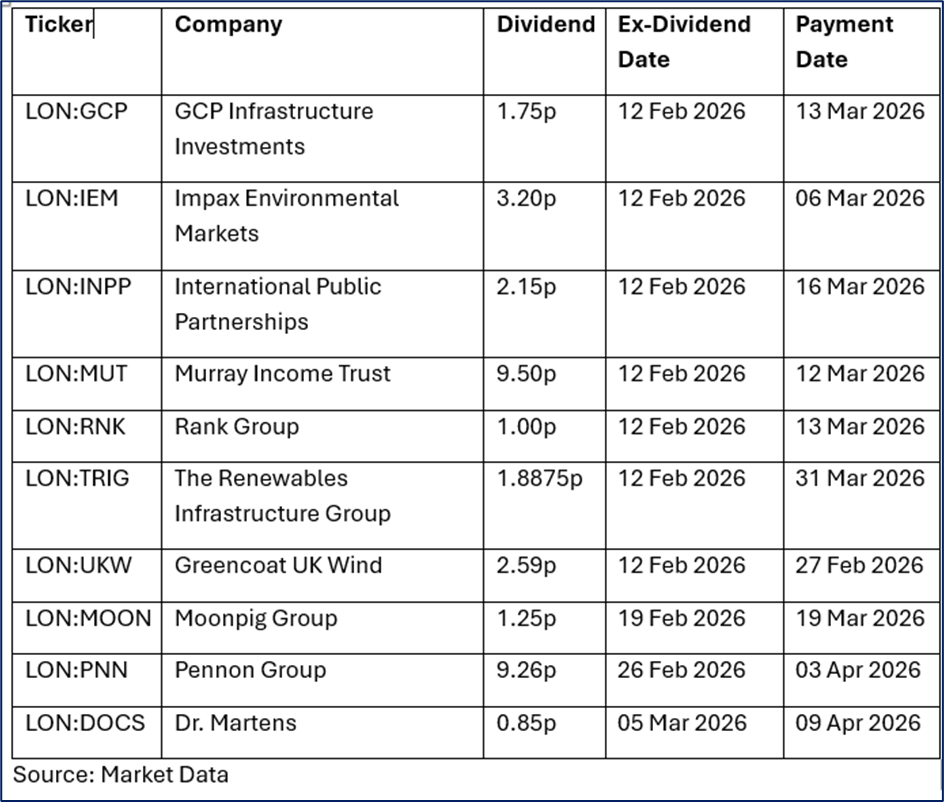
These companies represent a cross-section of industries including renewable energy, infrastructure, retail, asset management, utilities, and consumer brands, illustrating the sector diversity of dividend opportunities within the FTSE 250.
Understanding the Ex-Dividend Date
The ex-dividend date is critical for income investors because it marks the cutoff for eligibility.
If an investor purchases shares before the ex-dividend date, they will receive the dividend payment even if they sell the shares afterwards. Conversely, purchasing on or after that date means the dividend will go to the previous shareholder.
Because of this rule, share prices often fall by roughly the value of the dividend when the market opens on the ex-dividend date. Many financial platforms refer to this as the “dividend impact”, representing the percentage change expected in the share price due to the payout.
For investors building dividend portfolios, tracking these dates ensures they capture the income stream without missing key distribution windows.
Infrastructure and Renewable Energy Dividend Stocks
Infrastructure and renewable energy companies dominate many FTSE 250 dividend calendars due to their stable, contracted cash flows.
LON:GCP – GCP Infrastructure Investments
GCP Infrastructure Investments focuses on lending to infrastructure and renewable projects across the UK. Because its assets generate predictable income streams, the company is able to distribute regular quarterly dividends.
Infrastructure investment companies like GCP often appeal to income investors seeking consistent yields and lower volatility compared with traditional equities.
LON:INPP – International Public Partnerships
International Public Partnerships is another infrastructure investment trust with exposure to transport, utilities, and public-sector infrastructure assets across multiple countries.
These projects typically generate long-term government-backed revenues, making them well-suited to support sustainable dividends.
LON:TRIG – The Renewables Infrastructure Group
TRIG owns a diversified portfolio of wind and solar energy assets across Europe. The renewable energy sector has become increasingly popular among dividend investors because renewable projects typically operate under long-term power purchase agreements.
LON:UKW – Greencoat UK Wind
Greencoat UK Wind is one of the largest UK wind farm investment funds. The company distributes income generated from electricity sales and government renewable incentives.
Some analysts view renewable infrastructure funds like Greencoat UK Wind as strong income opportunities, with dividend yields often exceeding 10% in certain market conditions.
These infrastructure-focused companies highlight a growing trend: renewable energy and infrastructure funds are becoming core dividend plays in the UK market.
Investment Trust Dividend Payers
Investment trusts represent another major segment of FTSE 250 dividend stocks.
LON:MUT – Murray Income Trust
Murray Income Trust is a long-established equity income fund focused on dividend-paying companies globally. The trust has a strong record of maintaining and gradually increasing dividends, thanks to its diversified portfolio of income-producing equities.
LON:IEM – Impax Environmental Markets
Impax Environmental Markets invests in companies benefiting from environmental and sustainability themes, including clean technology, water management, and waste solutions.
Although growth-oriented, the trust still pays regular dividends, demonstrating that sustainable investing and income investing are increasingly overlapping strategies.
Investment trusts often provide stable dividend streams because they can retain earnings in strong years to support distributions during weaker periods.
Consumer and Retail Dividend Stocks
Consumer companies within the FTSE 250 often offer moderate dividend yields supported by stable brand revenue.
LON:MOON – Moonpig Group
Moonpig operates a well-known online greeting card and gift platform. The company has expanded into subscription gifting and personalised e-commerce, which has strengthened recurring revenues.
While Moonpig is still relatively growth-focused compared with traditional dividend payers, it has begun distributing dividends as profitability improves.
LON:DOCS – Dr. Martens
Dr. Martens is a globally recognized footwear brand known for its iconic boots. The company’s dividend policy reflects its transition from a high-growth consumer brand to a cash-generating global retailer.
Despite volatility in the fashion sector, strong brand recognition helps support stable revenue and dividend payments.
Utility and Public Service Dividend Stocks
Utilities and water companies remain a core component of dividend portfolios due to their regulated revenue models and predictable cash flow.
LON:PNN – Pennon Group
Pennon Group operates water and environmental infrastructure businesses in the UK. Water utilities often provide dependable dividends because regulators allow companies to earn stable returns on infrastructure investment.
As a result, water companies frequently appear in dividend calendars with regular interim and final payouts.
Gaming and Leisure Dividend Stocks
LON:RNK – Rank Group
Rank Group operates gaming venues and online betting platforms across the UK and Europe.
Dividend payments in the gaming sector can fluctuate depending on consumer spending trends and regulatory developments. However, as in-person leisure activity has rebounded, the company has gradually restored shareholder distributions.
Why the FTSE 250 Is Attractive for Dividend Investors
The FTSE 250 is often overshadowed by the FTSE 100, but many investors consider it a hidden gem for dividend growth.
Several factors explain why:
- Higher Growth Potential
Mid-cap companies often grow faster than large multinational corporations. This growth can translate into rising dividends over time.
- Sector Diversity
The FTSE 250 includes a broader mix of sectors such as:
- Renewable energy
- Infrastructure funds
- Retail and consumer brands
- Financial services
- Technology firms
This diversity allows investors to build balanced dividend portfolios within a single index.
- Attractive Yields
The index currently offers an average dividend yield above 3%, with certain infrastructure and energy stocks delivering far higher payouts.
Key Risks When Investing for Dividends
While dividends provide reliable income, investors should still consider potential risks.
Dividend Cuts
High yields sometimes signal underlying financial challenges. If profits decline, companies may reduce payouts.
Economic Sensitivity
Consumer-facing businesses like retailers and gaming operators may experience dividend volatility during economic downturns.
Interest Rate Impact
Infrastructure and REIT-style dividend stocks can be sensitive to rising interest rates because they compete with fixed-income investments.
Financial experts often advise examining cash flow, debt levels, and payout ratios before relying on any dividend stream.
Dividend Strategy: Capturing Ex-Dividend Opportunities
Many investors use specific strategies around ex-dividend dates:
Dividend Capture Strategy
Some traders buy shares shortly before the ex-dividend date to capture the payout. However, this strategy can be risky because the share price often adjusts downward by the dividend amount.
Long-Term Dividend Investing
Long-term investors prefer companies with a history of consistent or growing dividends, focusing on total return rather than short-term price movements.
Sector Diversification
Holding dividend stocks across multiple industries helps stabilize income streams if one sector cuts payouts.
Outlook for FTSE 250 Dividends in 2026
Dividend prospects for the FTSE 250 remain positive heading into 2026. Several factors support continued payouts:
- Rising renewable energy investment
- Stable infrastructure cash flows
- Strong balance sheets among many mid-cap companies
- Economic recovery in consumer sectors
Some analysts believe the FTSE 250 may even outperform large-cap dividend growth because mid-cap companies have greater room to expand earnings.
Infrastructure funds, renewable energy trusts, and specialist financial companies are expected to remain key dividend contributors within the index.
Final Thoughts
The FTSE 250 offers a rich pipeline of dividend opportunities across sectors ranging from renewable energy and infrastructure to consumer brands and financial services.
Tracking upcoming ex-dividend dates is essential for investors seeking to secure the next distribution from these companies. Stocks such as LON:GCP, LON:TRIG, LON:UKW, LON:PNN, and LON:DOCS illustrate the wide range of income-generating businesses within the UK mid-cap index.
As dividend strategies continue to gain popularity among income investors, the FTSE 250 remains a valuable hunting ground for stable payouts and long-term dividend growth.


 Nov 27, 2026





 Please wait processing your request...