
 AU
AU
 CA
CA
 US
US
 NZ
NZ
 IND
IND

 UK
UK

 Share
Share
 X (Formerly Twitter)
 Whatsapp
 Facebook
 LinkedIn
 Telegram
 Email This Article
 Copy Link
 Summarize with AI
 Chat GPT
 Perplexity
_04_21_2026_16_11_34_624162.jpg)
Introduction
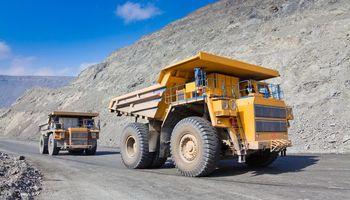
Glencore plc (LSE:GLEN) has come under pressure in today’s trading session, reflecting a mix of commodity price volatility, concerns around global demand, and broader market sentiment shifts. As one of the world’s largest diversified mining and commodity trading companies, LSE:GLEN is highly sensitive to movements in key commodities such as copper, coal, zinc, and nickel.
The immediate driver behind the decline appears to be weakness in industrial metal prices, particularly copper, which is widely viewed as a barometer of global economic health. Any indication of slowing demand from major economies, especially China, tends to weigh heavily on mining stocks like Glencore plc.
Company Overview
Glencore plc (LSE:GLEN) is a global natural resources company with operations spanning mining, processing, and trading of commodities. Its portfolio includes energy products, metals, and agricultural commodities, making it one of the most diversified players in the sector.
The company operates across multiple geographies and benefits from an integrated business model that combines production with a large-scale trading arm. This diversification allows it to generate earnings from both commodity extraction and market arbitrage opportunities.
Recent Share Price Performance
LSE:GLEN has experienced notable volatility over the past year, reflecting the cyclical nature of commodity markets. After periods of strong performance driven by elevated commodity prices, the stock has recently faced downward pressure.
The share price has pulled back from recent highs, with short-term declines linked to weaker commodity sentiment and profit-taking. Despite this, the longer-term trend remains closely tied to global economic conditions and commodity demand cycles.
Key Drivers Behind the Decline
A primary driver of the recent weakness in LSE:GLEN is the softening of key commodity prices. Copper and other base metals have seen fluctuations due to concerns about global growth and industrial demand.
Additionally, uncertainty around Chinese economic recovery is weighing on sentiment. As China is a major consumer of industrial metals, any slowdown in its economy directly impacts demand expectations.
Another factor is investor repositioning. After strong rallies in commodity stocks, investors may be locking in profits amid uncertain macroeconomic conditions.
Key Growth Catalysts
Despite short-term pressure, Glencore plc (LSE:GLEN) has several strong growth catalysts. The global energy transition is driving demand for critical metals such as copper, cobalt, and nickel, all of which are part of Glencore’s portfolio.
The company’s trading division provides an additional revenue stream, allowing it to benefit from market volatility. Strategic investments in mining assets and expansion of production capacity could also support long-term growth.
Decarbonization efforts and increasing electrification globally are expected to sustain demand for key commodities.
Sector and Company-Specific Drivers
The mining sector is heavily influenced by commodity cycles, and Glencore’s diversified portfolio provides exposure to both energy and metals markets. This diversification can help mitigate risks but also exposes the company to multiple demand drivers.
Company-specific factors include operational efficiency, production levels, and cost management. Any disruptions in mining operations or increases in costs can impact profitability.
Regulatory and environmental considerations are also becoming increasingly important, particularly in the context of sustainability and emissions.
Investor Sentiment
Investor sentiment toward LSE:GLEN appears cautious in the short term. While long-term fundamentals remain intact, near-term concerns around commodity prices and global demand are weighing on confidence.
Analysts generally maintain mixed views, reflecting the balance between strong structural demand for metals and cyclical risks associated with economic conditions.
The recent decline suggests that investors are adopting a more defensive stance toward commodity-linked stocks.
Risks and Opportunities
Glencore plc (LSE:GLEN) faces several risks. Commodity price volatility is the most significant, as revenues are directly linked to market prices.
Geopolitical risks, operational disruptions, and regulatory challenges also pose potential threats. Additionally, exposure to emerging markets can introduce political and economic uncertainties.
On the opportunity side, rising demand for critical minerals used in renewable energy and electric vehicles provides a strong long-term growth outlook. The company’s trading arm also offers flexibility to navigate volatile markets.
Wider Industry and Macro Context
The broader macroeconomic environment is playing a key role in the stock’s movement. Concerns about global growth, inflation, and interest rates are influencing commodity markets.
Geopolitical tensions, including developments related to Iran, are adding to market uncertainty. Rising energy prices can have mixed effects, benefiting some segments of Glencore’s business while increasing operational costs.
Global supply chain dynamics and shifts toward sustainable energy are also shaping the industry landscape.
Balanced Outlook
Glencore plc (LSE:GLEN) presents a balanced outlook, with strong long-term demand drivers offset by short-term cyclical challenges. The company’s diversified operations and exposure to critical metals provide resilience, but volatility remains a key characteristic.
Short-term performance is likely to be influenced by commodity prices and macroeconomic developments, while long-term prospects remain tied to global energy transition trends.
Conclusion
Glencore plc (LSE:GLEN) is down today due to commodity price weakness, global demand concerns, and investor profit-taking. While the company remains well-positioned within the mining sector, short-term sentiment is shaped by macroeconomic and market conditions.

 Jun 26, 2026

 Please wait processing your request...