
 AU
AU
 CA
CA
 US
US
 NZ
NZ
 IND
IND

 UK
UK

 Share
Share
 X (Formerly Twitter)
 Whatsapp
 Facebook
 LinkedIn
 Telegram
 Email This Article
 Copy Link
 Summarize with AI
 Chat GPT
 Perplexity
Company Overview
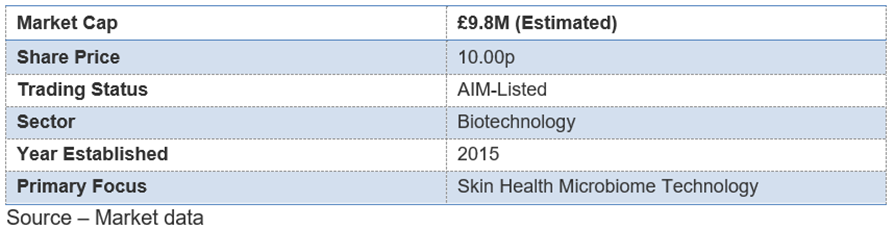
SkinBioTherapeutics PLC operates as a specialized biotechnology company developing innovative therapeutic solutions targeting skin health through microbiome-based approaches, representing an emerging frontier in dermatology and consumer health. Founded in 2015, the company has assembled expertise in skin microbiology, biotechnology, and pharmaceutical development to create novel therapeutic products addressing chronic skin conditions and cosmetic needs. The company's scientific foundation emphasizes the critical role of the skin microbiome in maintaining healthy skin and treating dermatological conditions. SkinBioTherapeutics' product development strategy focuses on translating microbiome science into clinical therapies and consumer products with meaningful benefits. The company's research and development capabilities combine microbiological expertise, clinical development experience, and commercial acumen.
The company's positioning at the intersection of biotechnology, dermatology, and consumer health provides access to multiple revenue streams and large addressable markets. Skin health represents a market of substantial size with persistent patient demand and consumer willingness to invest in skin care and treatment products. The scientific understanding of skin microbiota has advanced dramatically in recent years, providing a foundation for therapeutic innovation previously unavailable. SkinBioTherapeutics' focus on microbiome-based solutions provides differentiation from conventional dermatological treatments and cosmetic products. The company's opportunity to pioneer microbiome therapeutics in skin health offers potential for significant intellectual property protection and market advantage.
Dermatological conditions affect millions of individuals globally, creating substantial market opportunities for effective, innovative solutions. The consumer skin care market represents one of the world's largest personal care categories, supporting premium valuations for differentiated products with demonstrated efficacy. SkinBioTherapeutics' commitment to rigorous clinical development and evidence-based product claims supports credibility with healthcare professionals and consumers. The company's long-term vision emphasizes establishing leadership in microbiome-based skin therapies and becoming a recognized innovator in this emerging field. Scientific publications and clinical evidence generation support brand building and competitive differentiation.
The skin microbiome science field experiences rapid advancement with increasing recognition of microbiota importance in skin health and disease. Regulatory pathways for microbiome-based therapeutics continue developing, creating opportunities for novel product approval. Consumer interest in microbiome health and gut-skin connections creates marketing opportunities. The company's ability to generate high-quality clinical evidence supports regulatory approvals and market adoption. International expansion opportunities exist as microbiome therapeutics gain recognition globally.
Business Model and Revenue Streams
SkinBioTherapeutics' revenue model involves developing and commercializing proprietary therapeutic products targeting skin conditions, with potential revenues from direct product sales, licensing agreements, and strategic partnerships. The company generates revenues through multiple channels including prescription therapeutics, over-the-counter consumer products, and professional use dermatological treatments. Licensing agreements with established dermatology companies or consumer health brands provide alternative revenue pathways and reduce the company's commercialization burden. Strategic partnerships provide capital infusions, validation of scientific approach, and access to established distribution channels and customer bases. Milestone payments and royalties from licensing partnerships support ongoing research and development activities.
Product commercialization depends on successful clinical development, regulatory approval, manufacturing establishment, and effective marketing to healthcare providers and consumers. The company's ability to execute clinical trials efficiently and generate compelling evidence supports regulatory approval and market adoption. Manufacturing partnerships with specialized contract manufacturers enable scaled production while minimizing capital requirements for facility development. Digital marketing, professional education programs, and patient advocacy initiatives support product awareness and adoption. The company's revenue growth depends on successful clinical development pipeline progression and effective market penetration of launched products.
The company's product portfolio strategy likely includes multiple indications and product formats expanding addressable market size and revenue diversification. Early-stage development programs focusing on high-unmet-need dermatological conditions provide opportunities for breakthrough status and accelerated regulatory pathways. Consumer product strategies targeting larger mass markets can generate substantial revenues but require effective marketing and distribution. The company's ability to generate intellectual property protection through patents on microbiome applications supports long-term competitive advantage and pricing power. Strategic partnerships with larger consumer health or dermatology companies provide leverage and market access supporting revenue scale.
Revenue timing depends on clinical trial progression, regulatory approval achievement, and successful market launch execution. The company's cash position determines ability to fund development through commercialization milestones. Partnerships or strategic investments provide capital supporting development acceleration. Multiple revenue streams reduce dependence on any single product or market. The company's financial discipline and capital allocation efficiency determine path to sustainable profitability.
Financial Performance and Valuation
SkinBioTherapeutics' current financial performance reflects the early commercial stage of the company, with revenues potentially emerging from recently launched products or clinical development programs advancing toward commercialization. The company's research and development investments determine the rate of product development and commercial pipeline progression. Cash position and access to capital markets determine sustainability through continued development phases. The company's burn rate reflects the stage of development and clinical program intensity. Investors should evaluate the company's path to profitability and assess the probability that additional fundraising will not require excessive shareholder dilution.
Valuation of biotech companies appropriately reflects the stage of product development, probability of regulatory approval, addressable market opportunity, and management team quality. Early-stage biotech companies command premium valuations based on pipeline potential and the market opportunity if development succeeds. Comparable company analysis against peer dermatology-focused biotech companies provides context for valuation assessment. The company's intellectual property portfolio and patent protection periods provide defensibility supporting premium valuations. Clinical data generation and regulatory progress represent key valuation catalysts as companies progress toward commercialization.
Forward-looking valuation should consider estimated market sizes for targeted skin conditions, anticipated market share capture, and pricing expectations for developed products. Risk-adjusted valuations reflecting probabilities of regulatory approval and commercial success should inform investment decisions. The company's partnerships or strategic investments provide external validation of business model and scientific approach. Management guidance regarding clinical development timelines, regulatory milestones, and commercialization plans should be evaluated against industry benchmarks. Investors should assess the credibility of financial projections and the likelihood of achieving revenue targets based on historical company performance.
Valuation multiples for development stage biotech companies reflect risk-adjusted probability-weighted analysis of commercial potential. Net present value calculations incorporate clinical success probabilities and market adoption estimates. Comparable transaction analysis examining biotech company acquisitions provides market precedent. The company's strategic partnerships and licensing agreements validate scientific approach and commercial potential. Patent portfolio strength and exclusivity period length determine long-term value creation potential.
Market Position and Competitive Landscape
SkinBioTherapeutics operates in the dermatology and skin care markets, which remain fragmented and competitive despite dominance of large pharmaceutical and consumer health companies. Established dermatology companies focusing on conventional treatments provide primary competition for prescription therapeutic products. Large consumer health and cosmetics companies dominate the over-the-counter and consumer product segments. SkinBioTherapeutics' differentiation through microbiome-based approaches addresses unmet needs in treating chronic skin conditions and provides novel value propositions. The emerging field of microbiome therapeutics offers opportunities to establish leadership positions before larger competitors develop competing products.
The competitive landscape for skin therapies includes topical treatments, systemic medications, biologics, and emerging technologies. Microbiome-based approaches represent a nascent field with limited existing competitors, providing first-mover advantages for pioneers. However, the success of microbiome approaches will likely attract larger pharmaceutical companies seeking to develop competing products. SkinBioTherapeutics' ability to develop differentiated products and maintain intellectual property advantages proves essential for long-term competitive positioning. Clinical evidence generation and publications support brand building and competitive differentiation in the scientific and medical community.
Market dynamics favor companies demonstrating clinical efficacy, patient safety profiles, and sustainable business models. SkinBioTherapeutics competes against well-established competitors with superior marketing resources and physician relationships. However, focused strategy targeting microbiome-based therapeutics provides differentiation and defensibility. Strategic partnerships with larger dermatology or consumer health companies can provide leverage and market access. The company's reputation for scientific rigor and innovation supports competitive positioning in attracting collaborators and customers. Long-term success depends on successful commercialization and market acceptance of microbiome-based skin therapies.
Competitive advantages emerge from early positioning in microbiome therapeutics, patent protection, and scientific credibility. The company's ability to attract talented scientists and maintain research momentum supports competitive advantage. Strategic relationships with academic institutions and research organizations enhance innovation capability. The company's focus on specific skin conditions provides differentiation from larger, more generalized competitors. Brand building through scientific publications and clinical evidence supports long-term competitive positioning.
Risk Factors
Clinical and regulatory risks represent significant challenges for SkinBioTherapeutics, as development programs may fail to demonstrate safety and efficacy or face regulatory approval delays. Changes in regulatory standards for microbiome-based therapies could impact development timelines and increase costs. Competitive product launches by larger pharmaceutical companies could rapidly erode market opportunities or force price reductions. Patent challenges or early patent expirations could reduce intellectual property advantages. Market adoption risks emerge if physicians or patients resist microbiome-based treatments despite clinical benefits or if conventional treatments remain preferred.
Commercialization risks include potential launch failures, inadequate market size, or competitive responses neutralizing competitive advantages. Manufacturing and supply chain disruptions could prevent timely product availability. Key talent retention risks emerge if experienced scientists or managers depart during critical development phases. Reimbursement challenges could limit insurance coverage and patient access to developed products. Financial risks include insufficient capital to fund operations through profitability, requiring additional fundraising with potential shareholder dilution.
Scientific risks include the possibility that microbiome-based approaches prove less effective than anticipated or that adverse effects emerge during clinical development. Intellectual property risks include patent validity challenges or freedom-to-operate issues. Dependence on strategic partners for manufacturing or distribution creates vulnerability to partner decisions. Regulatory changes affecting microbiome therapeutics or dermatological product classifications could impact development and commercialization strategies. Market timing risks require successful commercialization coinciding with favorable competitive and market conditions.
Clinical trial failures would destroy significant company value and require major strategic pivot. Regulatory rejection or delayed approvals could exhaust financial resources and investor patience. Manufacturing challenges could delay commercialization and increase costs. Key person departure could disrupt research programs and strategic direction. Investment sentiment against biotech could constrain capital availability and valuations. Competitive breakthroughs by larger companies could diminish market opportunity.
Investment Outlook and Conclusion
SkinBioTherapeutics presents a compelling investment opportunity for biotech-focused investors with conviction regarding the potential of microbiome-based skin therapeutics. The company's scientific approach addresses genuine unmet medical needs in dermatology, supported by growing scientific evidence regarding skin microbiota importance. Successfully commercialized products should generate meaningful revenues and support cash flow positive operations. The addressable market for skin treatments remains substantial, with significant patient populations and consumer demand. Long-term investors who believe in the company's scientific approach and commercialization strategy may benefit from significant upside if development programs succeed.
The investment case depends critically on successful clinical development progression, regulatory approval achievement, and effective market penetration of developed products. Monitoring clinical trial results, regulatory submissions, and commercialization progress provides essential indicators of company trajectory. Strategic partnerships validate the company's scientific approach and provide capital and market access supporting commercialization. The company's ability to generate and publish clinical evidence supports scientific credibility and physician adoption. Investors should remain vigilant regarding competitive developments and potential clinical setbacks affecting the company's pipeline.
SkinBioTherapeutics warrants consideration by biotech-focused investors seeking exposure to differentiated therapeutic approaches in the large skin health market. The company's innovative microbiome-based strategy, strong management team, and significant addressable markets create potential for substantial long-term value creation. Successful execution of clinical development and commercialization plans should drive revenue growth and improved financial performance. The combination of scientific innovation, market opportunity, and experienced management makes SkinBioTherapeutics an attractive investment for patient long-term investors. Investors with conviction regarding microbiome therapeutics and tolerance for biotech development risks should find the company's risk-reward profile compelling.
Thorough evaluation of the company's scientific foundation, clinical trial design, and commercialization strategy should precede investment decisions. The company's quarterly announcements regarding clinical progress, partnership developments, and financial performance provide monitoring information. Regulatory milestone achievements serve as important value catalysts. The company's intellectual property portfolio strength and patent protection duration warrant careful evaluation. Management's track record in biotech development and commercialization provides confidence assessment criteria.


 Jun 03, 2026




 Please wait processing your request...