
 AU
AU
 CA
CA
 US
US
 NZ
NZ
 IND
IND

 UK
UK

 Share
Share
 X (Formerly Twitter)
 Whatsapp
 Facebook
 LinkedIn
 Telegram
 Email This Article
 Copy Link
 Summarize with AI
 Chat GPT
 Perplexity
Burberry Group PLC (LSE: BRBY) kicked off the 2026 trading year as a standout performer, jumping approximately 3.7% to 4.3% on January 2, 2026. This rally wasn't just a flash in the pan; it was a symbolic move that helped the FTSE 100 break the historic 10,000-point barrier for the first time in history.
The New Year Rally: Key Drivers of the Jan 2 Surge

Source: Kalkine Group
The price action on the first full trading session of 2026 was driven by a "perfect storm" of macro-optimism and internal recovery signs:
- The "Santa Claus" Tailwinds: Stocks often benefit from light trading volumes and positive sentiment during the first days of January. Burberry, being a high-beta luxury name, captured this momentum as investors rotated back into UK "value" plays.
- 10,000 Milestone Sentiment: As the FTSE 100 approached and crossed the 10,000 mark, institutional buying increased across blue-chip stocks. Burberry, having recently rejoined the top-tier index in late 2025, was a primary beneficiary.
- Validation of 'Burberry Forward': Market confidence is peaking around the "Burberry Forward" strategy. Investors are pricing in a full-year recovery after the company reported a return to adjusted operating profit (£19m) in late 2025.
- China’s "Great Rebalance": Early 2026 data suggested that Chinese luxury demand—Burberry’s lifeblood—is finally stabilizing following the 2025 economic stimulus packages.
Latest Business Model: A Return to Heritage
Under CEO Joshua Schulman, Burberry has abandoned the "ultra-high-end" leather goods chase of previous years. The 2026 business model is built on "Authentic British Luxury."
- Outerwear Authority: Refocusing on the trench coat and gabardine—products where Burberry has "permission" to lead.
- Pricing Realignment: Moving away from the aggressive price hikes seen in 2023-2024 (especially in leather goods) to appeal to the "aspirational" luxury buyer who was previously priced out.
- Direct-to-Consumer (DTC) Focus: Rationalizing wholesale accounts by 11% to ensure brand exclusivity and tighter control over discounting.
Financial & Operational Updates (FY26 Snapshot)
Burberry's recent interim reports show a business that has successfully "stopped the bleeding."
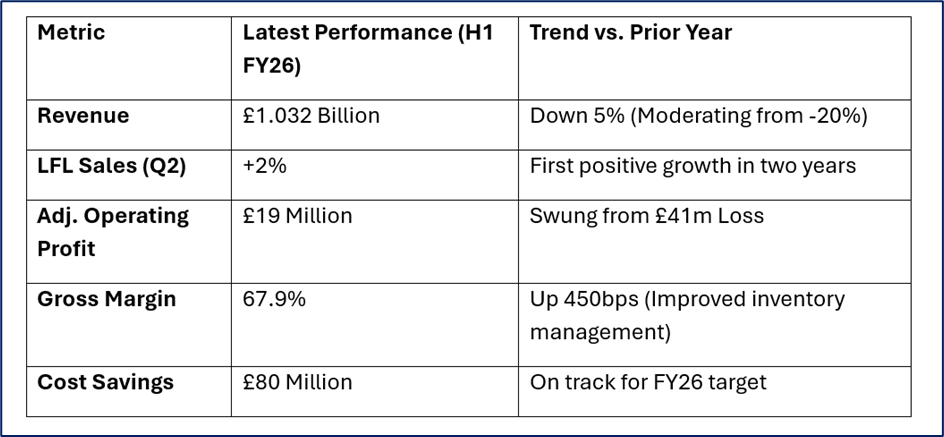
Source: Company Data
Operational Milestone: The company successfully executed its "Burberry Forward" transformation, which included a difficult but necessary reduction of 1,700 global roles (roughly 15% of the workforce) to lean out the corporate structure.
SWOT Analysis: The 2026 Outlook

Source: Kalkine Group
Strengths
- Iconic Brand Equity: The "Check" and Trench coat remain among the most recognizable assets in fashion.
- Royal Warrants: Maintained prestige through British heritage and associations with the Royal Family.
- Leaner Cost Base: Significant restructuring has lowered the break-even point.
Weaknesses
- Heavy China Exposure: Approximately 40%+ of revenue is tied to the Asia-Pacific region.
- Dividend Suspension: The lack of a dividend (suspended in mid-2024) makes the stock less attractive to income-focused funds.
- Brand Perception: Still battling the "older/traditional" label among Gen-Z consumers.
Opportunities
- US Market Acquisition: Growth in the Americas (+3%) shows the brand is resonating with new customer archetypes.
- Scarf Bars & Pop-ups: High-margin accessories (like the Scarf Bar) are seeing high conversion rates in the 2025/26 winter season.
- Digital Innovation: Use of AR for "Lola" and "Frances" bags to bridge the gap between physical and digital retail.
Threats
- Geopolitical Tariffs: Potential US-China trade tensions pose a risk to supply chains and luxury pricing.
- Tourist Spend Shifts: The UK’s lack of VAT-free shopping for tourists continues to divert spend to Paris and Milan.
- Economic Volatility: High interest rates in 2025 have left "aspirational" buyers with less discretionary income.
The "Burberry Forward" Risk Assessment
While the stock is up, the recovery is in the "early innings."
- Execution Risk: If the Spring/Summer 2026 collections do not resonate, the recent momentum could stall.
- Competitive Pressure: LVMH and Richemont are aggressively defending market share in the "entry-to-luxury" space.
- Currency Headwinds: As a global exporter, Burberry remains sensitive to the strength of the Pound ($GBP$).
Conclusion
Burberry’s ~4% jump on January 2, 2026, reflects a market that is finally rewarding operational discipline over aspirational dreaming. By returning to its roots—trench coats, scarves, and British identity—Burberry has stabilized its margins and returned to profitability. However, with the stock still trading well below its 5-year highs, the company must prove that its Q2 growth wasn't just a holiday fluke but a sustainable trend.


 Jun 03, 2026




 Please wait processing your request...