
 AU
AU
 CA
CA
 US
US
 NZ
NZ
 IND
IND

 UK
UK

 Share
Share
 X (Formerly Twitter)
 Whatsapp
 Facebook
 LinkedIn
 Telegram
 Email This Article
 Copy Link
 Summarize with AI
 Chat GPT
 Perplexity
Introduction and Overview of the FTSE All Share Index
The FTSE All Share Index is one of the most widely followed benchmarks for the UK equity market, developed and maintained by FTSE Russell, part of the London Stock Exchange Group (LSEG). It serves as a critical tool for investors, institutions, and fund managers to assess overall market performance and construct diversified portfolios.
This index captures the performance of companies listed on the London Stock Exchange main market by combining the FTSE 100, FTSE 250, and FTSE SmallCap indices. As a result, it provides a broad and representative view of the UK equity landscape.
Its structured, rules-based methodology ensures transparency and consistency, making it suitable for both passive and active investment strategies. Over time, the index has become a cornerstone benchmark, widely used for performance comparison and portfolio construction.
History and Evolution of the FTSE All Share Index
Origins and Launch
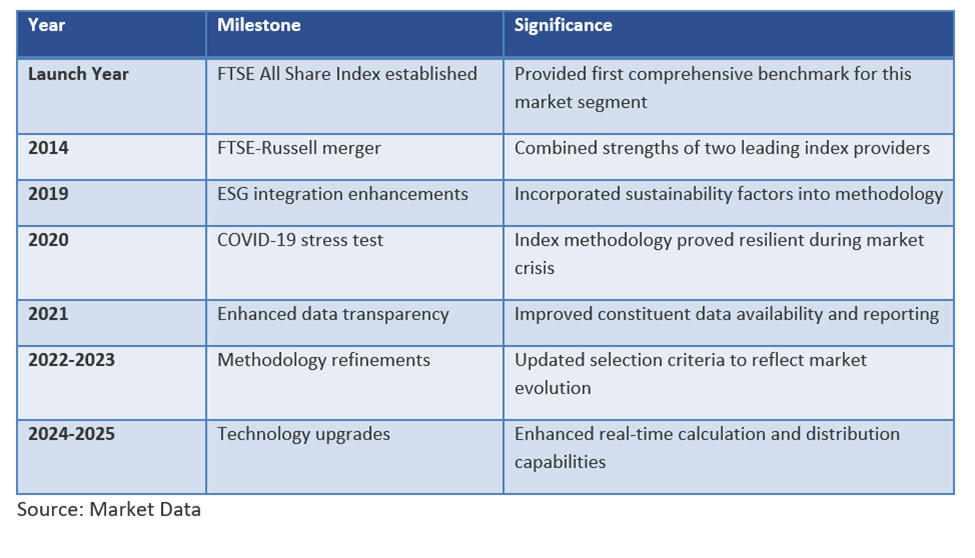
The FTSE All Share Index dates back to 1962, making it one of the longest-standing equity benchmarks globally. It was introduced to provide a unified and reliable measure of UK market performance at a time when fragmented benchmarks dominated the landscape.
The index was designed in consultation with institutional investors to ensure it met practical investment needs while maintaining methodological integrity.
Key Milestones and Evolution
Over the years, the index has undergone continuous enhancements to reflect market developments and investor demands. A major milestone was the 2014 merger of FTSE Group with Russell Investments’ index business, forming FTSE Russell.
Subsequent updates have included ESG integration, improved transparency, and technological advancements in data dissemination.
The FTSE Russell Legacy
FTSE Russell has built a strong reputation for creating transparent and rules-based indices. The FTSE All Share Index reflects these principles, offering reliability, consistency, and global credibility.
Index Methodology and Construction of the FTSE All Share Index
Foundational Principles
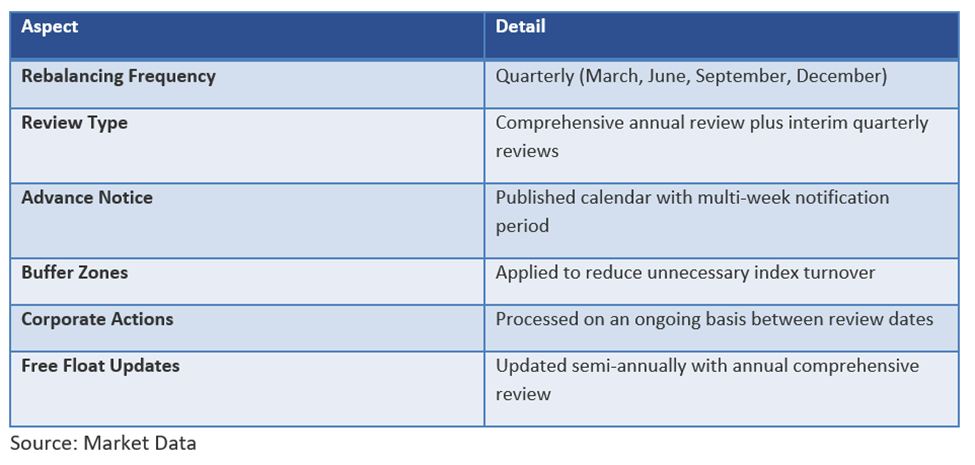
The index is built on key principles such as transparency, investability, and representativeness. It uses a free-float market capitalisation approach and is reviewed quarterly.
This methodology ensures that the index accurately reflects the investable UK equity universe.
Eligibility Universe
The index includes companies listed on the London Stock Exchange that meet criteria related to size, liquidity, and free float.
Regular updates ensure that new listings and market changes are incorporated efficiently.
Free Float Methodology
Only shares available for public trading are considered in weighting calculations. This ensures the index reflects realistic investment opportunities.
Constituent Selection and Screening for the FTSE All Share Index
Selection Criteria
Companies must meet strict requirements related to market capitalisation, liquidity, and listing standards to be included.
The selection process is rules-driven and reviewed periodically.
Screening and Exclusion Policies
Additional filters may exclude companies based on governance or ESG considerations. These rules are applied consistently and transparently.
Weighting and Rebalancing of the FTSE All Share Index
Weighting Methodology
The index uses free-float adjusted market capitalisation, meaning larger companies carry greater weight.
This approach aligns the index with real market conditions.
Rebalancing Schedule and Process
Rebalancing occurs quarterly, ensuring the index remains current and representative.
Corporate actions are handled continuously between review periods.
Composition and Sector Analysis of the FTSE All Share Index
Sector Breakdown
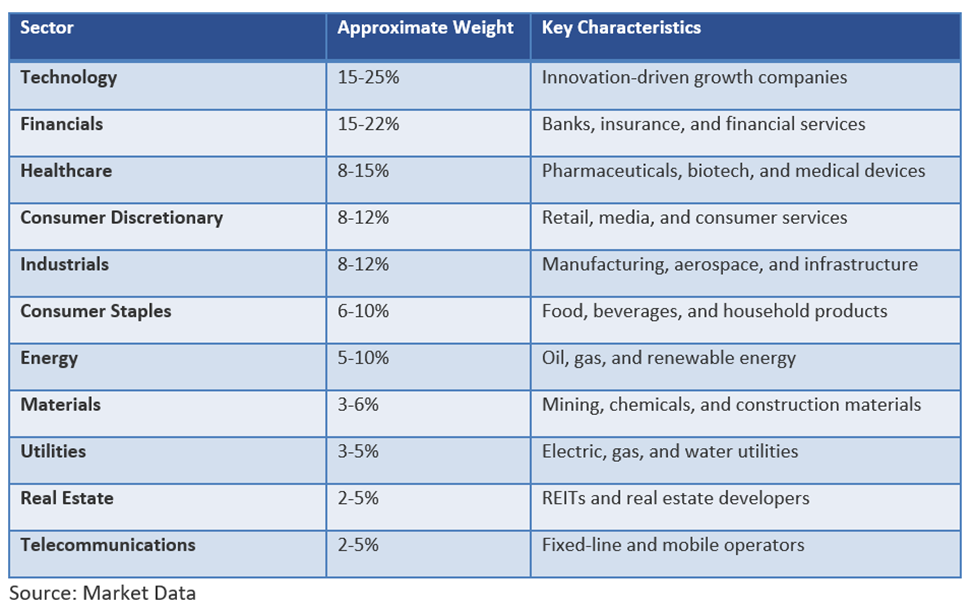
The index covers all major sectors of the UK economy, including financials, healthcare, energy, consumer goods, and industrials.
Sector weights evolve over time based on market performance and structural changes.
Top Constituents Analysis
Large-cap companies dominate the index, which can lead to concentration risk. Their performance significantly influences overall returns.
Geographic Breakdown of the FTSE All Share Index
Although focused on the UK, many companies generate substantial revenue globally. This introduces indirect international exposure.
Investors should consider currency and geopolitical factors when evaluating the index.
Performance Analysis of the FTSE All Share Index
Historical Returns
The index has delivered returns aligned with the broader UK economy, with performance varying across economic cycles.
Performance Attribution
Performance attribution analysis provides insights into the drivers of the FTSE All Share Index's returns over different time periods. This analysis can decompose total returns into contributions from different sectors, countries, or individual securities, helping investors understand why the index performed as it did. Attribution analysis is particularly valuable for active managers who are measured against the FTSE All Share Index, as it allows them to identify the sources of their outperformance or underperformance relative to the benchmark.
The sector contribution to the FTSE All Share Index's returns can vary significantly across different market environments. During technology-driven bull markets, the technology sector may contribute a disproportionate share of the index's total return, while defensive sectors such as healthcare and consumer staples may provide relative stability during market downturns. Understanding these dynamics is essential for investors who are using the FTSE All Share Index as the basis for factor tilts or sector rotation strategies.
Dividend Yield and Income Characteristics
For income-oriented investors, the dividend yield of the FTSE All Share Index is an important consideration. The index's dividend yield is determined by the collective dividend payments of its constituent companies, and it fluctuates based on changes in share prices and dividend policies. The dividend yield of the FTSE All Share Index can serve as a useful reference point for assessing the income potential of United Kingdom equity markets relative to other asset classes and regions.
The total return version of the FTSE All Share Index incorporates dividend income, providing a more complete picture of investor returns than the price-only version. For tax-sensitive investors, a net total return version may also be available, which accounts for the withholding taxes that may be applied to dividend payments received by international investors. The choice between price, gross total return, and net total return versions depends on the investor's specific circumstances and objectives.
Risk and Volatility Assessment of the FTSE All Share Index
Volatility Profile
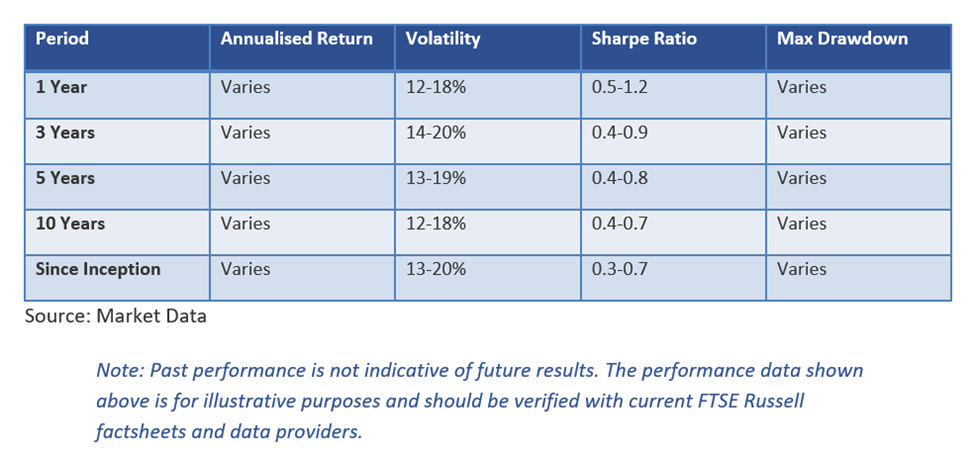
Volatility fluctuates based on market conditions, rising during crises and stabilising during growth periods.
Risk-Adjusted Performance Metrics
Metrics such as Sharpe ratio and drawdown provide insights into risk-adjusted returns.
Concentration and Liquidity Risk
Large-cap dominance and liquidity constraints in smaller stocks present potential risks.
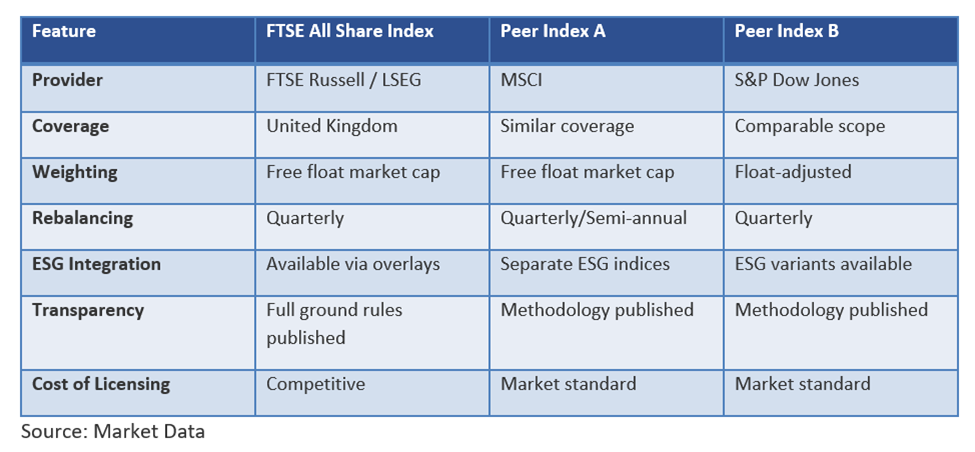
Comparison of the FTSE All Share Index with Peer Indices
The index competes with benchmarks such as the MSCI UK All Cap Index.
While methodologies are similar, differences in coverage and classification can lead to performance variations.
Investment Vehicles and Products Linked to the FTSE All Share Index
Exchange-Traded Funds (ETFs)
ETFs tracking the index provide low-cost and liquid access for investors.
Index Mutual Funds
Mutual funds offer an alternative, particularly for long-term investors making regular contributions.
Derivatives and Structured Products
Advanced investors can access the index through futures, options, and structured products.
Use Cases and Applications of the FTSE All Share Index
Portfolio Benchmarking
One of the primary applications of the FTSE All Share Index is as a benchmark for measuring the performance of investment portfolios. It is the standard benchmark for UK equity performance measurement by pension funds, consultants, and the investment industry. By comparing their portfolio returns against the FTSE All Share Index, active managers can assess whether their investment decisions have added value relative to the market. Benchmarking is a fundamental component of the investment process and is required by most institutional investors, regulatory frameworks, and industry standards.
The choice of benchmark has significant implications for performance measurement and attribution. An appropriate benchmark should be investable, measurable, unambiguous, reflective of the investment manager's universe, specified in advance, and owned by the investor rather than the manager. The FTSE All Share Index meets all of these criteria, making it a suitable benchmark for a wide range of investment strategies focused on United Kingdom equity markets.
Asset Allocation
The FTSE All Share Index plays an important role in the asset allocation process for institutional investors. By providing a representative measure of United Kingdom equity market performance, the index serves as a building block for constructing diversified multi-asset portfolios. Asset allocators use the index to determine their strategic allocation to United Kingdom equities, to implement tactical tilts based on their market outlook, and to rebalance their portfolios to maintain their target allocation over time.
Academic and Market Research
The FTSE All Share Index is widely used in academic and market research as a reference for studying equity market dynamics, factor premia, and investment strategies. Researchers use the index to test hypotheses about market efficiency, to study the behaviour of equity markets during periods of stress, and to evaluate the performance of different investment approaches. The availability of long historical data series for the FTSE All Share Index makes it a valuable resource for empirical research and backtesting of quantitative investment strategies.
The index is also used by central banks, government agencies, and international organisations as a reference for monitoring equity market conditions and financial stability. The broad market coverage and transparent methodology of the FTSE All Share Index make it a reliable indicator of market trends, which is important for policymakers who need to assess the health of the financial system and make informed decisions about monetary and fiscal policy.
ESG and Sustainability Considerations for the FTSE All Share Index
The index acts as a base for ESG-enhanced variants, allowing investors to incorporate sustainability into their strategies.
FTSE Russell provides ESG ratings and climate-focused tools to support responsible investing.
Market Impact and Global Significance of the FTSE All Share Index
The FTSE All Share Index has established itself as a benchmark of global significance within the UK equity comprehensive investment landscape. Its influence extends beyond simple performance measurement to encompass the broader functioning of financial markets, including price discovery, capital allocation, and risk management. The index's role as a reference point for trillions of dollars in investment products means that changes to its composition can have material effects on the prices of individual securities, as index-tracking products adjust their holdings to match the updated benchmark.
The market impact of the FTSE All Share Index is particularly evident during rebalancing events, when changes to the index composition can trigger significant trading volumes in affected securities. Index-tracking products, including ETFs and index mutual funds, must buy securities that are being added to the index and sell those that are being removed, creating demand and supply imbalances that can temporarily affect prices. FTSE Russell manages this process carefully by providing advance notification of expected changes and implementing buffer zones to reduce the frequency of changes at the margin.
The global significance of the FTSE All Share Index is further underscored by its adoption by leading institutional investors around the world, including sovereign wealth funds, public pension funds, endowments, and insurance companies. These investors collectively manage vast pools of capital and rely on the FTSE All Share Index as a cornerstone of their investment infrastructure. The index's governance framework, which includes independent advisory committees and regular methodology reviews, helps to maintain the trust and confidence of these important stakeholders.
In the context of the ongoing evolution of global financial markets, the FTSE All Share Index continues to play a vital role in supporting the growth of index-based investing, promoting market transparency, and facilitating efficient capital allocation. As new markets develop, new investment themes emerge, and new technologies transform the investment landscape, the FTSE All Share Index and its associated products will continue to adapt and evolve to meet the changing needs of the global investment community.
Technical Specifications and Data Access for the FTSE All Share Index
Index Calculation
The index is calculated in real-time using established methodologies and is available in multiple formats.
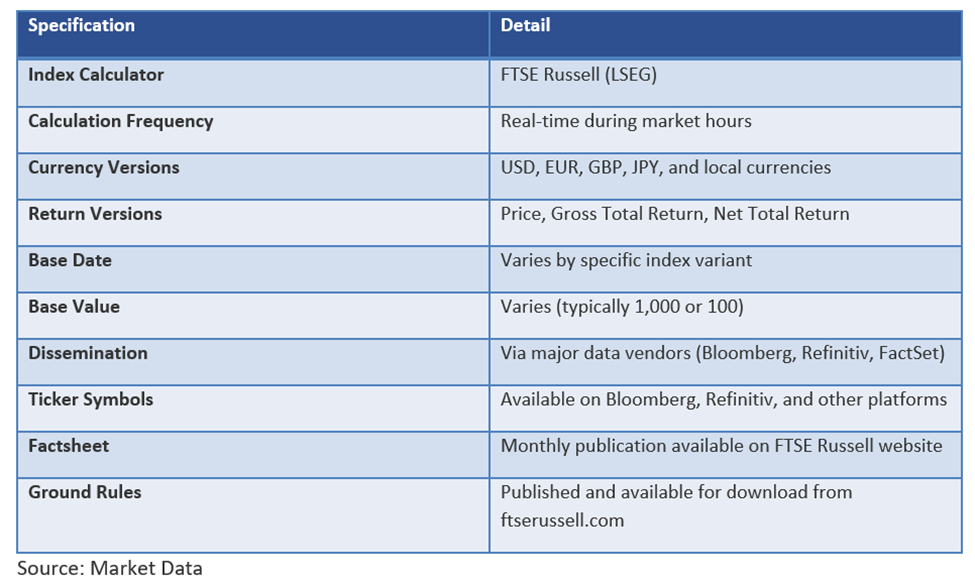
Data Access and Licensing
Data can be accessed through financial platforms, while commercial use requires licensing agreements.
Regulatory and Compliance Considerations for the FTSE All Share Index
The index complies with global regulations such as the EU Benchmarks Regulation and IOSCO principles, ensuring transparency and governance.
Frequently Asked Questions About the FTSE All Share Index
What is the FTSE All Share Index?
It is a benchmark representing the performance of UK-listed equities across large, mid, and small-cap segments.
How often is it rebalanced?
Typically quarterly, with ongoing updates for corporate actions.
Can investors invest directly?
No, but exposure is available through ETFs and funds.
What is the difference between price and total return?
Price return excludes dividends, while total return includes them.
Future Outlook and Emerging Trends for the FTSE All Share Index
The Growth of Passive Investing
Demand for index-based investing continues to grow, benefiting benchmarks like this.
Technology and Innovation
Advancements in data and analytics are enhancing index accuracy and accessibility.
Sustainability and Climate Transition
ESG and climate-focused investing will play a larger role in shaping future index developments.
Conclusion and Key Takeaways About the FTSE All Share Index
The FTSE All Share Index remains a vital benchmark for UK equities, offering comprehensive market coverage, transparency, and reliability.
It is widely used for benchmarking, investment products, and portfolio construction, making it essential for investors seeking UK exposure.
Glossary of Key Terms
Benchmark: A standard used to measure investment performance.
Free Float: Shares available for public trading.
Market Capitalisation: Total value of a company’s shares.
Tracking Error: Difference between fund and index performance.
ETF: Exchange-traded fund tracking an index.
References and Further Reading
This section includes general resources such as FTSE Russell publications, financial data platforms, and regulatory frameworks.


 Jun 08, 2026




 Please wait processing your request...