
 AU
AU
 CA
CA
 US
US
 NZ
NZ
 IND
IND

 UK
UK

 Share
Share
 X (Formerly Twitter)
 Whatsapp
 Facebook
 LinkedIn
 Telegram
 Email This Article
 Copy Link
 Summarize with AI
 Chat GPT
 Perplexity
Key Takeaways – February 2026 (Latest Update)
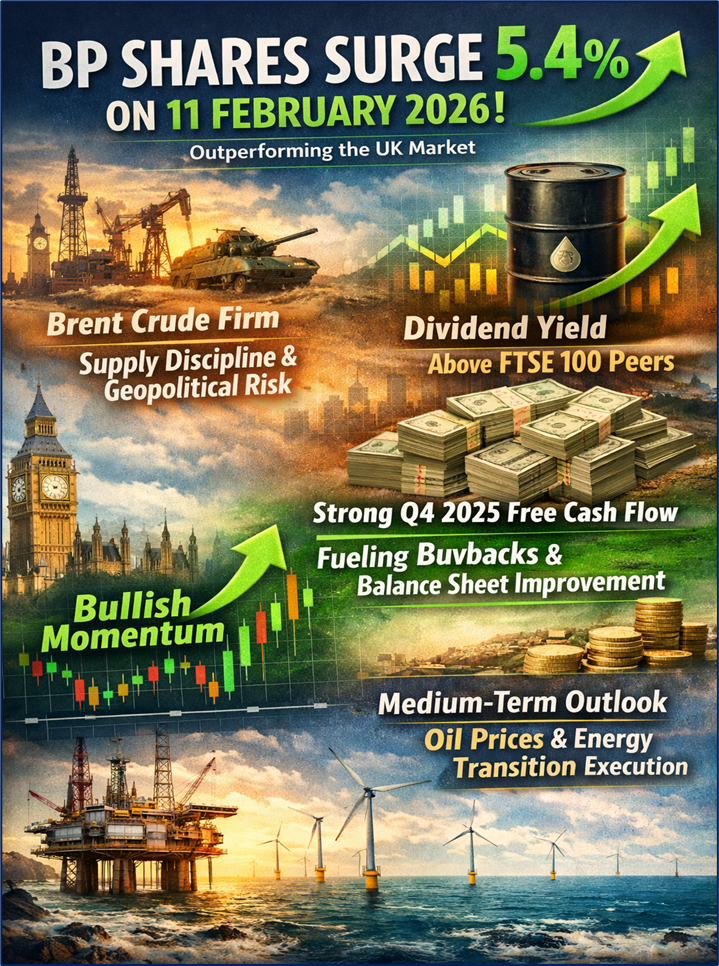
- BP shares surged 5.4% on 11 February 2026, outperforming the wider UK market
- Brent crude remains firm, supported by supply discipline and geopolitical risk premium
- Dividend yield stands above many FTSE 100 large-cap peers
- Strong Q4 2025 free cash flow underpins buybacks and balance sheet improvement
- Short-term momentum is bullish; medium-term outlook linked to oil prices and transition execution
Source: Kalkine Group
Why Is BP Stock Rallying in February 2026 Amid Global Energy Volatility?
BP plc, one of the largest constituents of the FTSE 100, has regained investor attention as energy markets stabilise. The 5.4% share price surge on 11 February 2026 reflects renewed strength in Brent crude oil, resilient global demand, and disciplined capital allocation.
Energy equities are benefiting from:
- Oil prices holding above key technical support
- OPEC+ supply management
- US shale capital restraint
- Geopolitical risk premiums
- Defensive sector rotation within global equity markets
As inflation moderates and the Bank of England signals a more predictable rate path, high-yield commodity stocks such as BP are attracting institutional income flows.
BP’s Q4 2025 results (released January 2026) reinforced confidence, highlighting:
- Robust operating cash flow
- Continued share buybacks
- Net debt reduction
- Dividend commitment within its payout framework
How Is the FTSE 100 and UK Macro Environment Supporting BP?
The FTSE 100 remains commodity-heavy, which provides a natural hedge during periods of global uncertainty. Compared with the FTSE 250, which is more exposed to domestic consumer demand, the FTSE 100 benefits from internationally diversified earnings.
Current UK macro tailwinds include:
- Year-on-year inflation moderation
- GBP stabilisation against USD
- Improved earnings visibility among blue-chip exporters
Because BP generates most revenue in US dollars, currency stability improves earnings predictability for UK investors.
What Global Oil Market Forces Are Driving BP in 2026?
Energy markets in 2026 are shaped by structural and cyclical drivers:
- OPEC+ production discipline
- Tight global spare capacity
- Asian demand recovery
- Capital underinvestment in new supply
- Coexistence of fossil fuel demand and energy transition spending
Brent crude resilience supports BP’s upstream profitability, while downstream refining and trading operations provide diversification and margin cushioning.
BP’s integrated model remains a key competitive strength.
How Does BP’s Business Model Support Dividend Sustainability?
BP operates across four major segments:
- Upstream oil and gas
- Downstream refining and marketing
- Trading and optimisation
- Low-carbon and renewables investment
Free cash flow breakeven levels remain significantly below prevailing oil prices, strengthening dividend visibility.
In Q4 2025, BP demonstrated:
- Strong operating cash flow
- Ongoing share buyback programme
- Continued net debt reduction
- Maintained dividend policy
For passive income investors, the combination of dividend yield plus buybacks enhances total shareholder return potential.
How Does BP Compare With Global Energy Supermajors?
Peer Comparison:
- Shell plc
- Exxon Mobil Corporation
- Chevron Corporation
Compared to US majors, BP trades at a relative valuation discount on earnings and free cash flow metrics. While US peers typically hold stronger balance sheets, BP’s improving capital discipline narrative has narrowed perception gaps.
Shell offers balance sheet strength and scale, while BP presents greater operational leverage to oil price upside and transition repositioning.
Is BP Stock Bullish or Bearish in the Short Term?
3–6 Month Outlook: Bullish Bias
Positive Drivers:
- Oil price momentum
- Technical breakout after 5.4% rally
- Defensive energy rotation
- Positive earnings sentiment
Risks:
- Sudden oil price correction
- Global growth slowdown
- Stronger GBP impacting USD earnings
Short-term technical indicators suggest positive momentum supported by sector inflows.
Is BP a Compelling Medium-Term Investment in 2026–2027?
Medium-term performance depends on:
- Oil price stability
- Capital allocation discipline
- Share buyback continuity
- Transition strategy execution
If oil remains within a stable range and capital returns persist, BP’s total shareholder return profile remains attractive for income-focused investors.
Can BP Deliver Long-Term Value in the Energy Transition Era?
Long-term investment considerations include:
- Balancing hydrocarbon production with renewables
- Maintaining return discipline
- Navigating ESG pressures
- Managing regulatory and windfall tax risk
BP’s ability to generate returns from low-carbon investments without diluting upstream cash generation will define its long-term valuation trajectory.
What Are Analysts Saying About BP in February 2026?
Recent broker commentary includes:
- Goldman Sachs – Buy
- JPMorgan – Overweight
- Barclays – Equal Weight
- Morgan Stanley – Overweight
Consensus indicates moderate upside potential, with dividend yield providing downside support. BP’s valuation remains below many US peers, offering re-rating potential if oil prices remain supportive.
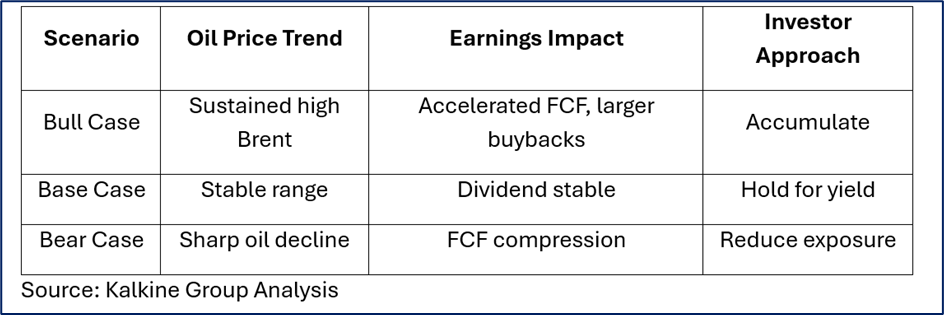
What Does Scenario Analysis Suggest for Investors?
What Strategies Can Passive Investors Consider?
Short-Term
- Monitor oil technical levels
- Track macro data releases
- Watch buyback updates
Medium-Term
- Accumulate during volatility
- Reinvest dividends
- Monitor capital discipline
Long-Term
- Position BP as income anchor
- Diversify across energy majors
- Evaluate transition capital returns
What Key Risks Should Investors Monitor?
- Oil price volatility
- Windfall taxation policy
- Transition capital misallocation
- Geopolitical disruptions
- GBP/USD currency movements
Final Investment Conclusion: Is BP Positioned for Continued Upside in 2026?
BP’s 5.4% surge in February 2026 reflects strengthening investor confidence in oil markets, disciplined capital allocation, and dividend sustainability. As a high-yield FTSE 100 integrated energy major, BP offers income generation, free cash flow resilience, and leverage to global commodity strength.
For passive investors seeking dividend income, buyback support, and exposure to global energy demand, BP remains strategically compelling — provided investors remain aware of oil price cyclicality and transition-related risks.
In the current macro and commodity backdrop, BP stands as one of the FTSE 100’s most closely watched income opportunities in 2026.


 Jun 29, 2026




 Please wait processing your request...