
 AU
AU
 CA
CA
 US
US
 NZ
NZ
 IND
IND

 UK
UK

 Share
Share
 X (Formerly Twitter)
 Whatsapp
 Facebook
 LinkedIn
 Telegram
 Email This Article
 Copy Link
 Summarize with AI
 Chat GPT
 Perplexity
Views Expressed Disclaimer:
You are reading a free article with opinions that may differ from the recommendation given by Kalkine in its paid research reports. Become a Kalkine member today to get access to our research reports, in-depth technical and fundamental research.
With a yield near historic highs, British American Tobacco is attracting attention from passive income investors. Discover the risks and opportunities before you invest.
Key Takeaways — February 2026
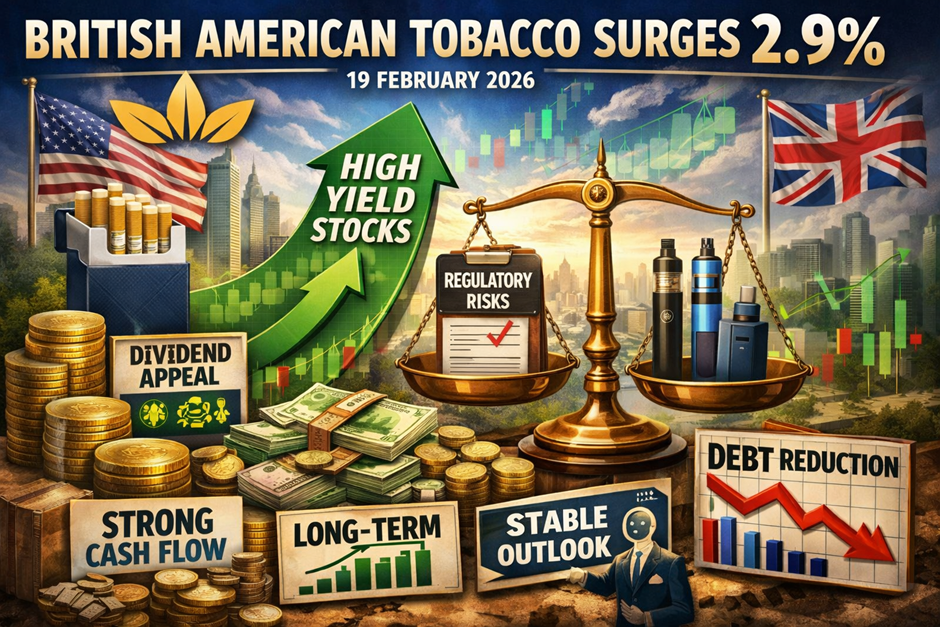
- British American Tobacco stock rose approximately 2.9% on 19 February 2026, supported by defensive sector demand and dividend appeal.
- Investors are rotating toward high-yield FTSE 100 stocks amid interest rate uncertainty and global volatility.
- BAT continues to generate strong free cash flow, supporting dividend sustainability (company reports).
- Analysts maintain mixed but generally stable outlooks due to regulatory risks and transformation progress.
- Long-term performance depends on reduced-risk product growth and debt reduction trajectory.
Source: Kalkine Group
Why Is British American Tobacco Stock Trending Globally Among Dividend Investors in February 2026?
British American Tobacco stock, FTSE 100 dividend giants, high dividend yield UK stocks, passive income investing, recession-resistant stocks, defensive sector leaders, undervalued FTSE opportunities, and best income shares 2026 are among the most searched global investing keywords right now — and BAT is increasingly appearing in investor discussions across Google, AI search platforms, YouTube finance channels, and social media communities. The February 2026 share price rise reflects a broader market narrative where investors are prioritising stable cash flow companies with reliable dividends during uncertain macroeconomic conditions.
The stock’s 2.9% gain also coincides with renewed confidence in the FTSE 100 index relative to the FTSE 250, driven by multinational earnings exposure, stronger currency stability, and defensive sector rotation. In periods of economic ambiguity, global investors often gravitate toward high-margin, predictable-demand industries such as tobacco, utilities, and consumer staples — placing BAT in a favourable sentiment cycle.
Another important catalyst is the company’s transformation strategy focused on reduced-risk nicotine products, including vaping and heated tobacco categories. As investors increasingly evaluate ESG transitions and long-term sustainability narratives, BAT’s shift toward non-combustible products is influencing valuation discussions.
What Are the Key Reasons Behind the February 2026 Share Price Increase?
Several interconnected drivers appear to be supporting momentum:
- Strong dividend yield compared with government bonds and peers
- Defensive sector positioning during macro uncertainty
- Stable earnings guidance and predictable cash flows
- Investor expectations of future interest rate cuts supporting equity valuations
- Positive sentiment toward global consumer staples companies
- Progress in new category revenue expansion and cost efficiencies (company disclosures)
These factors collectively improve risk-adjusted attractiveness for income-oriented investors.
How Are the UK Economy, FTSE Indices, and GBP Movements Influencing BAT?
The UK macroeconomic environment in early 2026 shows signs of gradual stabilisation:
- Inflation trending lower than previous years
- Potential monetary easing later in 2026
- Moderating recession fears
- Improved financial market confidence
For multinational companies like BAT, macro conditions matter differently compared with domestically focused firms. The FTSE 100 derives significant revenue from international markets, making it less sensitive to UK consumer weakness compared with the FTSE 250. Currency dynamics also play a role, as a stable GBP reduces earnings volatility while emerging market growth continues to support revenue streams.
As a result, BAT benefits from both global diversification and defensive sector demand, which can enhance relative performance during volatile economic cycles.
How Is the Global Tobacco Industry Changing and What Does It Mean for BAT?
The tobacco industry continues to evolve structurally:
- Declining cigarette consumption in developed markets
- Growth in smokeless and reduced-risk nicotine products
- Pricing power offsetting volume declines
- Regulatory pressures across multiple jurisdictions
- Emerging market demand resilience
BAT’s strategic pivot toward reduced-risk products represents a long-term transformation that could influence future valuation multiples if execution remains successful.
What Does BAT’s Financial Strength and Business Model Indicate About Its Stability?
The company maintains several structural advantages:
- Global brand portfolio with strong consumer loyalty
- Significant pricing power and high operating margins
- Predictable recurring demand patterns
- Robust free cash flow generation
- Long-standing dividend commitment
Recent company communications highlight continued investment in next-generation products, operational efficiency initiatives, and balance sheet management efforts aimed at reducing leverage over time (company reports).
How Does BAT Compare With Other Global Tobacco Companies?
Peer comparisons suggest:
- Competitive or superior dividend yield versus major tobacco peers
- Valuation discount relative to some US-listed competitors
- Comparable profitability metrics
- Stronger emerging market exposure in certain regions
This valuation gap is often cited by analysts as a potential source of medium-term upside if investor sentiment improves.
Is the Dividend Sustainable and Attractive for Income Investors?
British American Tobacco is frequently discussed among investors seeking:
- Best dividend stocks UK 2026
- Passive income portfolios
- High yield FTSE opportunities
- Long-term income compounding strategies
Dividend sustainability appears supported by:
- Strong operating cash flows
- High-margin product categories
- Cost control measures
- Stable demand characteristics
However, long-term sustainability remains linked to regulatory developments and successful transformation toward reduced-risk products.
What Could the Stock Outlook Look Like Across Different Time Horizons?
Short-term outlook:
- Influenced by macro sentiment and interest rate expectations
- Defensive sector demand providing downside support
- Currency fluctuations impacting earnings translation
Medium-term outlook:
- Growth in reduced-risk product adoption
- Debt reduction progress
- Regulatory clarity across markets
Long-term outlook:
- Structural transformation success
- Industry consolidation dynamics
- Demographic and behavioural shifts
- Capital allocation discipline
Is BAT Stock Currently Bullish, Bearish, or Neutral Based on Market Signals?
Short-term perspective: Neutral to slightly bullish
The dividend yield attracts buyers, and defensive positioning provides stability, though strong growth catalysts remain limited.
Long-term perspective: Moderately constructive
If transformation initiatives succeed and leverage declines, valuation re-rating potential could emerge despite structural industry challenges.
What Strategic Actions Could Investors Consider Depending on Investment Horizon?
Short horizon investors may focus on:
- Dividend yield opportunities
- Defensive sector allocation during volatility
- Tactical positioning around macro events
Medium horizon investors may evaluate:
- Progress in new category revenue growth
- Debt reduction trajectory
- Regulatory developments globally
Long horizon investors may prioritise:
- Dividend reinvestment compounding
- Portfolio diversification benefits
- Long-term valuation positioning
What Are Analysts Currently Indicating About BAT’s Future Prospects?
Broker sentiment remains mixed but stable:
- Some analysts highlight valuation discounts and income appeal
- Others emphasise regulatory risks and limited growth visibility
- Cash flow predictability is widely recognised as a key strength
Overall consensus suggests income stability with moderate capital appreciation potential rather than high-growth expectations.
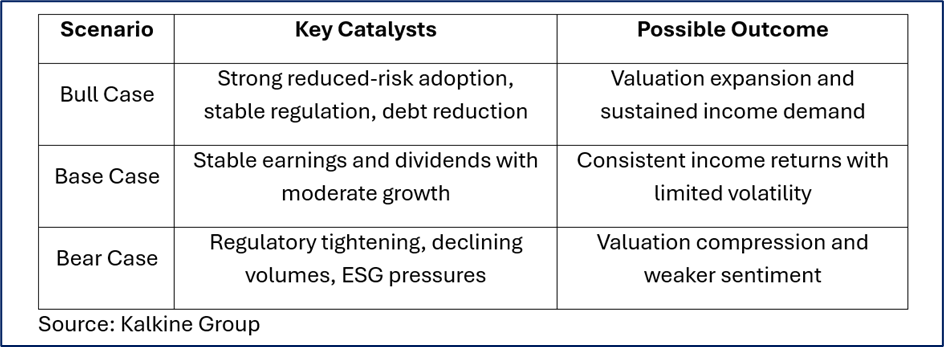
What Could Bull and Bear Scenarios Look Like for Investors?
What Risks Should Investors Monitor Closely?
Key uncertainties include:
- Regulatory and taxation changes
- Litigation risks
- Declining cigarette volumes
- Currency fluctuations
- Competitive pressure in reduced-risk products
- ESG-driven capital allocation shifts
FAQ
Is British American Tobacco a good dividend stock in 2026?
The company offers one of the higher dividend yields among FTSE 100 stocks, supported by strong cash flow, though risks remain.
Why did BAT stock rise in February 2026?
Defensive investor demand, dividend attractiveness, and macroeconomic expectations contributed to the share price increase.
Is the tobacco sector defensive during recessions?
Historically, tobacco demand has shown resilience during economic downturns.
What is BAT’s long-term strategy?
Transition toward reduced-risk nicotine products while maintaining strong cash generation.
Final Investment Perspective: Could BAT Remain Relevant for Investors in 2026 and Beyond?
British American Tobacco represents a combination of high dividend income, defensive sector exposure, global diversification, and transformation potential, making it particularly relevant for investors seeking stability during uncertain economic conditions. While structural industry challenges and regulatory risks remain important considerations, the company’s financial strength and strategic pivot toward reduced-risk products could support long-term resilience.
For income-focused investors, BAT may continue to attract attention as part of diversified portfolios aiming to balance yield and stability.


 Jun 29, 2026




 Please wait processing your request...