
 AU
AU
 CA
CA
 US
US
 NZ
NZ
 IND
IND

 UK
UK

 Share
Share
 X (Formerly Twitter)
 Whatsapp
 Facebook
 LinkedIn
 Telegram
 Email This Article
 Copy Link
 Summarize with AI
 Chat GPT
 Perplexity
Company Overview
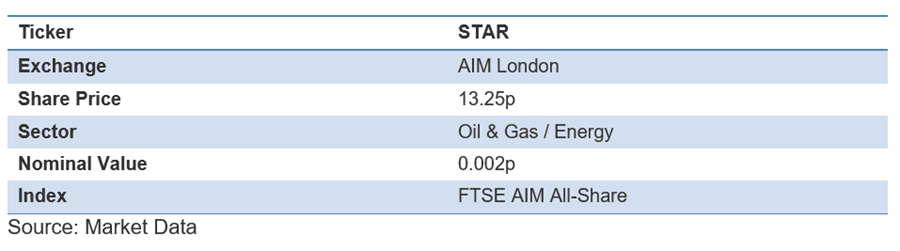
Star Energy Group PLC is an AIM-listed independent energy company engaged in oil and gas exploration and production activities. Operating within the upstream segment of the energy sector, the company focuses on identifying, developing, and extracting hydrocarbon resources. With a share price of 13.25 pence, Star Energy is positioned as a micro-cap energy stock, offering investors exposure to the high-risk, high-reward dynamics typical of small-cap exploration and production businesses. Its strategy centres on assembling and progressing a portfolio of assets across various development stages.
The company aims to build value by acquiring interests in prospective licences, conducting exploration programmes to define resource potential, and advancing successful discoveries toward production. Like many smaller energy firms, its asset mix and operational priorities may shift in response to commodity price movements, regulatory changes, and strategic opportunities. This adaptability is a key element of management’s approach in navigating the cyclical nature of the energy market.
Star Energy operates in a sector characterised by significant operational uncertainty but also by the possibility of substantial upside when exploration efforts succeed. The management team brings sector-specific expertise in technical evaluation, project execution, and corporate development. Investors are encouraged to focus on the company’s underlying asset base and growth prospects rather than nominal share characteristics, which primarily reflect historical capital structuring.
The broader global energy market is undergoing structural change as traditional hydrocarbon producers balance current energy demand with long-term transition pressures. For smaller companies such as Star Energy, managing this balance between near-term revenue opportunities and evolving policy and environmental considerations will be a defining factor in long-term performance.
2. Business Model and Revenue Streams
Star Energy follows the conventional exploration and production model, where shareholder value is created through discovering and developing commercially viable oil and gas reserves. The company acquires exploration licences with favourable geological prospects, conducts seismic and drilling programmes, and advances successful finds toward production. Revenue is generated through the sale of produced hydrocarbons, with pricing linked to global commodity benchmarks.
This model requires significant upfront capital investment, as exploration and drilling costs are incurred well before potential revenue generation. Exploration success rates are inherently uncertain, and only a limited proportion of drilled wells lead to commercially viable discoveries. This high-risk profile is particularly pronounced for smaller companies with concentrated portfolios, making careful capital management essential.
To manage exposure and capital intensity, Star Energy may hold both operated and non-operated interests, allowing participation in multiple projects while sharing risk with partners. Farm-in and farm-out agreements are common tools in this sector, enabling companies to exchange equity stakes to secure funding or technical expertise. Effective capital allocation, disciplined project selection, and access to financing are critical to long-term value creation.
3. Financial Performance and Valuation
At 13.25 pence per share, Star Energy’s valuation reflects the speculative characteristics typical of early-stage energy exploration companies. Financial performance is heavily influenced by commodity prices, exploration outcomes, and the development status of its asset portfolio. For companies at this stage, cash flow may be limited, and share price movements are often driven more by operational milestones and drilling results than by traditional financial metrics.
The balance sheet may include capitalised exploration expenditure and relatively modest tangible assets, with continued operations potentially reliant on access to equity markets. Investors should carefully monitor liquidity, funding requirements, and dilution risk associated with capital raising. The sustainability of exploration programmes depends on prudent financial management and the ability to secure funding under acceptable terms.
Valuation approaches for companies like Star Energy often rely on estimates of risked net asset value, taking into account geological potential, development costs, and probabilities of success. Comparisons with peer transactions and portfolio-based valuation methods are also commonly used. A meaningful discount or premium to estimated asset value can influence investor sentiment and inform risk-reward considerations.
4. Market Position and Competitive Landscape
Star Energy operates within a competitive environment populated by numerous small-cap exploration and production firms. Access to attractive acreage, technical capability, and funding availability are key differentiators in this fragmented market. Larger integrated energy companies possess scale and financial strength, but smaller firms can compete by focusing on niche opportunities or overlooked assets.
The broader commodity cycle significantly impacts investor appetite and project viability. Strong oil and gas prices tend to enhance exploration economics and improve access to capital, whereas price downturns can restrict financing and reduce development activity. The ongoing global energy transition introduces additional complexity, as fossil fuel producers face evolving policy frameworks and shifting investor sentiment. However, near- to medium-term energy demand continues to support the economic rationale for selected hydrocarbon developments.
5. Risk Factors
Star Energy faces substantial risks inherent to the exploration sector. Geological uncertainty remains the primary operational risk, as drilling programmes may not result in commercially viable discoveries. Even where resources are identified, technical and financial challenges associated with development can be significant.
Financial risk is elevated due to capital intensity and potential reliance on external financing, which may lead to shareholder dilution. Commodity price volatility directly affects project economics and overall valuation. Regulatory changes, environmental requirements, taxation policies, and geopolitical factors may further influence operational prospects. The small-cap AIM listing also introduces share price volatility and potential liquidity constraints, increasing investment risk.
6. Investment Outlook and Conclusion
Star Energy Group represents a speculative opportunity within the small-cap energy exploration sector. The potential upside from successful exploration and development can be considerable, but the probability of achieving such outcomes is uncertain. Investors must weigh the prospect of transformative discovery against the possibility of capital loss.
The investment case depends on the quality of the company’s asset portfolio, management execution, and the prevailing commodity environment. Careful analysis of licence terms, geological assessments, capital position, and funding strategy is essential before committing capital. As a high-risk investment, position sizing should remain proportionate to overall portfolio tolerance for volatility. For investors comfortable with the uncertainties of small-cap exploration and seeking leveraged exposure to energy price dynamics, Star Energy may offer opportunity, albeit with significant associated risk.


 Jun 08, 2026




 Please wait processing your request...