
 AU
AU
 CA
CA
 US
US
 NZ
NZ
 IND
IND

 UK
UK

 Share
Share
 X (Formerly Twitter)
 Whatsapp
 Facebook
 LinkedIn
 Telegram
 Email This Article
 Copy Link
 Summarize with AI
 Chat GPT
 Perplexity

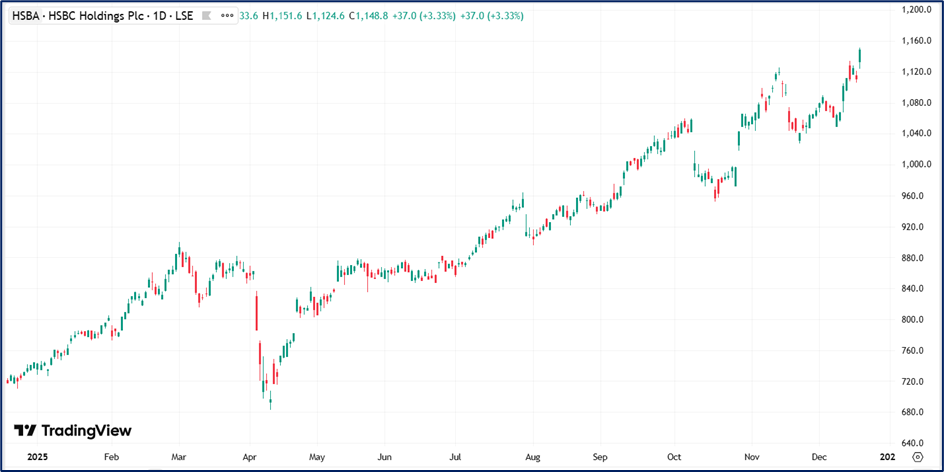
HSBC stock has jumped approximately 3% (outperforming a sluggish FTSE 100), driven primarily by a massive strategic catalyst: The Hang Seng Privatisation Progress.
- The Deal: HSBC is moving forward with its plans to buy out the remaining minority stake in its Hong Kong subsidiary, Hang Seng Bank, in a deal valued around $13.6bn.
- The Market Reaction: Investors are cheering the move. Why? It allows HSBC to capture 100% of the profits from its most lucrative Asian asset rather than sharing them. An independent committee recently deemed the deal "fair and reasonable," clearing a major hurdle.
- The "Safe Haven" Effect: While mid-caps and tech stocks wobbled this week, institutional money rotated into HSBC as a defensive fortress with a fat yield, pushing the price higher.
3 Key Drivers Fuelling the Rally
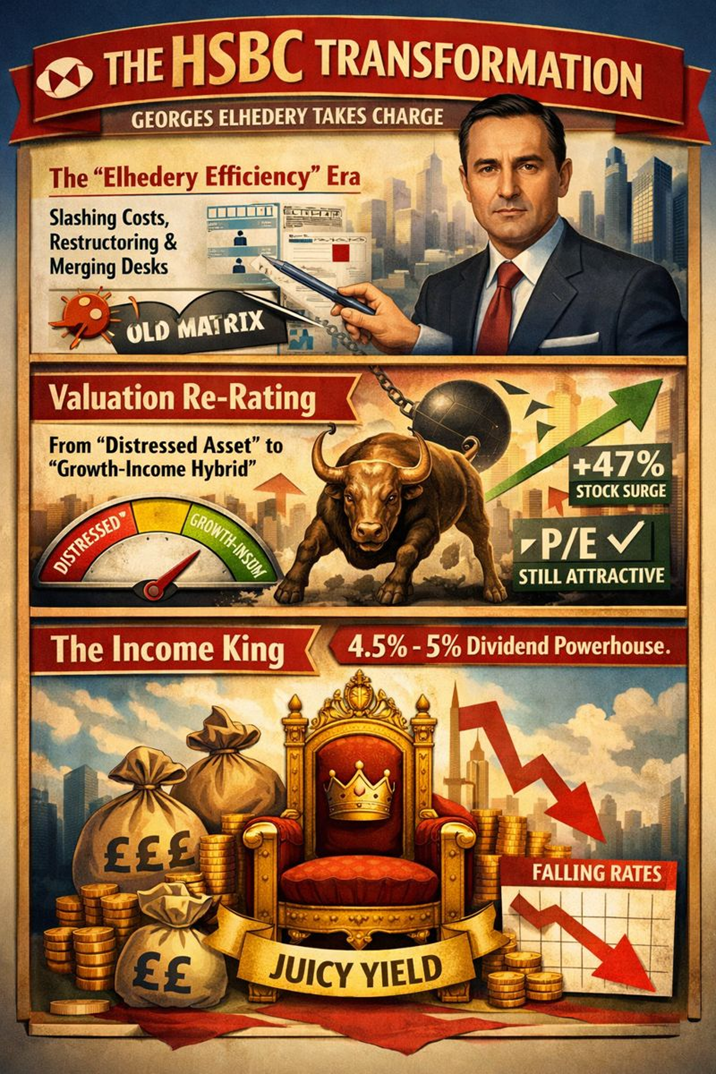
- The "Elhedery Efficiency" Era Since taking the reins, CEO Georges Elhedery has been ruthless. He isn’t just trimming fat; he is performing surgery. The bank is smashing its old "matrix" structure, reducing management layers, and merging trading desks to compete with Wall Street giants. The market loves efficiency, and HSBC is finally delivering it.
- Valuation Re-Rating For years, HSBC traded at a discount due to geopolitical fears. In 2025, that narrative is flipping. With the stock up ~47% over the last year, the market is re-rating HSBC from a "distressed asset" to a "growth-income hybrid." Even after the rally, the P/E ratio remains attractive compared to US peers, suggesting there’s still gas in the tank.
- The Income King Despite a temporary pause in buybacks to fund the Hang Seng deal, HSBC remains a dividend aristocrat. With a yield hovering around 4.5% - 5%, it pays investors to wait. In a world where UK interest rates are projected to fall (making savings accounts less attractive), that dividend yield looks juicy.
Source: Kalkine Group
Latest Business Model: The "East-West" Split
HSBC has radically overhauled its business model to survive a fragmented world. Gone is the complex global web. In its place is a simplified, four-pronged machine:
- Hong Kong: A standalone powerhouse focusing on the bank's profit engine.
- UK: A ring-fenced bank serving British retail and commercial clients.
- Corporate & Institutional Banking: A merged global unit to serve big cross-border clients (now including the newly unified trading desks).
- International Wealth: Chasing the nouveau riche in Asia and the Middle East.
The Goal: Stop the "London vs. Hong Kong" internal politics and let the Asian business run fast without being slowed down by UK regulations, and vice versa.
The Risks: What Could Kill the Rally?
- The "Buyback Pause" Hangover: To afford the Hang Seng buyout, HSBC has paused its popular share buybacks. If the deal drags on or gets expensive, investors addicted to those buybacks might jump ship.
- The China Factor: HSBC is betting everything on Asia. While China’s economy is stabilizing, any renewed property crisis or flare-up in Washington-Beijing tensions puts HSBC directly in the crosshairs.
- Falling Interest Rates: Banks love high interest rates because they earn more on loans (Net Interest Margin). As the Bank of England and the Fed cut rates in late 2025, HSBC’s "easy money" from margins will shrink, forcing them to rely on fees and trading profits.
Conclusion
HSBC is no longer just a "boring dividend stock." It is an aggressive restructuring play with a clear bet on Asian dominance. If the Hang Seng deal closes smoothly and the new streamlined structure cuts costs, the stock could break new highs in 2026. If the Hang Seng integration is messy or China falters, the stock could give back its 2025 gains.
Verdict: The ~3% pop is justified by the deal progress. For retail investors, HSBC offers a rare mix of defensive income and aggressive Asian growth—but you must be comfortable with the geopolitical rollercoaster.
Source: Trading View, 17 December 2025, 9:30 AM GMT


 Jun 24, 2026




 Please wait processing your request...