
 AU
AU
 CA
CA
 US
US
 NZ
NZ
 IND
IND

 UK
UK

 Share
Share
 X (Formerly Twitter)
 Whatsapp
 Facebook
 LinkedIn
 Telegram
 Email This Article
 Copy Link
 Summarize with AI
 Chat GPT
 Perplexity
The Mega-Trend: Tokenization Shifts from Hype to $30 Trillion Reality
The financial world is undergoing a tectonic shift, and its epicenter is the London Stock Exchange Group (LSEG). LSEG is not just exploring blockchain; it has officially launched its Digital Markets Infrastructure (DMI) platform, a live, regulated system designed to tokenize real-world assets (RWAs) starting with the vast, inefficient landscape of private funds. This isn't a future vision—it's an operational reality.
Market forecasts are aggressive: the RWA tokenization market, currently valued in the tens of billions, is projected by major institutions like Standard Chartered to swell to a staggering $30 trillion by 2034. The question for the UK’s financial sector in 2026 is no longer if tokenization will happen, but how fast LSEG’s DMI can capture market share against entrenched scepticism and rising global competition.

2026 Outlook & LSEG's Core Strategy: Frictionless Adoption
LSEG’s 2026 strategy is built on a single, compelling promise to its institutional clients: efficiency without disruption.
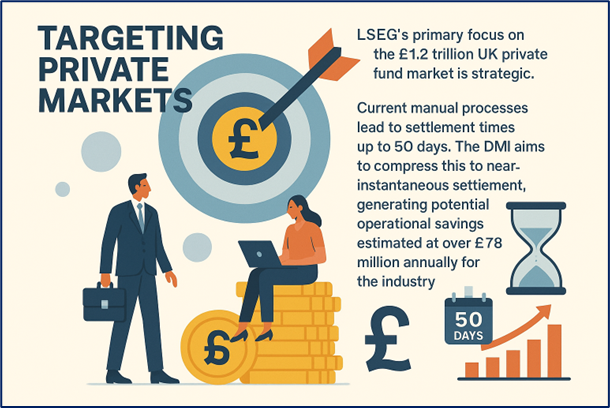
- Targeting Private Markets: LSEG’s primary focus on the £1.2 trillion UK private fund market is strategic. Current manual processes lead to settlement times up to 50 days. The DMI aims to compress this to near-instantaneous settlement, generating potential operational savings estimated at over £78 million annually for the industry.
Source: Kalkine Group
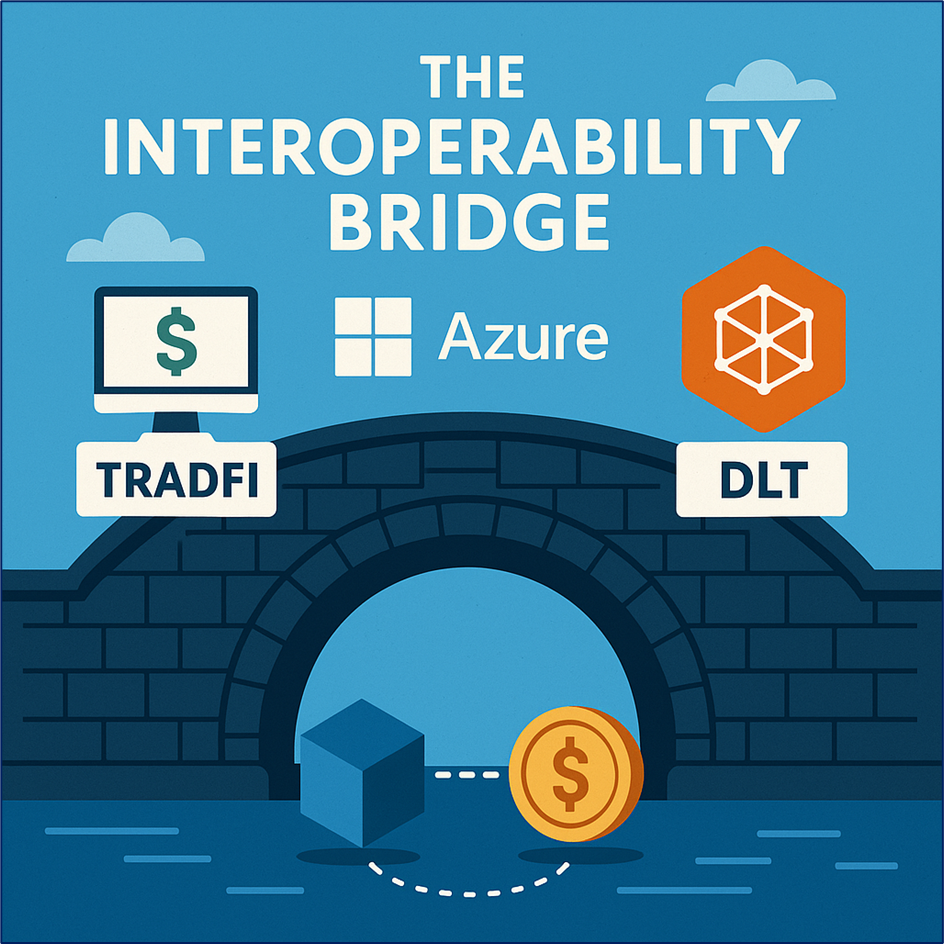
- The Interoperability Bridge: The platform, built in partnership with Microsoft Azure, prioritizes interoperability. This means clients don't have to overhaul their legacy systems or choose between TradFi and DLT; they can "plug in" to the DMI, allowing their digital and traditional assets to co-exist and interact. This low-friction adoption model is designed to silence the loudest critics of blockchain implementation complexity.
Source: Kalkine Group
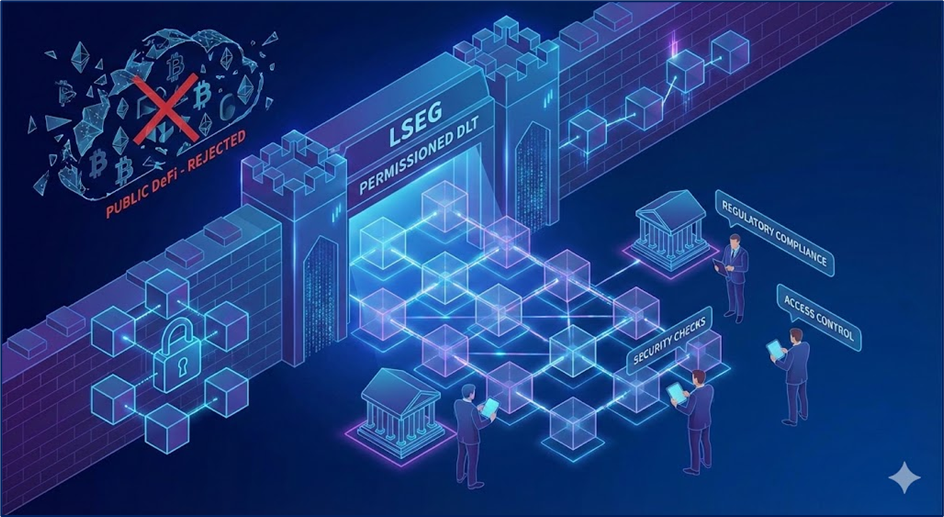
- The Power of Permissioned DLT: To meet regulatory and security demands, LSEG is using a permissioned Distributed Ledger Technology (DLT). This ensures that while the system offers blockchain’s speed and transparency, the required control, compliance checks, and access restrictions for institutional finance are rigidly enforced—a necessary trade-off that rejects the anarchist ideals of public DeFi.
Source: Kalkine Group
Sceptic’s Corner: Critics argue this centralized, "permissioned" approach compromises the true value of decentralization, reducing LSEG's offering to a highly efficient database rather than a truly transformative technology. The ultimate test will be DMI's adoption rate beyond initial clients like MembersCap and Archax.
The Banker’s Pivot: Hybrid Strategy for Digital Assets
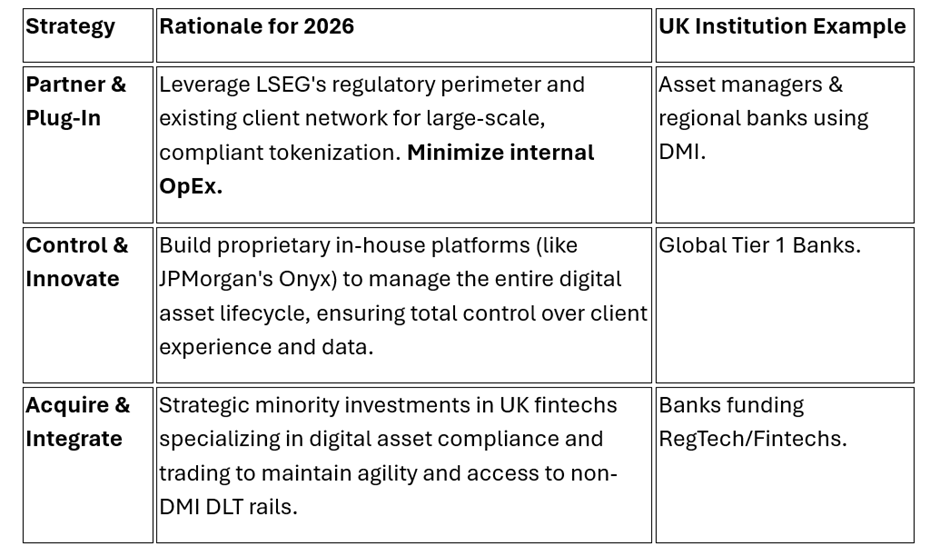
For major UK banks and global asset managers, LSEG’s DMI is a catalyst that forces a definitive digital strategy by 2026. The dominant institutional approach is no longer Build vs. Buy, but Partner vs. Control.
Source: Kalkine Group
The overwhelming trend is the Hybrid Model: institutions will use LSEG for the bulk of their large-scale, regulated private fund tokenization while developing niche, proprietary solutions for specialised or exotic digital assets.
UK Sectors & Stocks to Monitor: Beyond the Exchange
The success of LSEG's DMI platform will not be confined to the exchange; it signals a fundamental restructuring of the UK's financial services industry. Observation of the following sectors offers insight into the overall momentum of the digital transition:
- Financial Infrastructure & Data:
- LSEG (London Stock Exchange Group): The direct indicator. Watch for metrics on Assets Under Tokenization (AUT) on the DMI platform, client onboarding milestones, and expansion into asset classes beyond private funds (e.g., fixed income).
- Strategic Partners (Microsoft Azure): Continued, deep collaboration signals commitment to scalability. LSEG's integration of AI with the DMI platform will drive next-generation workflow efficiencies.
- Specialist Regulated Fintech:
- Archax: As an FCA-regulated digital asset exchange and one of the DMI’s first clients, its growth and transaction volumes on the DMI will be a key barometer of platform activity and the nascent secondary market for tokenized assets.
- Blockchain/RegTech Firms (e.g., Elliptic, Block Scholes): Demand for specialist compliance, AML, and on-chain analytics services is soaring. The growth of these firms signals the maturing of the regulated digital asset ecosystem required to support LSEG’s vision.
- Asset & Wealth Managers:
- Watch the large cap, listed UK asset managers. Explicit announcements of tokenized product launches on the DMI platform—especially in areas like property funds or infrastructure—will indicate genuine institutional belief in the cost-saving and liquidity benefits.
Conclusion: The Next Regulatory Battleground
LSEG’s blockchain initiative is a decisive move to protect its central role in a rapidly evolving global financial system. The launch of the DMI platform has ended the debate over blockchain’s viability in traditional finance; the conversation has shifted to adoption rate and regulatory clarity.
As the UK government and the Bank of England actively support DLT pilots (such as the DIGIT Treasury bond project), a clear regulatory framework is emerging. The long-term success of the DMI, and by extension the UK’s global position in digital finance, hinges on its ability to scale across asset classes and convince a sceptical, cautious banking sector that the digital future offers not just incremental efficiency, but a necessary foundation for the next $30 trillion in capital formation.


 Jun 24, 2026




 Please wait processing your request...