
 AU
AU
 CA
CA
 US
US
 NZ
NZ
 IND
IND

 UK
UK

 Share
Share
 X (Formerly Twitter)
 Whatsapp
 Facebook
 LinkedIn
 Telegram
 Email This Article
 Copy Link
 Summarize with AI
 Chat GPT
 Perplexity

In a cliffhanger 5-4 vote that mirrored the tension of a penalty shootout, the Bank of England (BoE) delivered a festive boost on December 18, 2025, slashing the base rate to 3.75%. After a gruelling era of "higher for longer," the central bank has signalled that the dragon of inflation—now at a cool 3.2%—is finally losing its fire.
The Sector Heatmap: Who Wins and Who Wobbles?
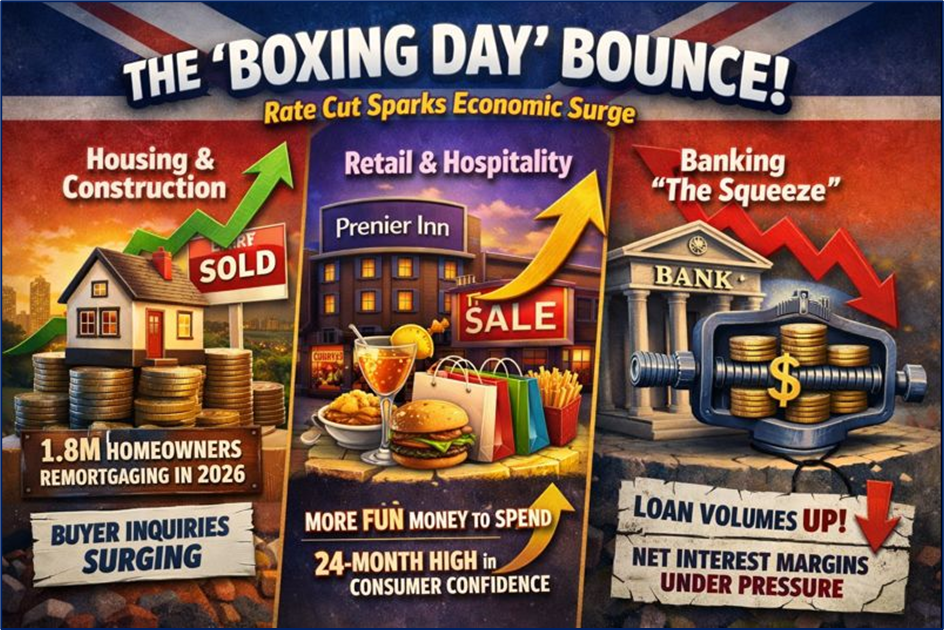
The shift to 3.75% isn't just a number; it’s a massive redistribution of wealth from savers to spenders. Here is where the smart money is moving:
Source: Kalkine Group
- Housing & Construction (The "Boxing Day" Bounce): With 1.8 million homeowners facing remortgaging in 2026, this cut provides a crucial safety net. Analysts are already predicting a "Boxing Day Bounce" in buyer inquiries.
- Retail & Hospitality: Lower mortgage payments mean more "fun money." Discretionary spenders like Whitbread (owner of Premier Inn) and Currys are already seeing a spike in sentiment as consumer confidence hits a 24-month high.
- Banking (The Squeeze): It’s a double-edged sword for lenders. While a busier housing market boosts loan volumes, "net interest margins" (the profit banks make on the gap between savings and lending) are under pressure.
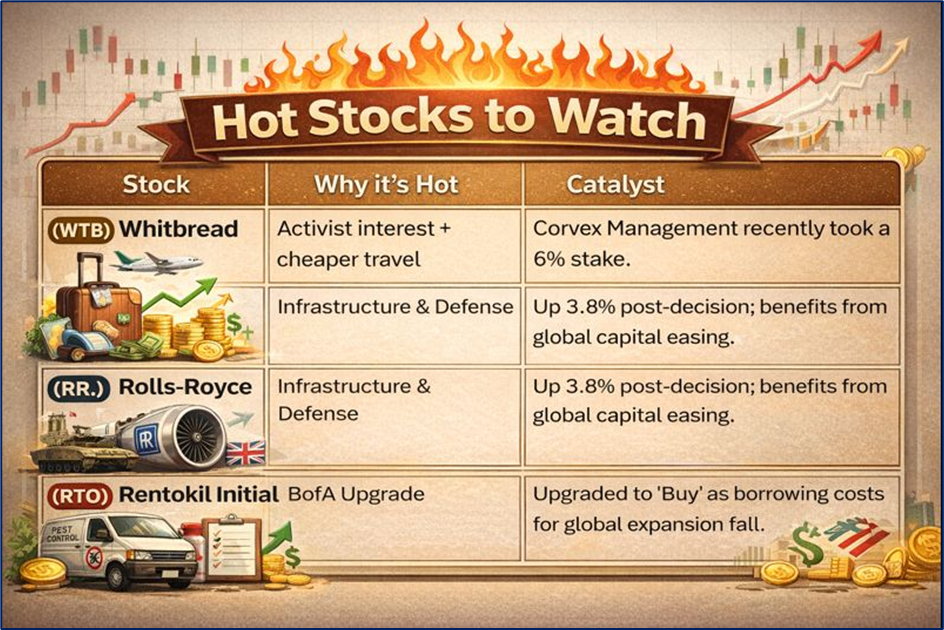
Stocks to Watch in 2026
Source: Kalkine Group
Fund Manager Opinion: "Cautious Optimism"
The consensus among City heavyweights is that we have entered a "Hawkish Cut" phase.
"This is a Christmas rate cut designed to restrain 'animal spirits' rather than ignite them," says Laith Khalaf, head of investment analysis at AJ Bell. "The 5-4 split shows the Bank is still terrified of a U-shaped inflation rebound."
Ben Nicholl of Royal London Asset Management notes that while the "disinflationary process" is on track, fund managers are pivoting toward shorter-dated bonds and mid-cap growth stocks (FTSE 250), which historically outperform when rates start their descent.
The 2026 Narrative: A "Soft Landing" or a "Slow Crawl"?
The policy outlook for 2026 is becoming a "closer call" with every meeting.
- Rate Floor: Most economists expect the BoE to pause in February but eye a terminal rate of 3.25% to 3.00% by late 2026.
- The "Neutral" Target: The Bank is feeling its way toward a "neutral" rate (where it neither stimulates nor restricts growth), estimated between 3% and 3.5%.
- The Labor Risk: The biggest wildcard for 2026 is the job market. With unemployment at 5.1%, the BoE may be forced to cut faster if the "soft landing" turns into a "hard slump."
Conclusion: Is it Time to Dive In?
The December cut to 3.75% is the clearest signal yet that the UK's "Great Reset" is underway. While the Bank remains cautious, the trend is undeniable: The era of peak interest is over. For retail investors, the strategy for 2026 is no longer about hiding in cash—it's about identifying the domestic UK champions that have been suppressed by high borrowing costs. The "Christmas Pivot" has laid the tracks; now it's time to see which stocks have the engine to pull ahead.


 Jun 03, 2026




 Please wait processing your request...