
 AU
AU
 CA
CA
 US
US
 NZ
NZ
 IND
IND

 UK
UK

 Share
Share
 X (Formerly Twitter)
 Whatsapp
 Facebook
 LinkedIn
 Telegram
 Email This Article
 Copy Link
 Summarize with AI
 Chat GPT
 Perplexity
What Powered the FTSE 100’s Strongest Rally in Early 2026 — and What Comes Next?
Opening Snapshot: What Happened to the FTSE 100 on 4 Feb 2026?
On 4 February 2026, the UK’s benchmark FTSE 100 Index climbed 0.85% to close at 10,402.34, marking a fresh record closing high. The rally was driven by outperformance in healthcare, insurance, and other value-oriented sectors, while global technology stocks lagged, reinforcing a decisive rotation away from growth and into defensives.
Why Did the FTSE 100 Rally So Strongly?
Key Drivers Behind the 4 Feb 2026 Record Close
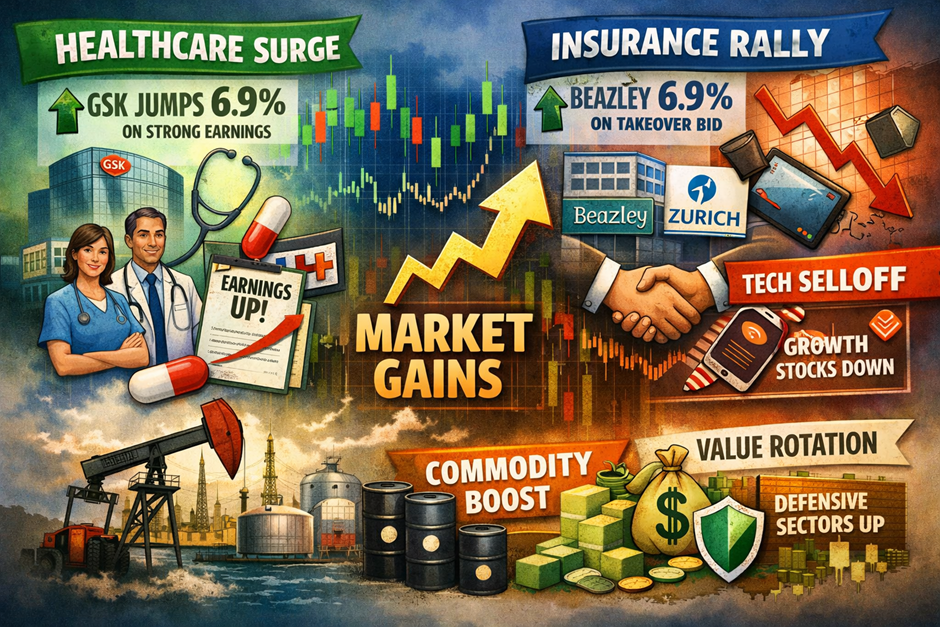
- Healthcare stocks led the charge, with GlaxoSmithKline (GSK) jumping nearly 6.9% after delivering better-than-expected earnings and an upgraded strategic outlook, pushing shares to multi-year highs.
- Insurance stocks surged, highlighted by Beazley, which rallied around 6.9% following reports of an improved £8 billion takeover approach from Zurich Insurance.
- Broad rotation into value and defensive sectors accelerated as investors reduced exposure to global technology and high-beta growth names.
- Improved commodity sentiment supported energy stocks, adding further upside momentum to the index.
Source: Kalkine Group
Which Sectors Lagged the FTSE 100?
Areas Under Pressure
- Technology and data-driven stocks underperformed, mirroring global weakness in growth equities.
- AI-linked disruption fears and valuation concerns triggered profit-taking across tech-heavy global benchmarks, weighing on UK-listed growth names.
Macro & Central Bank Backdrop
- Investors closely monitored expectations around the Bank of England, as cooling inflation trends contrasted with still-resilient UK services activity.
- Mixed US economic data and persistent weakness in global tech stocks spilled over into broader risk sentiment, reinforcing defensive positioning.
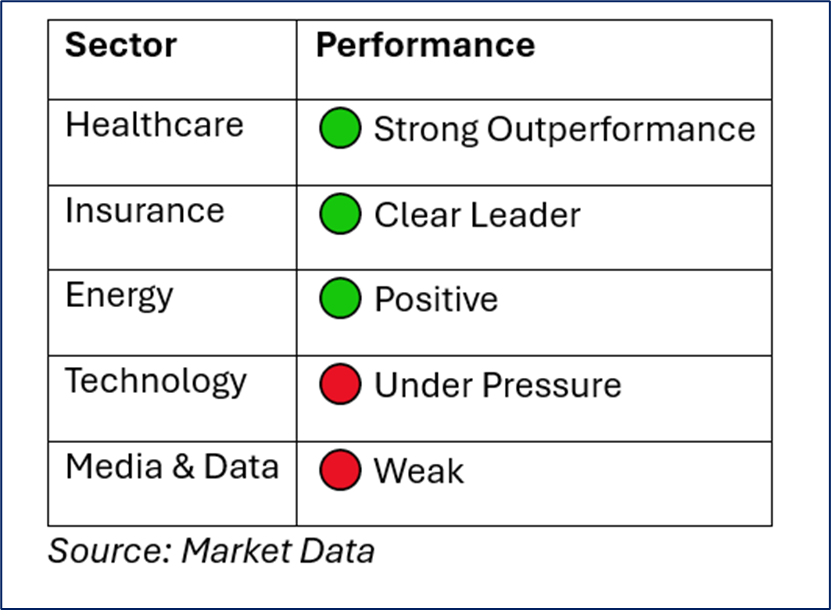
FTSE 100 Sector Performance Snapshot — 4 Feb 2026
Top FTSE 100 Gainers — and the Catalysts
- GlaxoSmithKline (GSK): Earnings beat, resilient cash flows, and a positive long-term growth narrative.
- Beazley: Sharp re-rating on takeover premium expectations.
- Energy & non-life insurers: Benefited from value rotation, yield appeal, and improving macro confidence.
FTSE 100 Decliners — What Held Them Back?
- Technology-exposed names: Continued sell-offs tied to global AI and valuation concerns.
- Momentum-driven growth stocks: Lagged as capital rotated toward income and defensive exposure.
Cross-Asset Market Dynamics
Economy
- UK services activity remained robust, while inflation moderation complicated near-term policy expectations.
- Global growth signals stayed mixed, reinforcing selective risk appetite.
FX & Commodities
- Sterling traded firm, supported by UK equity inflows.
- Gold rebounded sharply following recent pullbacks, reflecting renewed demand for defensive assets.
Global Markets
- International equities were mixed: healthcare and energy outperformed, while technology stocks remained volatile.
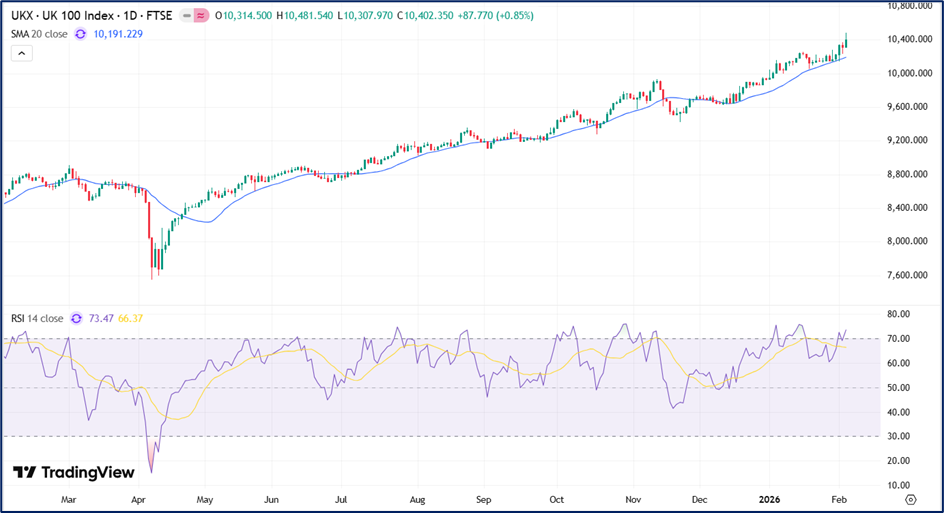
FTSE 100 Technical Outlook (as of 4 Feb 2026)
Source: Trading View
- Trend: Index holding well above key support in the 10,150–10,250 zone.
- Momentum: Consecutive record closes signal sustained bullish structure.
- Risk factors: Any escalation in global tech sell-offs or volatility spikes could test short-term sentiment.
FTSE 100 Outlook: What Should Investors Watch?
Short Term (Weeks)
- Continued rotation into defensives could keep the FTSE near record highs.
- Downside risks stem from global tech shocks or unexpected macro data.
Medium Term (Months)
- Bank of England policy clarity and inflation trends remain pivotal.
- Earnings strength in healthcare, insurers, and financials underpins resilience.
Long Term (12 Months+)
- Attractive dividend yields, global revenue exposure, and valuation support strengthen the FTSE 100’s appeal versus growth-heavy peers.
Scenario Analysis
Bull Case
- Ongoing earnings surprises in defensive sectors
- Supportive or neutral central bank policy
- Accelerating rotation from growth into value
Bear Case
- Deepening global technology sell-off
- Rising geopolitical or macro risk
- Inflation re-acceleration forcing tighter policy
Investor Playbook by Time Horizon
Short Term:
- Track sector rotation signals and macro releases
Medium Term:
- Balance portfolios with healthcare and insurance exposure
Long Term:
- Focus on high-quality FTSE dividend stalwarts and earnings durability
Frequently Asked Questions
Why did the FTSE 100 rise on 4 February 2026?
Healthcare and insurance stocks surged, offsetting weakness in technology shares.
Which sectors led and lagged?
Healthcare, insurance, and energy outperformed, while technology and media stocks lagged.
How do global factors influence the FTSE 100?
Global tech volatility, inflation trends, and central bank expectations remain key drivers.
Final Takeaway: What Does the FTSE 100’s Record Close Signal?
The FTSE 100’s move to 10,402.34 on 4 February 2026 highlights a clear investor preference for value, income, and defensive earnings amid global technology volatility.
As central bank decisions and macro data loom, the index appears structurally well-positioned—so long as defensive leadership continues and global risk sentiment remains contained.


 Jun 03, 2026




 Please wait processing your request...