Kalkine's Global Tariff Report offers independent, data-driven analysis of key global sectors impacted by tariff adjustments. It evaluates the potential implications these changes may have for equity valuations within those industries. The report prioritizes trade-sensitive sectors, which typically face increased investor scrutiny during periods of tariff uncertainty, while also identifying defensive and countercyclical segments that demonstrate resilience or potential for outperformance amidst global trade disruptions.
As illustrated in the table below, several key sectors in different countries are directly impacted by the recent tariff announcement from President Trump.
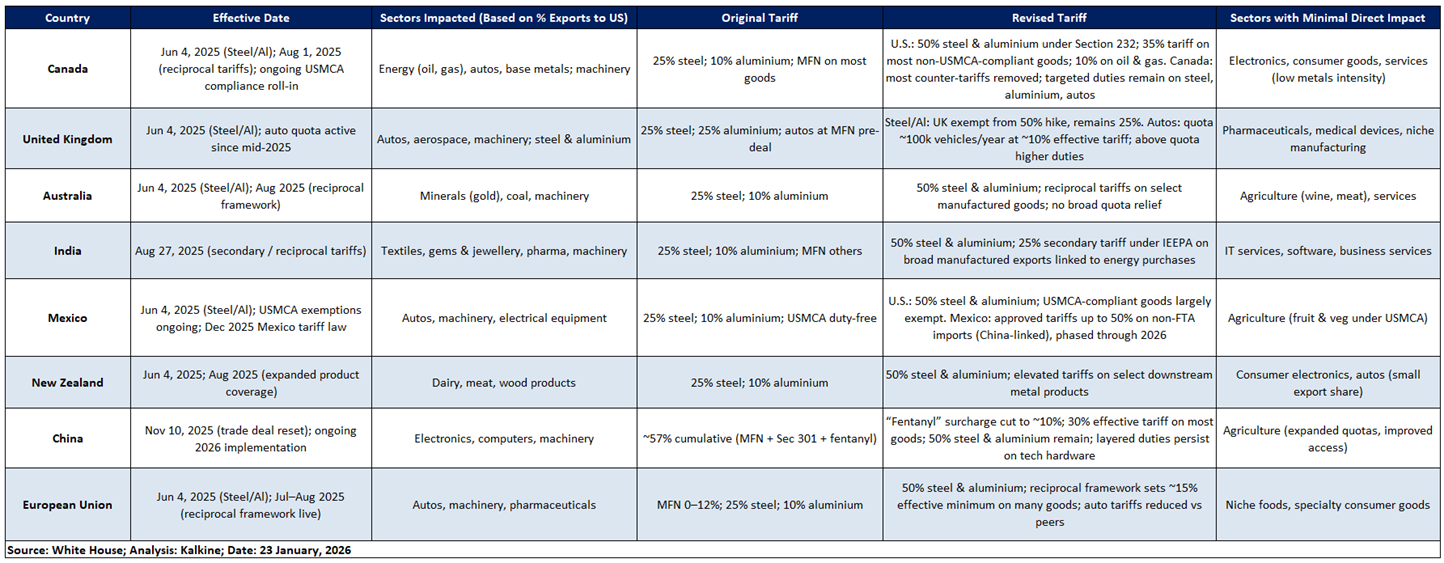

Key Developments
Canada
- The ~35% U.S. tariff on non-USMCA-compliant Canadian imports, effective 1 August 2025, remains firmly in place.
- USMCA-compliant goods continue to be exempt, containing the impact on integrated supply chains such as autos, energy, and advanced manufacturing.
- S.–Canada trade tensions remain elevated but stable; Ottawa continues to favour targeted responses and legal channels rather than broad retaliation.
- Trump escalated trade rhetoric, threatening 100% tariffs on all Canadian exports to the U.S. if Canada deepens trade ties with China. The warning follows a new Canada–China agreement to lower select trade barriers, including Canada allowing 49,000 Chinese EVs at ~6% tariffs in exchange for expected Chinese tariff cuts on Canadian canola. The move signals a modest pivot in Canadian trade policy and adds headline-driven downside risk to Canada’s U.S.-exposed exporters into 2026.
India
- S. tariffs on certain Indian exports remain unchanged as of January 24, 2026, keeping pressure on U.S.-facing sectors.
- Bilateral U.S.–India negotiations are ongoing, but no formal agreement or tariff-reduction timeline has been announced.
- In parallel, India and the EU are expected to announce the conclusion of a long-negotiated free trade agreement, which could materially improve market access for Indian exports and partially offset U.S. tariff headwinds.
- As a result, India’s trade strategy is increasingly pivoting toward diversification away from U.S.-centric exposure.
China
- The reduced “fentanyl” tariff of ~10%, effective 10 November 2025, remains in place, alongside the ~10% reciprocal tariff extension through November 2026.
- However, layered tariffs (Section 301, Section 232, and related measures) continue to keep effective U.S. tariffs on many Chinese goods elevated near ~29–30%.
- The tariff truce remains intact, with escalation deferred rather than reversed, offering stability but no meaningful relief.
- Delays to new, narrowly targeted U.S. semiconductor tariffs have eased near-term supply-chain stress but preserved longer-term policy risk.
European Union
- The U.S.–EU trade framework remains intact, effectively capping most EU-origin goods at a ~15% maximum combined tariff.
- Autos and auto parts continue to face ~15% tariffs under the agreed quota-based structure, reduced from ~27.5% earlier in 2025.
- The European Commission has moved to extend the suspension of a €93bn retaliatory tariff package against the U.S. by six months, signalling a continued preference for de-escalation despite political tensions.
- Negotiations on steel, aluminium, semiconductors, and other strategic sectors remain unresolved, keeping selective tariff risk alive into early 2026.

In October 2025, Canada’s trade position softened after September’s improvement. Total exports rose modestly to about CAD ~85.7 bn, driven by a 2.1% increase in goods exports, largely supported by another decent month for gold, despite a 0.4% decline in service exports to CAD ~20.1 bn. Imports climbed more sharply to roughly CAD ~85.7 bn, as merchandise imports rebounded 3.4% on broad-based strength in machinery, electronics, and metal products, even as service imports fell 1.2% to CAD ~19.6 bn. As a result, Canada’s combined goods and services balance shifted from a surplus of CAD ~0.6 bn in September to a small deficit of around CAD ~0.1 bn in October, reflecting healthy import momentum and a narrower surplus with the United States.
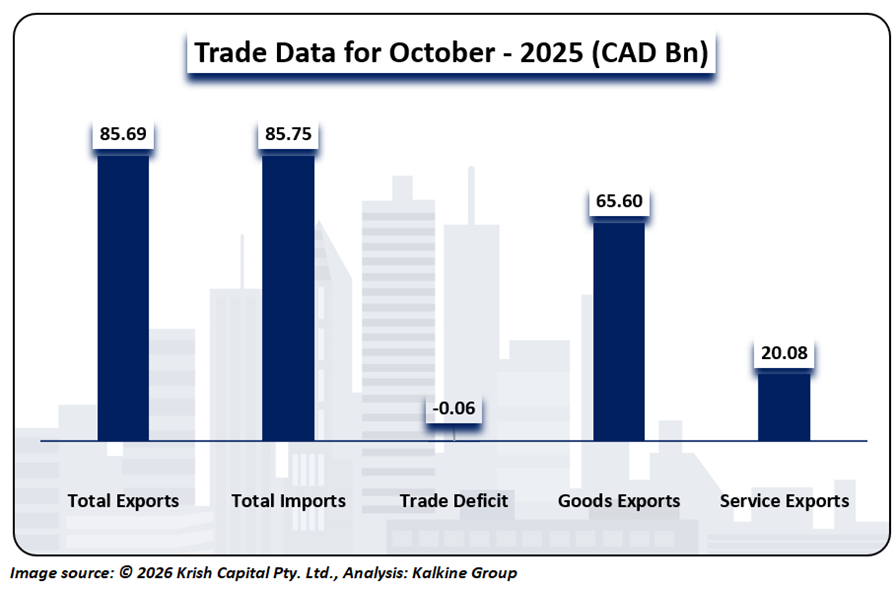

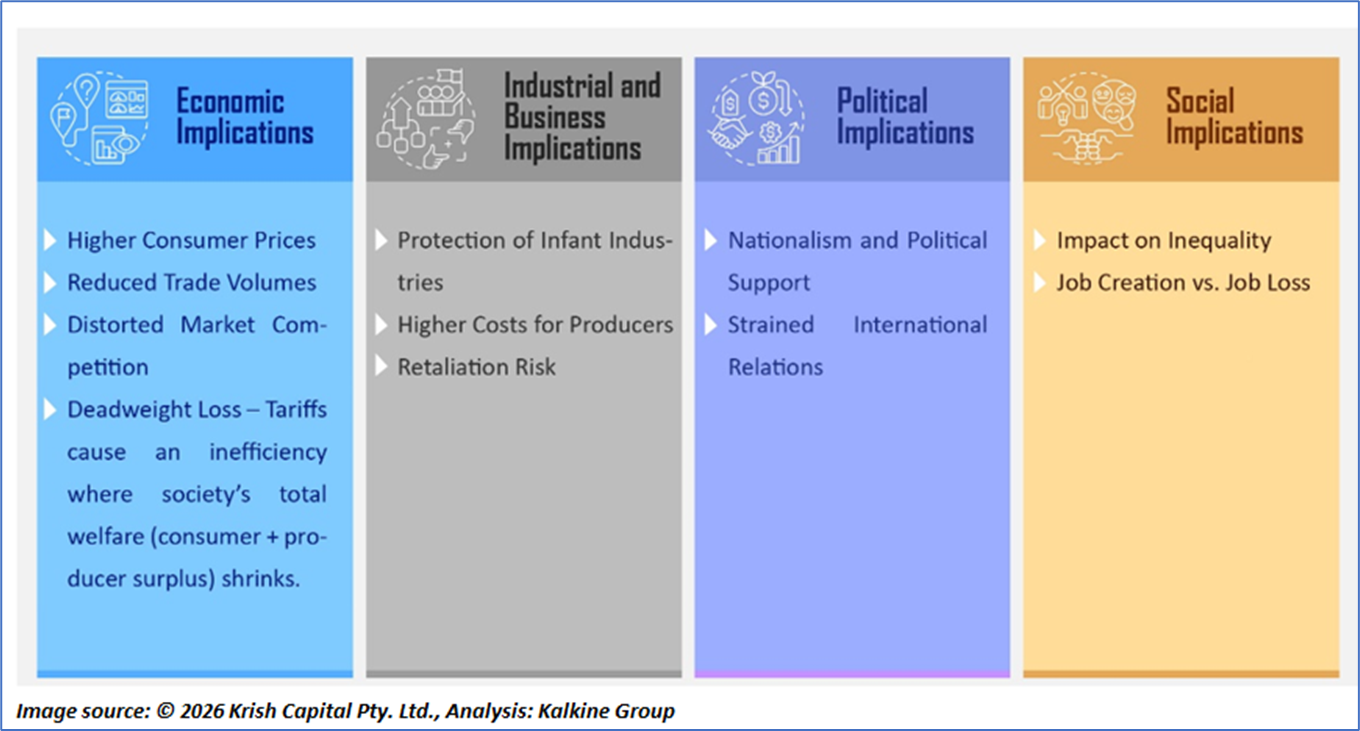

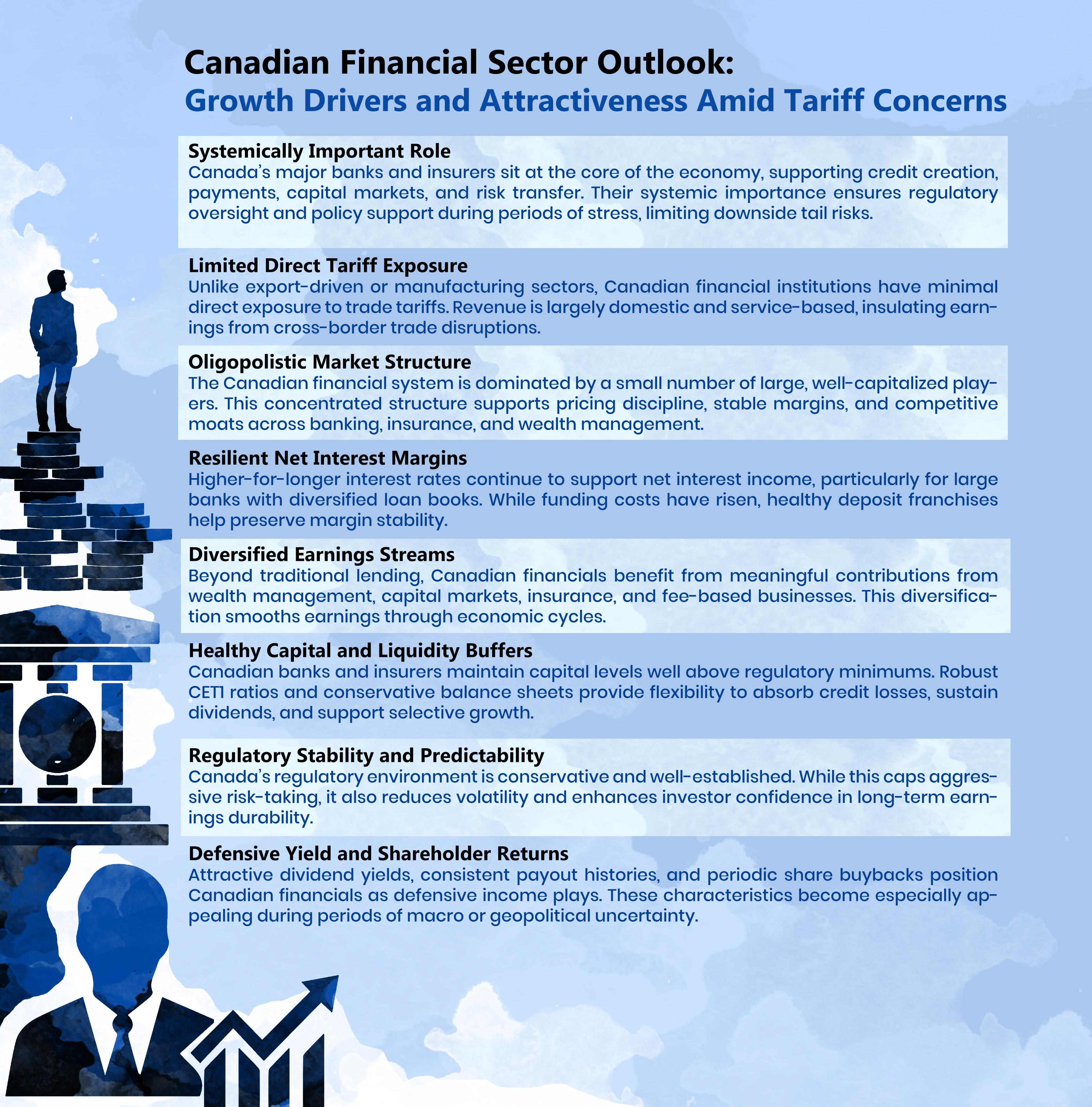
Image source: © 2026 Krish Capital Pty. Ltd., Analysis: Kalkine Group

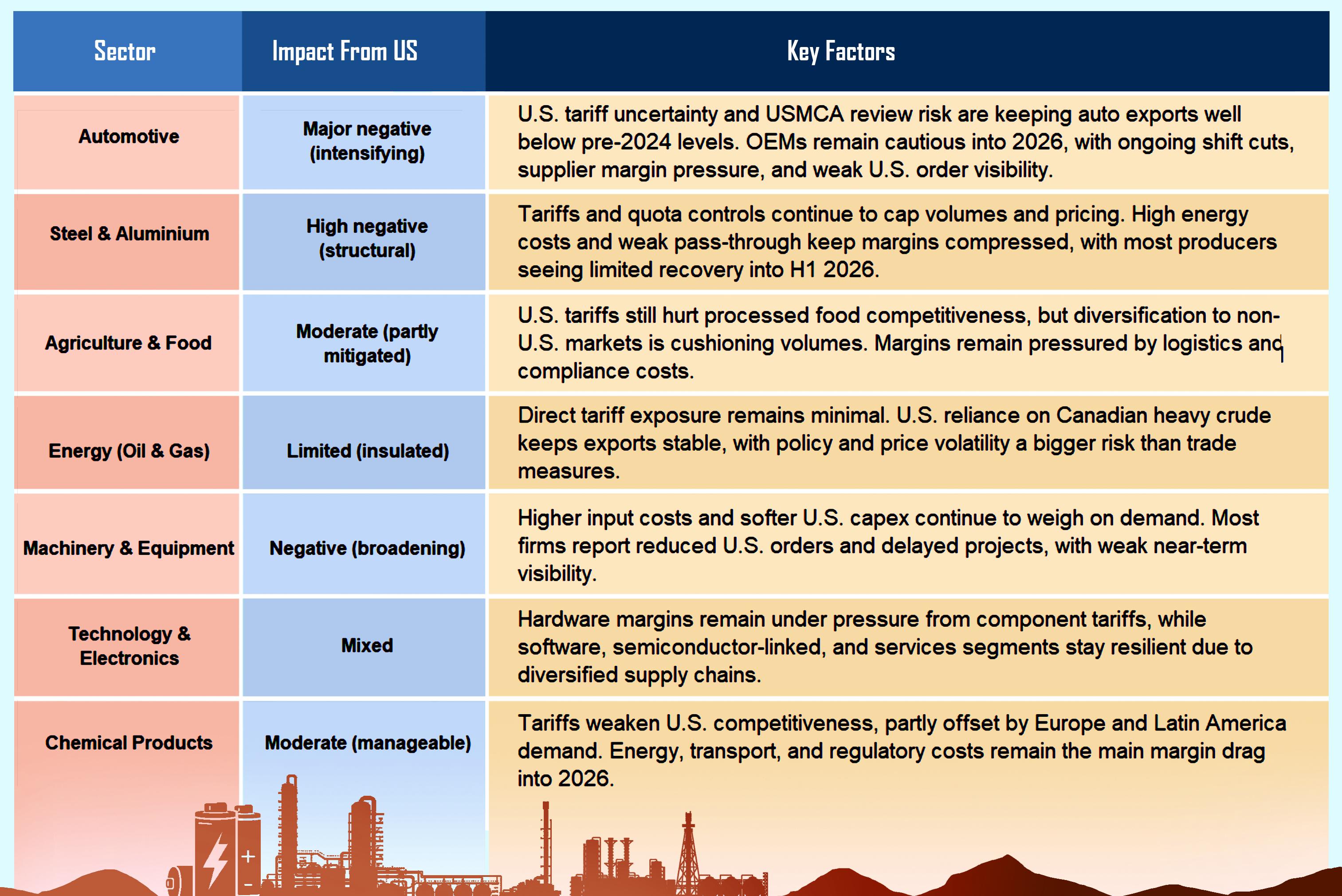
Image source: © 2026 Krish Capital Pty. Ltd., Analysis: Kalkine Group
Amid elevated Market Volatility and Tariff pressures, Intact Financial Corp (TSX: IFC) stands out as our defensive pick within the financial sector, supported by rigorous fundamental and technical research.
Section1: Company Overview and Fundamental Insights:

Intact Financial Corp (TSX: IFC) is a property and casualty insurance company that provides written premiums in Canada. The company distributes insurance under the Intact Insurance brand through a network of brokers and a wholly-owned subsidiary, BrokerLink, and directly to consumers through Belairdirect. Most of the company's direct premiums are written in the personal automotive space. Intact directly manages its investments through subsidiary Intact Investment Management. The vast majority of these invested assets are fixed-income securities. Its asset mix is designed to generate interest and dividend income.
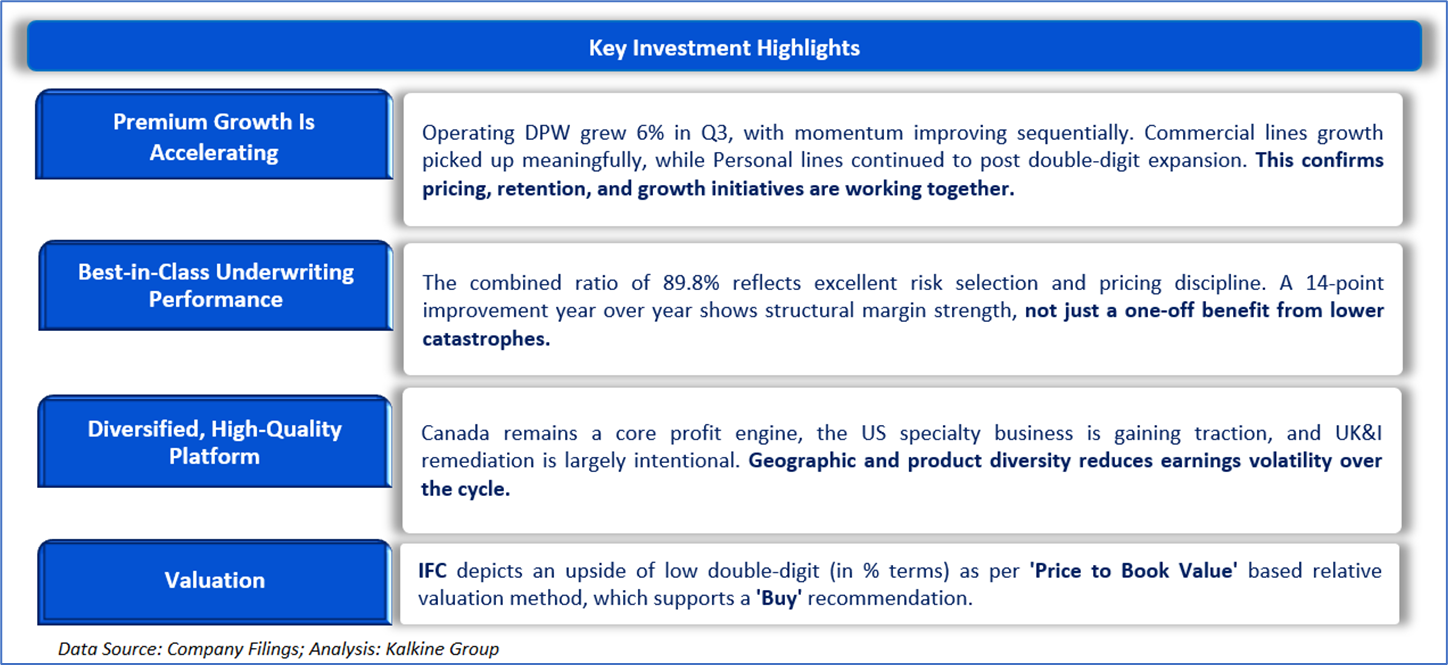
Kalkine’s Global Tariff Report covers the Investment Highlights, Key Financial Metrics, Risks, Technical Analysis along with the Valuation, Target Price, and Recommendation on the stock.
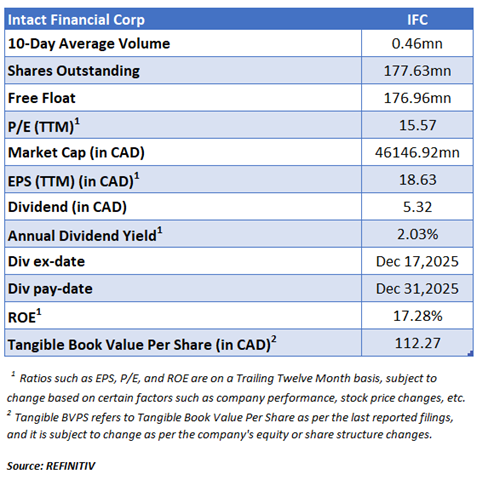


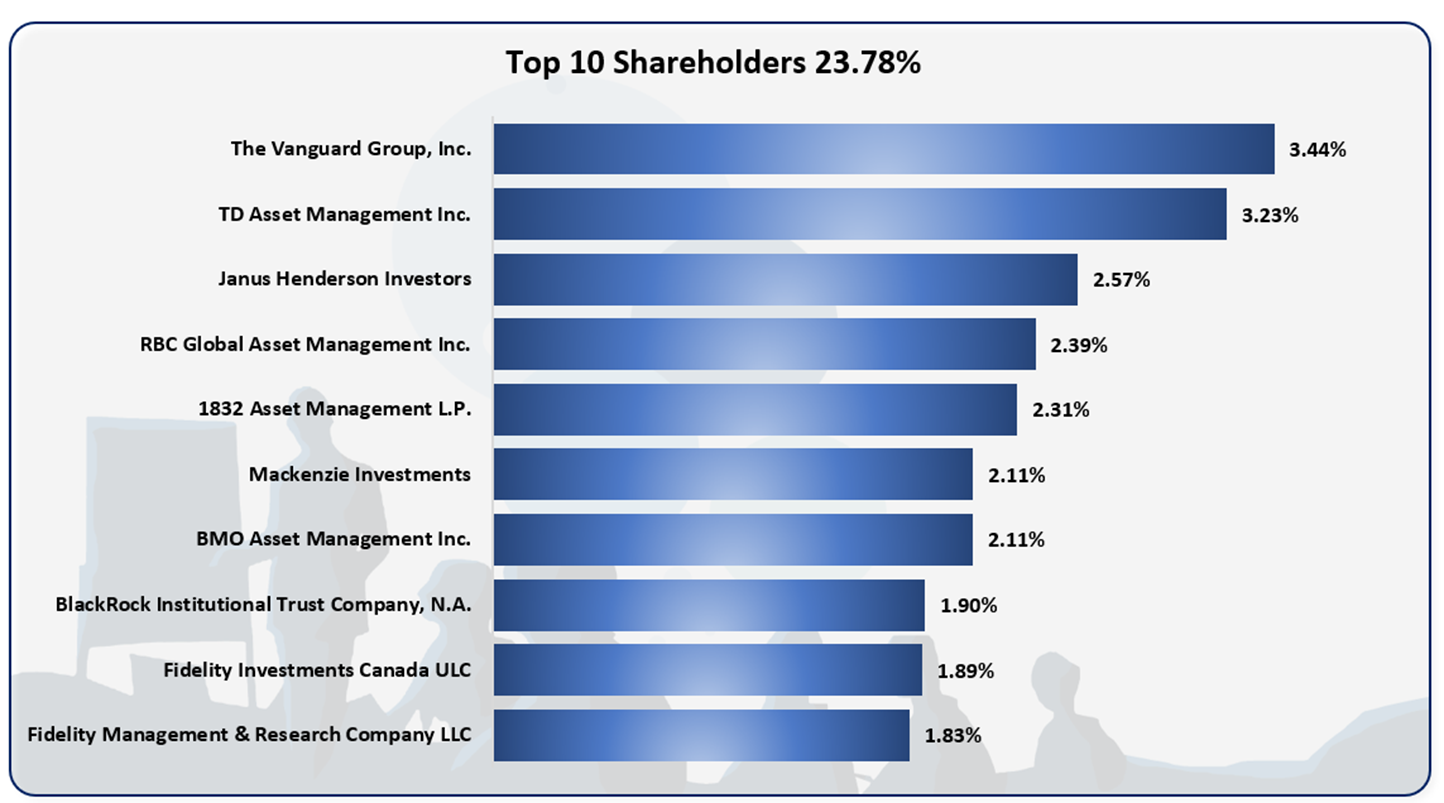
The top 10 shareholders together form ~23.78% of the total shareholding. The Vanguard Group, Inc. and TD Asset Management Inc. hold a maximum stake in the company at ~3.44% and ~3.23%, respectively.

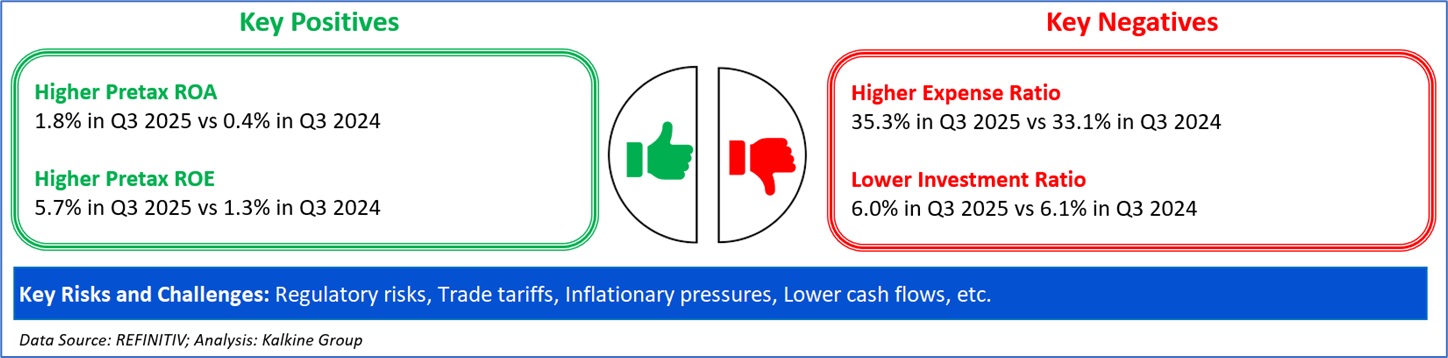
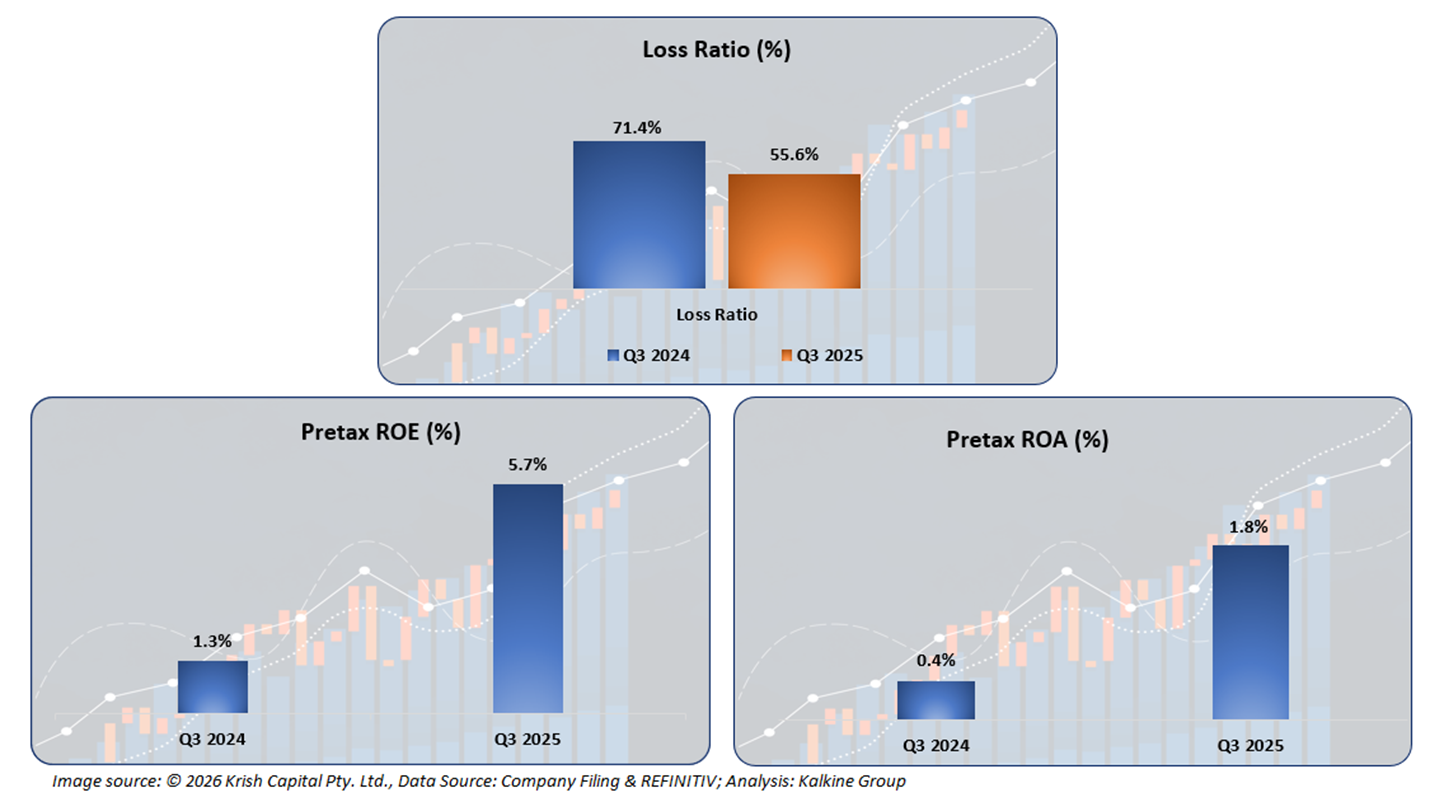
The company reported rising financials in Q3 2025, where it clocked healthy growth under its Pretax ROE, which is a key positive. Furthermore, it witnessed elevated Pretax ROA and reducing Loss Ratio, displaying the company’s efficiency.
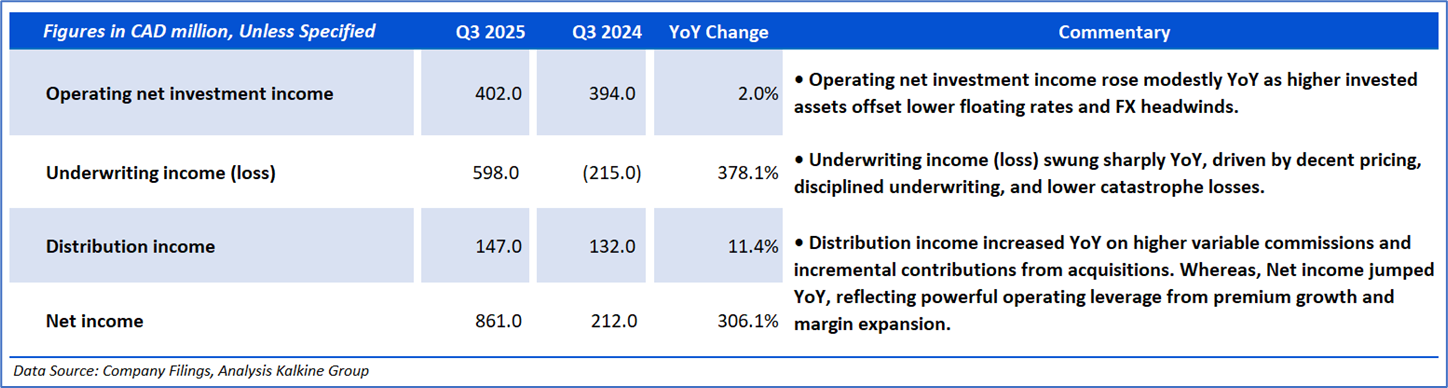
Section 2: Business Updates and Financial Highlights

The picture below gives an overview of the company’s recent activities, such as an announcement regarding Capital Strengthened Through Preferred Share Issuance.


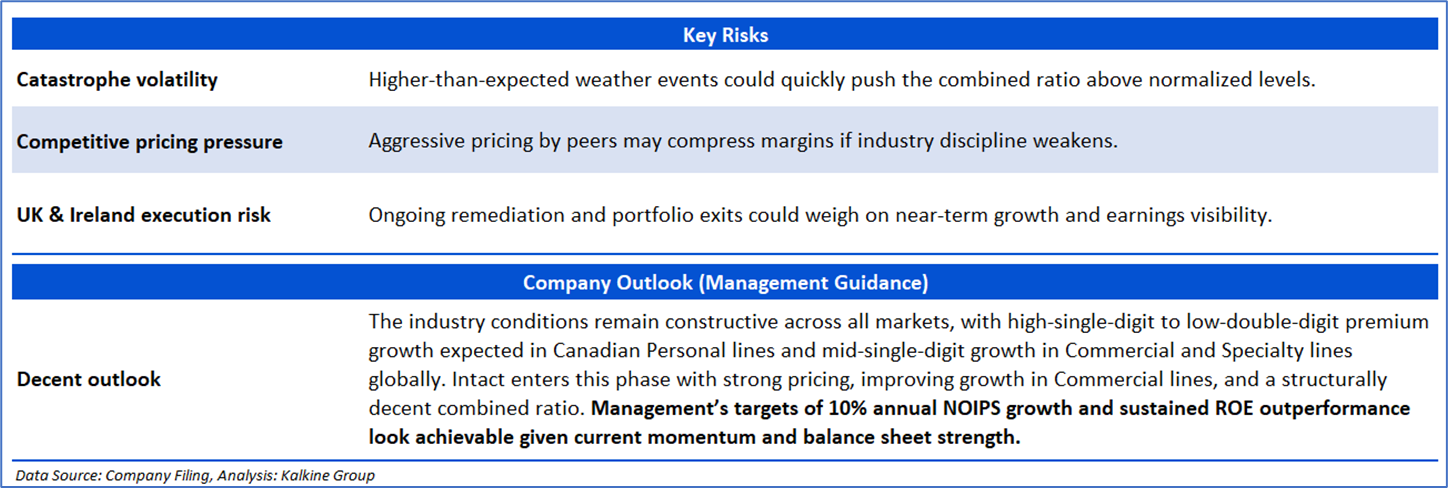
Section 3: Key Risks and Company Outlook
Section 4: Stock Recommendation Summary


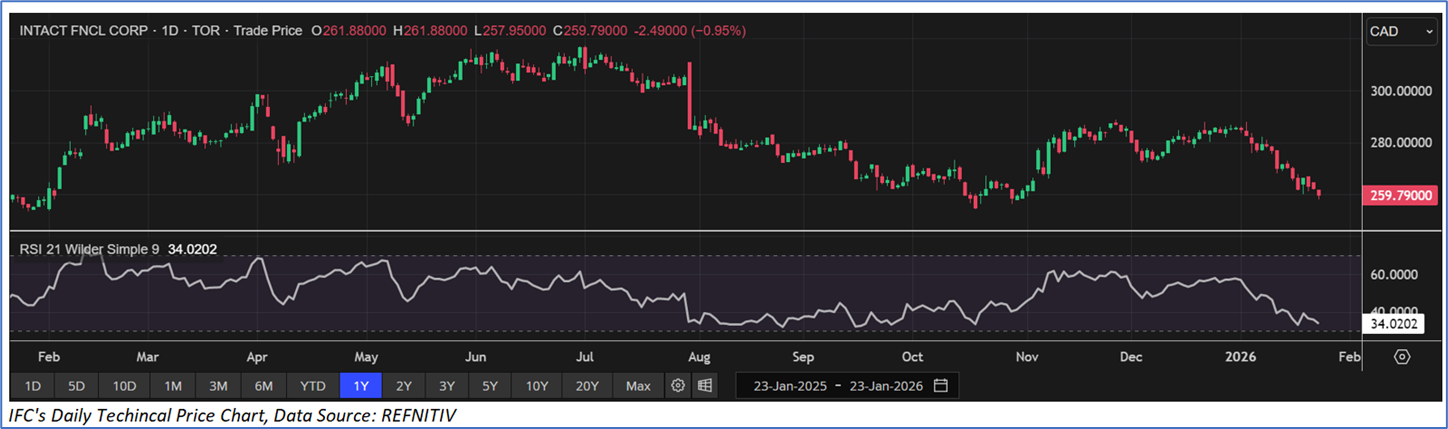
The stock has witnessed a downside of ~2.44% and ~1.10% over the last 1 week and 3 months respectively. Moreover, it is trading below the average 52-week high price of CAD 317.35 and 52-week low price of CAD 253.425, providing an opportunity to accumulate the stock.

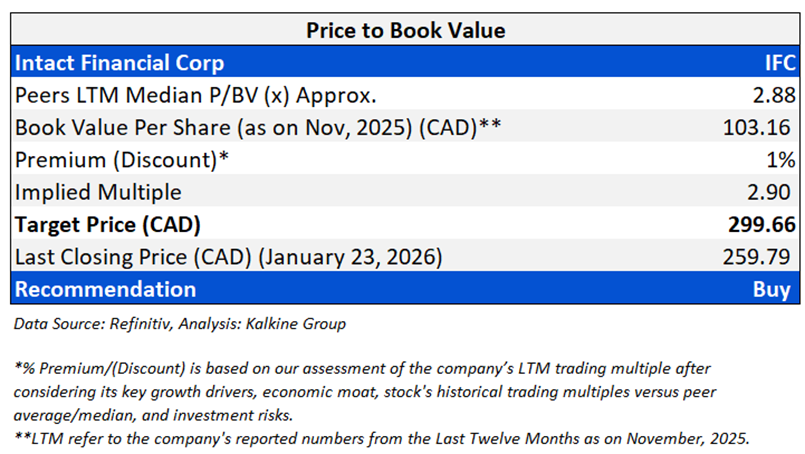
Valuation Methodology: Price to Book Value Based Relative Valuation (Illustrative):
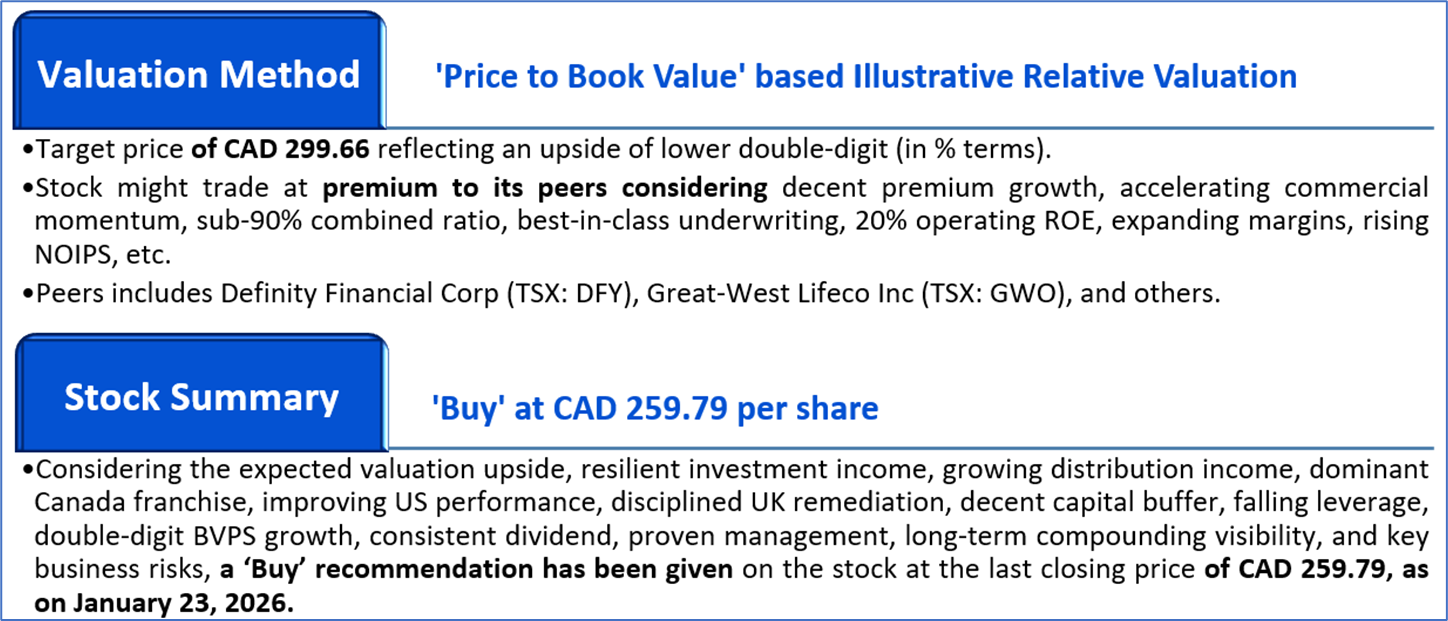
Markets are trading in a highly volatile zone currently due to certain macroeconomic issues and geopolitical tensions prevailing. Therefore, it is prudent to follow a cautious approach while investing.
Note 1: Past performance is not a reliable indicator of future performance.
Note 2: The reference date for all price data, currency, technical indicators, support, and resistance levels is January 23, 2026. The reference data in this report has been partly sourced from REFINITIV.
Note 3: Investment decisions should be made depending on an individual's appetite for upside potential, risks, holding duration, and any previous holdings. An 'Exit' from the stock can be considered if the Target Price mentioned as per the Valuation and or the technical levels provided has been achieved and is subject to the factors discussed above.
Note 4: Dividend Yield may vary as per the stock price movement.
Note 5: Kalkine reports are prepared based on the stock prices captured either from REFINITIV or Trading View. Typically, REFINITIV or Trading View may reflect stock prices with a delay which could be a lag of 25-30 minutes. There can be no assurance that future results or events will be consistent with the information provided in the report. The information is subject to change without any prior notice.
Technical Indicators Defined: -
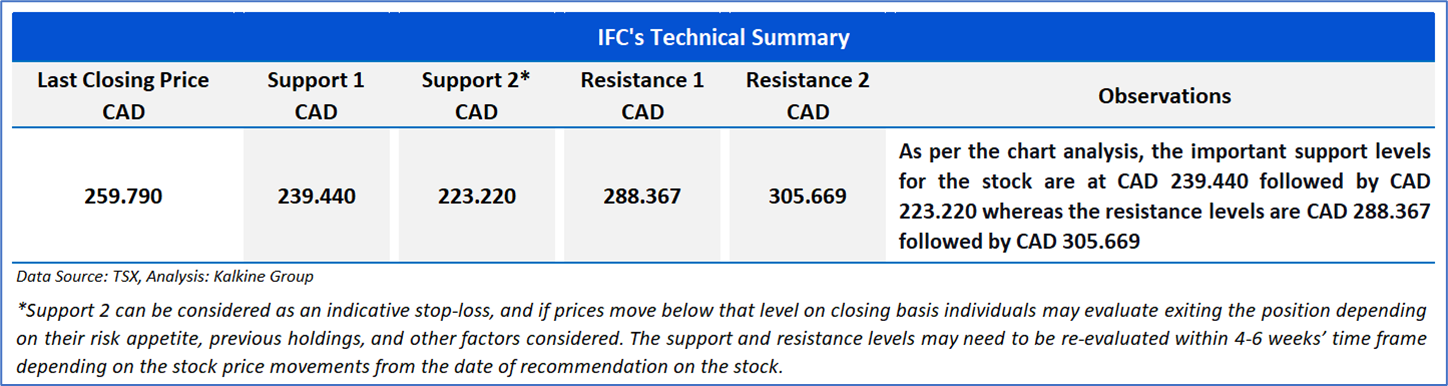
Support: A level at which the stock prices tend to find support if they are falling, and a downtrend may take a pause backed by demand or buying interest. Support 1 refers to the nearby support level for the stock and if the price breaches the level, then Support 2 may act as the crucial support level for the stock.
Resistance: A level at which the stock prices tend to find resistance when they are rising, and an uptrend may take a pause due to profit booking or selling interest. Resistance 1 refers to the nearby resistance level for the stock and if the price surpasses the level, then Resistance 2 may act as the crucial resistance level for the stock.
Stop-loss: It is a level to protect further losses in case of unfavourable movement in the stock prices.
Disclaimer-
This report has been issued by Kalkine Limited (Company number 07903332), a private limited company, incorporated in England and Wales ("Kalkine”). Kalkine.co.uk and associated pages are published by Kalkine. Kalkine is authorised and regulated by the Financial Conduct Authority under reference number 579414.
The information in this report and on the Kalkine website has been prepared from a wide variety of sources, which Kalkine, to the best of its knowledge and belief, considers accurate. Kalkine has made every effort to ensure the reliability of information contained in its reports, newsletters and websites. All information represents our views at the date of publication and may change without notice. The information in this report does not constitute an offer to sell securities or other financial products or a solicitation of an offer to buy securities or other financial products. Our reports contain non personalized recommendations to invest in securities and other financial products.
Kalkine does not offer financial advice based upon your personal financial situation or goals, and we shall not be held liable for any investment or trading losses you may incur by using the opinions expressed in our reports, publications, market updates, news alerts and corporate profiles. Kalkine does not intend to exclude any liability which it is not permitted to exclude under applicable law or regulation. Kalkine’s non-personalised advice does not in any way endorse or recommend individuals, investment products or services for your personal financial situation. You should discuss your portfolios and the risk tolerance level appropriate for your personal financial situation, with a professional authorised financial planner and adviser. You should be aware that the value of any investment and the income from it can go down as well as up and you may not get back the amount invested.
Please also read our Terms & Conditions for further information. Employees and/or associates of Kalkine and its related entities may hold interests in the securities or other financial products covered in this report or on the Kalkine website. Any such employees and associates are required to comply with certain safeguards, procedures and disclosures as required by law.
Kalkine Media Limited, an affiliate of Kalkine, may have received, or be entitled to receive, financial consideration in connection with providing information about certain entity(s) covered on its website including entities covered in this report.
Past performance is not a reliable indicator of future performance.

 CA
 NZ
 US
 AU
 IND

 UK

 Please wait processing your request...