
 AU
AU
 CA
CA
 US
US
 NZ
NZ
 IND
IND

 UK
UK

 Share
Share
 X (Formerly Twitter)
 Whatsapp
 Facebook
 LinkedIn
 Telegram
 Email This Article
 Copy Link
 Summarize with AI
 Chat GPT
 Perplexity
Company Overview
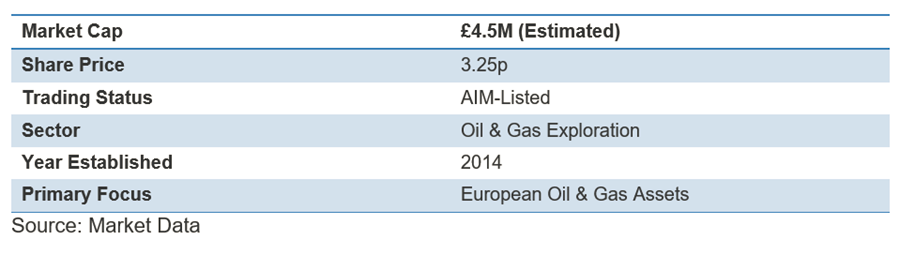
Prospex Energy PLC is an oil and gas exploration company focused on identifying and advancing petroleum assets within selected European basins. Established in 2014, the company has assembled a portfolio of exploration acreage in jurisdictions that offer established infrastructure, regulatory stability and access to developed energy markets. Its strategy centres on pursuing de-risked prospects in producing basins where existing pipelines, processing facilities and market access enhance commercial viability. The management team brings experience in petroleum geology, engineering and corporate development, supporting a disciplined approach to prospect generation and project advancement.
By concentrating on Europe, Prospex benefits from mature basin data, long-standing regulatory frameworks and transparent licensing systems. Decades of historical seismic and well data reduce geological uncertainty compared to frontier basins. However, the European operating environment is shaped by evolving decarbonisation policies and investor sensitivity toward fossil fuels. The company’s long-term prospects depend on efficiently commercialising discoveries and maintaining compliance with increasingly stringent environmental standards. Its positioning seeks to balance responsible resource development with economic opportunity in established markets.
The broader European exploration landscape presents openings as major integrated energy companies reduce exposure in certain mature regions. Smaller, focused explorers may capitalise on overlooked opportunities, particularly where cost-effective development can be achieved using existing infrastructure. Prospex’s success depends on identifying high-impact prospects and advancing them in partnership with larger operators when appropriate
Business Model and Revenue Streams
Prospex Energy’s business model revolves around identifying and maturing exploration prospects, then realising value through partnerships, farm-in agreements or potential asset sales. Rather than operating as a large-scale producer, the company focuses on adding value at the exploration and appraisal stages. Revenue potential arises from production sharing arrangements, asset sales, or participation in development projects funded by strategic partners.
A diversified exploration portfolio reduces reliance on a single prospect, spreading geological and commercial risk across multiple plays and basins. The company aims to progress prospects through geological analysis and seismic interpretation to create drill-ready opportunities attractive to funding partners. Farm-in agreements can transfer a significant portion of drilling costs and operational risk to larger companies while retaining exposure to upside potential.
Value creation depends on management’s technical expertise and ability to secure favourable commercial terms with partners. Market conditions, particularly oil and gas price trends and capital availability, influence the appetite of operators to invest in exploration projects. The company’s lean structure seeks to maintain capital efficiency while advancing multiple prospects.
Financial Performance and Valuation
As an exploration-stage business, Prospex typically operates with limited or no recurring production revenue. Financial sustainability depends on maintaining adequate cash reserves and access to external funding. Investors should assess cash burn rate, capital runway and potential future fundraising requirements. Exploration companies often rely on equity raises or partnership funding to progress projects, which may introduce dilution risk.
Valuation in this sector reflects geological potential and the probability-weighted value of prospective resources rather than earnings metrics. Net present value assessments of reserves, adjusted for risk and commodity price assumptions, provide a framework for estimating potential upside. Sensitivity to oil and gas prices remains significant, as commodity price shifts can materially alter project economics and investor sentiment.
Progress in drilling campaigns, partnership agreements and reserve estimates represent key catalysts influencing valuation. Announcements regarding farm-in deals or successful drilling results can validate asset potential and support re-rating, while disappointing results may negatively impact share price performance.
Market Position and Competitive Landscape
Prospex operates within a competitive oil and gas exploration industry that includes multinational majors, large independents and other junior explorers. Larger operators benefit from greater capital resources and operational scale, whereas smaller companies compete by identifying niche opportunities and operating efficiently. Prospex’s European focus differentiates it from peers targeting frontier or emerging markets with higher geopolitical risk.
Energy transition policies and environmental considerations increasingly shape the industry landscape. Institutional investor allocation to fossil fuel exploration has declined in some markets, creating valuation pressure but also opportunities for disciplined operators able to attract strategic partners. Prospex’s ability to secure partnerships and demonstrate economic viability within evolving regulatory frameworks will influence its competitive positioning.
Maintaining strong relationships with regulators, partners and stakeholders is critical. The company’s reputation for technical competence and prudent management enhances its attractiveness as a joint venture partner in mature basins.
Risk Factors
Exploration risk remains the most significant challenge, as drilling campaigns may fail to identify commercially viable hydrocarbons. Geological uncertainty and variability between pre-drill expectations and actual results can materially impact project economics. The company’s limited capital base restricts the number of exploration attempts it can undertake.
Commercial and commodity price risks are also material. Oil and gas price volatility influences project viability and partner willingness to invest. Dependence on third-party operators for funding and development introduces partner risk. Regulatory changes, environmental requirements and shifting political priorities within Europe may further affect exploration timelines and economics.
Financial risk includes reliance on capital markets, potential equity dilution and limited self-funding capacity. Market sentiment toward fossil fuels may constrain financing opportunities. Additionally, operational, environmental and cybersecurity risks represent ongoing considerations for exploration companies.
Investment Outlook and Conclusion
Prospex Energy represents a speculative exploration investment suited to investors with high risk tolerance and a long-term outlook. Successful discovery and commercialisation of hydrocarbons could generate substantial value, particularly if supported by strategic partnerships. However, exploration outcomes are inherently uncertain, and energy transition dynamics create structural headwinds for fossil fuel companies operating in Europe.
The investment thesis rests on disciplined execution of exploration programs, effective capital management and successful partnership formation. Monitoring drilling updates, partnership announcements and funding developments is essential for assessing progress. While upside potential exists in the event of discovery success, downside risk remains significant.
Prospex Energy may appeal to investors seeking exposure to European exploration opportunities with leveraged sensitivity to commodity prices. Prudent position sizing and ongoing evaluation of energy market trends are critical considerations for those considering participation in this high-risk sector.


 Jun 05, 2026




 Please wait processing your request...