
 AU
AU
 CA
CA
 US
US
 NZ
NZ
 IND
IND

 UK
UK

 Share
Share
 X (Formerly Twitter)
 Whatsapp
 Facebook
 LinkedIn
 Telegram
 Email This Article
 Copy Link
 Summarize with AI
 Chat GPT
 Perplexity
Master Dividend Investing Across the Entire UK Stock Market
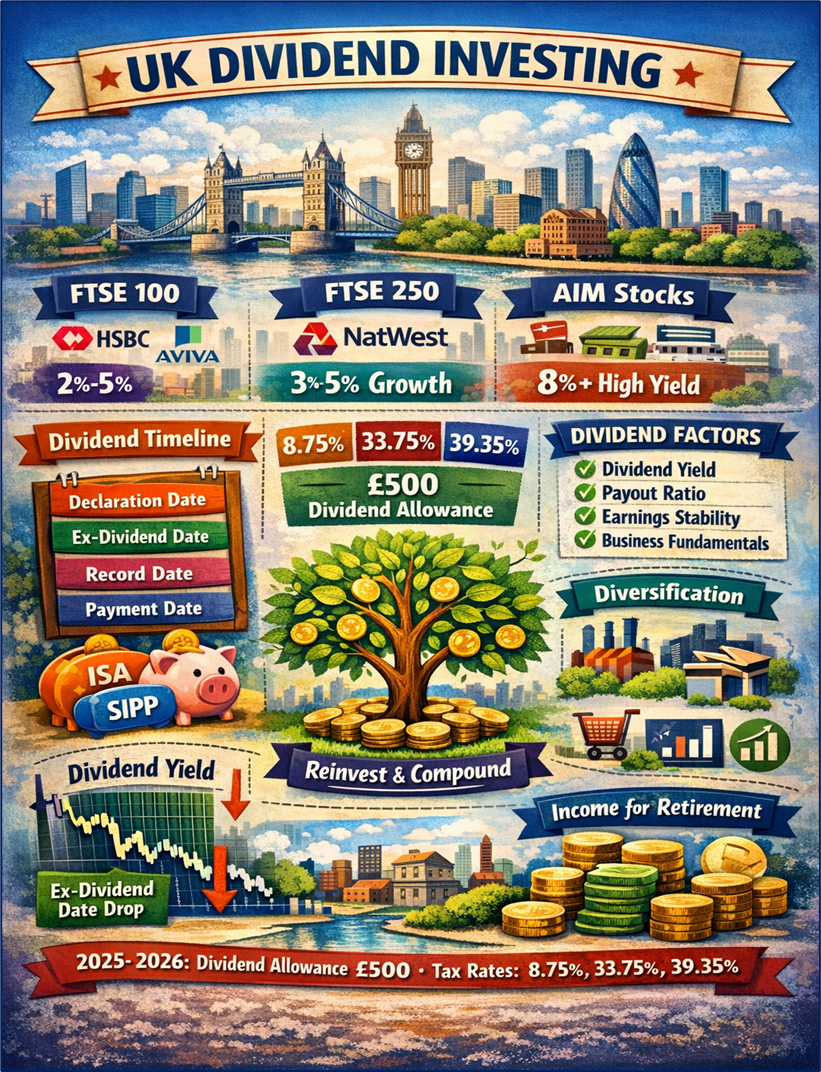
Key Takeaways (March 2026)
- Ex-dividend dates determine dividend eligibility. Investors must purchase shares before the ex-dividend date to receive the upcoming dividend payment.
- The London Stock Exchange (LSE) offers dividend opportunities across several segments including FTSE 100, FTSE 250, FTSE SmallCap, and AIM-listed companies.
- FTSE 100 stocks remain the backbone of UK dividend investing, with major companies like HSBC, NatWest, and Aviva offering yields ranging roughly between 2% and 5%.
- FTSE 250 companies provide a balance of income and growth, often delivering dividend yields around 3%–5% while also offering stronger earnings growth potential.
- AIM-listed companies can provide exceptionally high dividend yields, sometimes exceeding 8%–10%, but they carry higher volatility, lower liquidity, and greater risk.
- A dividend payment follows a structured timeline consisting of four key dates: declaration date, ex-dividend date, record date, and payment date.
- Share prices typically drop on the ex-dividend date by approximately the dividend amount, reflecting the removal of the dividend entitlement from the stock price.
- Dividend yield alone does not determine a good investment. Investors must also evaluate dividend cover, payout ratio, earnings stability, and long-term business fundamentals.
- UK investors benefit from tax-efficient investment vehicles such as ISAs and SIPPs, which allow dividend income to grow tax-free or tax-deferred.
- As of the 2025–2026 tax year, the UK dividend allowance is £500, with dividend tax rates of 8.75%, 33.75%, and 39.35% depending on the investor’s tax band.
- Successful dividend portfolios typically include diversification across sectors, company sizes, and market segments to reduce exposure to sector-specific risks.
- Long-term wealth from dividend investing often comes from reinvesting dividends and allowing compounding to work over decades rather than attempting short-term dividend capture strategies.
- The UK stock market remains one of the highest-yielding developed equity markets, making it attractive for income-focused investors and retirement portfolios.
Source: Kalkine Group
- Introduction to UK Dividend Investing
Dividend investing remains one of the most popular wealth-building strategies worldwide, and the United Kingdom stock market is among the most attractive regions for income-focused investors.
The UK market consistently delivers higher dividend yields than most developed markets, making it appealing for investors seeking regular income.
Across the London Stock Exchange (LSE), investors can access thousands of dividend-paying companies across several segments:
- FTSE 100 – the largest UK blue-chip companies
• FTSE 250 – mid-sized companies with strong growth potential
• FTSE SmallCap – smaller listed firms
• AIM (Alternative Investment Market) – growth companies and specialist investment vehicles
Each segment offers unique dividend opportunities.
For example:
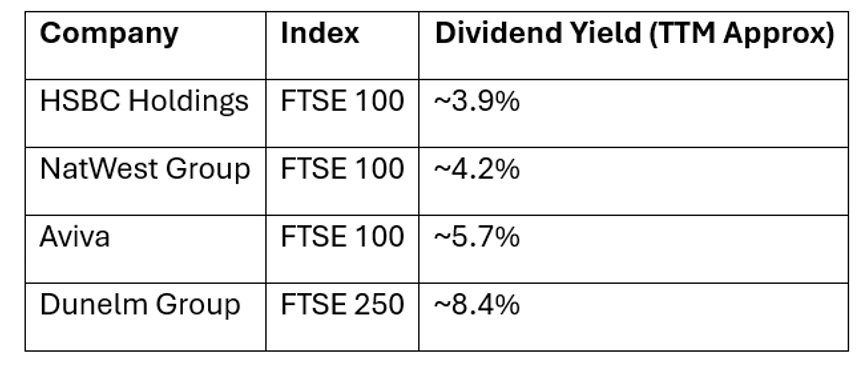
Understanding ex-dividend dates is essential because these dates determine who receives dividend payments.
Many investors miss dividends simply because they do not understand these timelines.
This guide explains:
- how ex-dividend dates work
• how UK dividends are taxed
• how to build a diversified dividend portfolio
• how to identify sustainable dividend stocks
• how to avoid dividend traps
By the end, you will have a complete framework for dividend investing in the UK stock market.
- What Is an Ex-Dividend Date?
The ex-dividend date is the key deadline that determines whether an investor receives a dividend payment.
Simple Rule
If you buy shares before the ex-dividend date, you receive the dividend.
If you buy shares on or after the ex-dividend date, you do not receive the dividend.
The dividend instead goes to the seller who owned the shares previously.
This rule exists because stock trades require time to settle.
- The Dividend Timeline Explained
Every dividend follows a four-step timeline.
Declaration Date
The company announces:
- dividend amount
• ex-dividend date
• record date
• payment date
Ex-Dividend Date
Shares start trading without dividend rights.
Record Date
The company checks its shareholder register.
Only investors listed on this date receive the dividend.
Payment Date
The dividend is deposited into investor accounts.
Example Timeline
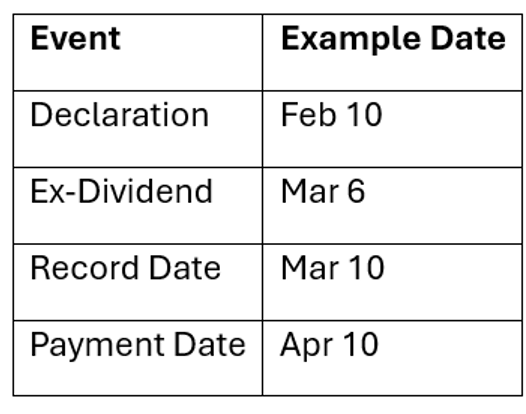
- The London Stock Exchange Structure
The London Stock Exchange contains several market segments.
Main Market
The Main Market includes large, established companies.
All major FTSE indices trade here.
FTSE Indices
The FTSE index family categorizes companies by size.
FTSE 100
Top 100 companies by market value.
Examples include:
- HSBC
• Shell
• BP
• Diageo
• AstraZeneca
These firms generate billions in annual revenue and typically offer stable dividends.
FTSE 250
The next 250 companies after FTSE 100.
Often considered the UK’s most dynamic index.
These firms combine:
- dividend income
• growth potential
FTSE SmallCap
Companies smaller than the FTSE 250.
Higher risk but sometimes higher dividend yields.
FTSE Fledgling
The smallest listed firms.
Dividends here are rare but possible.
- FTSE 100 Dividend Stocks
FTSE 100 companies are known for consistent dividend payments.
Many investors rely on them for retirement income.
Major Dividend Payers
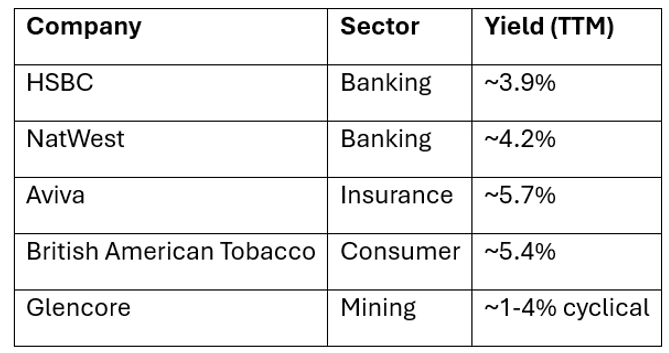
Why FTSE 100 Dividends Are Popular
Key advantages include:
- large, stable companies
• high liquidity
• global earnings
• long dividend histories
However, many FTSE 100 companies are mature businesses with limited growth.
- FTSE 250 Dividend Opportunities
The FTSE 250 is often called the “sweet spot” of the UK stock market.
These companies are large enough to be stable but small enough to grow rapidly.
Example Dividend Stocks
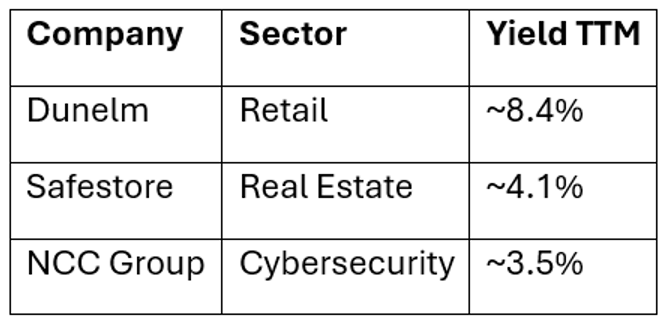
Many FTSE 250 companies benefit from domestic UK economic growth.
They also tend to increase dividends faster than FTSE 100 firms.
- AIM Dividend Stocks
The Alternative Investment Market (AIM) hosts thousands of smaller companies.
Most AIM companies prioritize growth over dividends.
However, some offer very high yields.
Example:
Octopus AIM VCT
Dividend Yield: ~9.3%
Benefits of AIM Stocks
- potential high dividends
• inheritance tax relief after 2 years
• exposure to innovative companies
Risks
- lower liquidity
• weaker regulation
• higher volatility
AIM stocks should typically represent only a small portion of a portfolio.
- How to Build a UK Dividend Portfolio
A strong dividend portfolio includes diversification across sectors.
Example Allocation
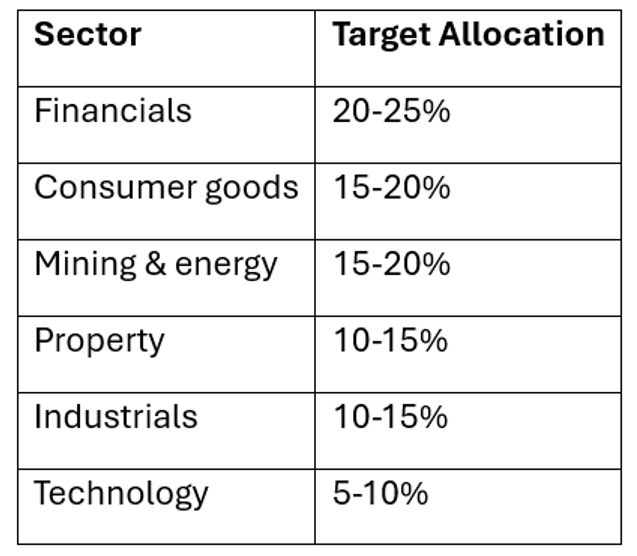
Investors should also diversify across:
- FTSE 100
• FTSE 250
• smaller stocks
Dividend Reinvestment
Reinvesting dividends significantly increases long-term returns.
A £10,000 investment yielding 4% annually can double faster when dividends are reinvested.
- Dividend Yield Analysis
Dividend yield = annual dividend ÷ share price.
Example:
£0.50 dividend
£10 share price
Yield = 5%
What Different Yields Mean
|
Yield |
Meaning |
|
1-2% |
Growth company |
|
3-4% |
Balanced dividend |
|
5-7% |
High yield |
|
8%+ |
Potential risk |
Extremely high yields may signal a dividend trap.
- UK Dividend Tax Rules (2026)
The dividend allowance for UK investors is:
£500 per year tax-free
After this allowance:
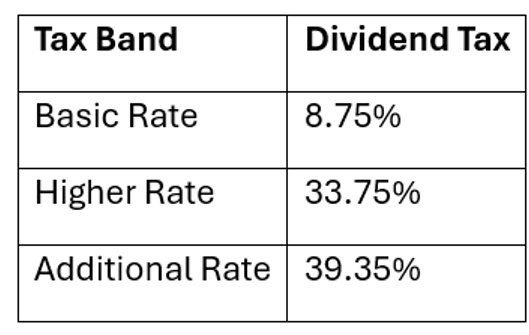
Tax-Efficient Investing
The best way to avoid dividend tax is through:
- ISAs
• SIPPs (pensions)
Dividends inside these accounts are tax-free.
- Risks of Dividend Investing
Dividend investing is not risk-free.
Major risks include:
Dividend Cuts
Companies may reduce dividends during economic downturns.
Interest Rate Changes
Higher interest rates reduce demand for dividend stocks.
Inflation
Inflation erodes purchasing power.
Sector Concentration
The UK market is heavily weighted toward:
- banks
• mining
• energy
Diversification is essential.
- Tools to Track Ex-Dividend Dates
Helpful platforms include:
- London Stock Exchange website
• Hargreaves Lansdown
• Interactive Investor
• Trustnet
• Shares Magazine
Investors can also track dividends using spreadsheets or portfolio apps.
- Professional Dividend Strategies
Experienced investors often use these strategies:
Dividend Growth Investing
Focus on companies increasing dividends every year.
Income Investing
Prioritize high-yield stocks.
Dividend Reinvestment
Automatically reinvest dividends.
Total Return Strategy
Combine dividends with capital appreciation.
- Frequently Asked Questions
Do I receive dividends if I sell shares after the ex-date?
Yes. Ownership before the ex-date secures the dividend.
Do share prices drop on ex-dividend day?
Usually yes, by approximately the dividend amount.
Can dividends be cancelled?
Yes, if company profits decline.
Are AIM dividends taxed differently?
No, but AIM shares may qualify for inheritance tax relief.
- Dividend Investing Glossary
Dividend Yield
Annual dividend divided by share price.
Dividend Cover
Earnings divided by dividend payments.
Payout Ratio
Percentage of profits distributed as dividends.
Ex-Dividend Date
Deadline for dividend eligibility.
Record Date
Date shareholders are verified.
Dividend Trap
High yield caused by falling share price.
- Final Thoughts
Dividend investing remains one of the most powerful long-term wealth strategies.
The UK stock market offers exceptional opportunities because of its:
- high dividend yields
• global companies
• strong regulatory framework
Investors who understand ex-dividend dates, dividend sustainability, and tax efficiency can build portfolios that generate income for decades.
Successful dividend investing requires:
- patience
• diversification
• reinvestment
• disciplined analysis
Over time, the compounding power of dividends can transform small investments into substantial wealth.


 Jun 05, 2026




 Please wait processing your request...