
 AU
AU
 CA
CA
 US
US
 NZ
NZ
 IND
IND

 UK
UK

 Share
Share
 X (Formerly Twitter)
 Whatsapp
 Facebook
 LinkedIn
 Telegram
 Email This Article
 Copy Link
 Summarize with AI
 Chat GPT
 Perplexity
_03_09_2026_04_00_20_292002.jpg)
Key Takeaways – March 2026
- Glencore (LON: GLEN) shares fell about 2.4% on 6 March 2026 amid weaker commodity sentiment.
• Falling copper, coal and nickel prices are pressuring FTSE 100 mining stocks.
• Broader FTSE 100 and global commodity sector volatility is impacting mining equities.
• Strong cash flows and shareholder returns remain a long-term positive.
• Analysts remain cautiously optimistic about Glencore’s dividend and commodity exposure.
Why Are Investors Searching “Why Is Glencore Stock Down Today” Across FTSE 100 Markets?
The Glencore share price (LON: GLEN) slipped around 2.4% on 6 March 2026, making it one of the notable decliners among FTSE 100 mining and commodity stocks.
Investors, traders and retail shareholders across the UK stock market, FTSE 100, and global commodity markets are searching for answers as commodity prices fluctuate and global economic uncertainty continues to influence mining stocks.
The decline comes amid a mix of commodity price softness, global macroeconomic concerns, and profit-taking in mining stocks, even though Glencore remains one of the largest diversified commodity trading and mining companies in the world.
Despite today’s drop, Glencore continues to benefit from strong commodity demand for copper, nickel and energy transition metals, which are essential for electric vehicles, renewable energy infrastructure, and global industrial production.
What Key Reasons Are Driving Glencore Stock Lower Today?
Commodity Price Weakness
Recent price declines in copper, coal and nickel have pressured mining stocks globally.
- Copper demand concerns linked to China’s slowing industrial activity
• Volatility in thermal coal prices
• Nickel price correction following supply expansion
Mining stocks typically track commodity prices closely, which directly affects earnings expectations and investor sentiment.
Broader FTSE 100 Mining Sector Pullback
Many mining companies in the FTSE 100 index experienced selling pressure as investors rotated into defensive sectors.
- Risk-off sentiment in global markets
• Profit-taking after recent mining sector rallies
• Commodity demand concerns tied to global growth outlook
Global Macro Uncertainty
Commodity companies are highly sensitive to macroeconomic trends.
Current investor concerns include:
- China economic recovery uncertainty
• US interest rate outlook
• European industrial slowdown
These factors influence commodity demand expectations, which impacts mining stocks like Glencore.
How Is the UK Economy and FTSE 100 Affecting Glencore Stock?
The UK economy in 2026 continues to face a mixed outlook.
FTSE 100 Market Environment
- Commodity stocks remain highly cyclical
• Defensive sectors attracting inflows
• Global macro concerns impacting investor risk appetite
The FTSE 100 index contains several major mining companies, making it sensitive to global commodity trends.
GBP Currency Impact
The British pound (GBP) also plays a role.
A stronger pound can reduce the value of commodity revenues earned in US dollars, affecting earnings translation for multinational miners like Glencore.
What Is Glencore’s Current Business Model in 2026?
Glencore operates a unique vertically integrated commodity model combining:
- Mining operations
• Global commodity trading
• Energy and metals production
Major commodities include:
- Copper
• Coal
• Zinc
• Nickel
• Cobalt
The company benefits from trading margins and mining profits, making it more diversified than many mining peers.
Recent company updates highlighted:
- Strong commodity trading performance
• Continued shareholder distributions
• Focus on energy transition metals (Company reports)
How Does Glencore Compare With Its Mining Peers?
Peer Benchmarking – FTSE 100 Mining Sector
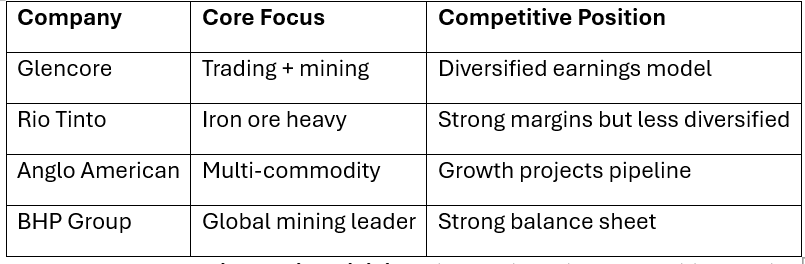
Glencore’s commodity trading division differentiates it from traditional miners.
What Is the Dividend Outlook for Glencore Stock?
Glencore has historically offered strong shareholder returns through dividends and buybacks.
Dividend drivers include:
- Commodity price cycles
• Free cash flow generation
• Capital allocation policies
The company previously emphasized returning excess cash to shareholders through dividends and share buybacks (Company investor presentations).
Commodity companies often provide higher yields during strong commodity cycles.
What Is the Short, Medium and Long Term Outlook for Glencore Stock?
Short Term Outlook (3–6 Months)
Neutral to slightly bearish
Drivers:
- Commodity price volatility
• China demand uncertainty
• Global growth outlook
However, trading operations may help cushion earnings.
Medium Term Outlook
Neutral to moderately bullish
Reasons:
- Increasing demand for energy transition metals
• Electric vehicle supply chain demand
• Infrastructure spending globally
Long Term Outlook
Bullish structural outlook
Long-term drivers include:
- Electrification demand
• Copper supply deficit projections
• Renewable energy infrastructure
These trends could significantly support metals demand over the next decade.
Is Glencore Stock Bullish or Bearish Right Now?
Short Term View
Neutral to slightly bearish
Commodity volatility and macro uncertainty could keep shares range-bound.
Long Term View
Bullish
The global energy transition requires massive quantities of copper, nickel and cobalt, commodities where Glencore has strong exposure.
What Strategies Can Investors Consider Across Different Time Horizons?
Short Term Strategy (3–6 Months)
Investors may consider:
- Monitoring commodity price trends
• Tracking China demand indicators
• Watching central bank policy signals
Mining stocks can remain volatile in the near term.
Medium Term Strategy
Potential approaches:
- Gradual accumulation during dips
• Diversification across mining companies
• Tracking commodity demand cycles
Long Term Strategy
Long-term investors may focus on:
- Energy transition metals demand
• Supply shortages in copper markets
• Long commodity supercycle potential
What Do Top Analysts and Brokers Forecast for Glencore Stock?
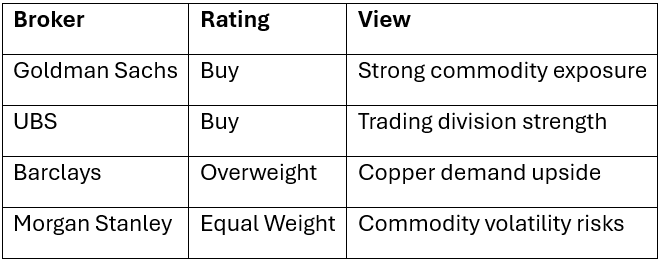
Analysts highlight Glencore’s strong cash generation and commodity diversification.
What Key Risks Should Investors Watch?
Major risks include:
- Commodity price downturns
• Regulatory pressures on coal operations
• Global economic slowdown
• ESG pressures on fossil fuels
Mining companies remain highly cyclical investments.
What Does Glencore’s ESG Profile Look Like?
Environmental and social factors are increasingly important.
Positive factors:
- Exposure to energy transition metals
• Investment in sustainable mining practices
Challenges:
- Coal exposure
• Environmental scrutiny
ESG transition strategy remains a key focus for investors.
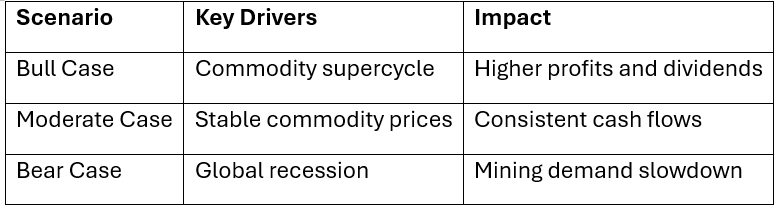
What Bull and Bear Scenarios Could Play Out for Glencore?
Scenario Matrix
Frequently Asked Questions About Glencore Stock
Why is Glencore stock falling today?
The decline is largely linked to commodity price volatility, mining sector weakness, and global macroeconomic concerns.
Is Glencore a good dividend stock?
Historically, Glencore has offered strong dividends and buybacks when commodity prices are strong.
Does Glencore benefit from the energy transition?
Yes. The company produces copper, cobalt and nickel, which are critical for electric vehicles and renewable energy.
Is Glencore a cyclical stock?
Yes. Mining companies typically move with commodity cycles and global economic growth.
Could Glencore Stock Become a Major Winner in the Next Commodity Cycle?
Glencore remains one of the most strategically positioned commodity companies in the world, thanks to its unique combination of mining assets and global commodity trading operations.
While short-term volatility is normal for mining stocks, the long-term demand outlook for energy transition metals, copper supply shortages, and global electrification trends could create powerful structural tailwinds.
For investors comfortable with commodity market cycles and mining sector volatility, Glencore may remain a compelling stock to watch in the FTSE 100 comodity sector over the coming decade.


 Jun 05, 2026




 Please wait processing your request...