
 CA
 NZ
 US
 AU
 IND

 UK

 Share
 X (Formerly Twitter)
 Whatsapp
 Facebook
 LinkedIn
 Telegram
 Email This Article
 Copy Link
 Summarize with AI
 Chat GPT
 Perplexity
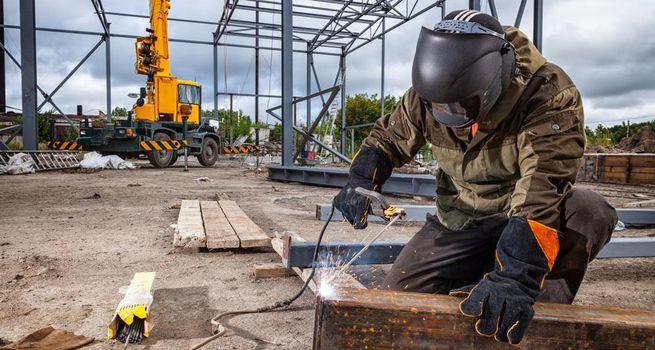
The London market's daily gainers list usually features speculative explorers and biotech hopefuls, so it is refreshing to find a century-old Yorkshire engineer near the top. Braime Group (LSE:BMT) rose 10.80 per cent on Thursday 2 July 2026 to close at 1,385 pence — £13.85 per share — one of the strongest showings among UK industrial stocks on the day.
Braime is precisely the kind of company that rarely troubles the headlines: a small, family-influenced manufacturer with real products, real profits and a share register that turns over slowly. Thursday's volume of just 568 shares underlines the point. In cash terms that is under £8,000 of stock traded, so the double-digit percentage move should be read with the illiquidity of the shares firmly in mind.
Even so, when a profitable industrial trading on a single-digit earnings multiple jumps ten per cent, it is worth asking what investors might be seeing. Below we examine the business, the numbers, and the context around this quiet UK manufacturing stock.
About Braime Group (LSE:BMT): Leeds engineering heritage meets global components
Braime Group is a Leeds-based engineering and manufacturing business with roots stretching back to the late nineteenth century. The group operates across two related areas. The first is deep-drawn metal pressings — precision-formed metal components produced for industrial customers, an exacting manufacturing discipline in which the company has generations of accumulated expertise.
The second, and internationally the better known, is its 4B division, which supplies components for bulk material handling. This encompasses products such as elevator buckets, forged chain, belting and electronic monitoring equipment used in facilities that move grain, animal feed, and other bulk commodities. The 4B business serves customers around the world, giving the Yorkshire group a genuinely global footprint in the agricultural and industrial supply chain.
That combination — a niche UK pressings operation plus an international components franchise — has allowed Braime Group to remain independent and consistently commercial while many peers disappeared into consolidation. The company is a small-cap by any measure, valued at around £18.72 million, but it is an established, profitable enterprise rather than a concept stock, with reported earnings per share of 1.88 pounds.
BMT share price and valuation: a double-digit move on a single-digit multiple
Thursday's session left Braime Group shares at 1,385 pence, up 10.80 per cent, for a market capitalisation of approximately £18.72 million. The striking feature of the valuation is the earnings multiple: with earnings per share of 1.88 pounds, the stock trades on a price-to-earnings ratio of about 7.35. For a profitable manufacturer with an international customer base, that is an undemanding rating by most standards.
Low multiples in small industrials often reflect liquidity rather than quality, and BMT illustrates the phenomenon. Just 568 shares changed hands on Thursday — a reminder that the company's shares are tightly held, with limited free float and infrequent trading. In such stocks, a modest buy order can move the quoted price substantially, which is very likely a component of the day's percentage gain.
That cuts both ways for interpretation. On one hand, the 10.80 per cent move cannot be taken as evidence of a wave of institutional buying. On the other, tightly held family-linked industrials can drift below fair value for long periods precisely because so few shares trade, leaving room for sharp adjustments when buyers do appear. Thursday's move fits that long-standing pattern in the UK small-cap market.
Why might investors be taking notice of Braime Group?
No specific announcement has been verified in this article as the driver of the move, and with volume this thin, the simplest explanation is a small number of willing buyers meeting scarce stock. Beyond the mechanics, though, there are reasons the name may be attracting fresh eyes.
The valuation itself is one. Screens for cheap, profitable UK small-caps will regularly surface a company earning 1.88 pounds per share and priced at 7.35 times those earnings. Value-oriented investors have increasingly combed the unloved end of the London market in recent years, and quiet compounders with strong niches are exactly what such searches aim to find.
A second thread is the nature of Braime's end markets. The 4B division's exposure to grain handling and agricultural infrastructure ties the group to global food supply chains — a theme with structural support as the world invests in storage, processing and logistics capacity. Companies supplying consumable and safety-critical components into such facilities can enjoy recurring demand.
Third, the UK market has seen persistent takeover interest in small industrial companies, with trade and private equity buyers attracted by depressed ratings. No such interest concerning Braime is suggested or verified here, but the wider pattern helps explain why investors monitor profitable small-caps trading on low multiples.
UK small-cap industrials: the sector backdrop for BMT
Braime Group sits within a cohort of small London-listed engineers and manufacturers that have navigated a demanding few years. Input cost inflation, energy prices and supply chain disruption tested UK industry through the early 2020s, while sterling swings altered the economics of exporting. Companies with pricing power in niche products generally weathered these pressures better than commodity manufacturers.
The stock market context matters as much as the operational one. UK small-caps endured a prolonged spell of outflows and neglect, with valuations across the segment compressing relative to larger peers and to international markets. That has left numerous established industrial businesses trading on modest earnings multiples, and it has fuelled both takeover activity and periodic bursts of revaluation when sentiment towards domestic equities improves.
For a company like Braime, the sector story is therefore double-edged: the business itself is steady, but the rating of its shares depends heavily on the market's fluctuating appetite for small UK industrials. Days like Thursday — a sharp move on tiny volume — are as much a symptom of that thin, under-owned market structure as they are a comment on the company. Investors weighing the stock may consider both dimensions.
Key risks and uncertainties for Braime Group shareholders
Liquidity heads the list. With only 568 shares traded on a day the price rose nearly 11 per cent, investors in BMT face wide spreads and the real possibility of being unable to deal in size at quoted prices. Low-volume moves can reverse, and the shares can equally print sharp falls on minimal turnover.
Cyclicality is the second consideration. Braime's customers span industrial and agricultural markets, and demand for components can soften with capital spending cycles, harvest economics and global trade conditions. Input costs — steel, energy, labour — bear directly on manufacturing margins, and currency movements affect the translation of international earnings.
Governance and structure deserve neutral mention: family-linked shareholdings provide stability but also concentrate control and limit free float, which some investors view as a constraint. Finally, the absence of any verified catalyst for Thursday's rise means the move itself provides no new information about trading performance. The investment case rests on the company's fundamentals, not on one day's price action.
What investors may watch next for BMT
Scheduled reporting is the obvious anchor. Braime Group's periodic results will show whether earnings per share around the 1.88 pound level can be sustained or grown, and how margins are coping with input costs. Commentary on demand in the 4B division's global markets — particularly agricultural infrastructure — would give useful colour on the order pipeline.
Market-structure signals matter too. Watchers may note whether trading volume in BMT builds beyond the hundreds of shares seen on Thursday; any sustained increase in liquidity would suggest new investors arriving on the register. The behaviour of the wider UK small-cap industrial cohort is also relevant, since a rising tide of interest in cheap domestic manufacturers would naturally include names like this.
Currency and commodity trends round out the watch list: sterling's level against the dollar and euro influences export competitiveness, while steel prices feed the cost base. None of these will move the shares daily — BMT is not that kind of stock — but they shape the medium-term earnings picture.
The bottom line: a quality quiet stock, a noisy price print
Braime Group's 10.80 per cent jump to 1,385 pence put a rarely discussed Yorkshire engineer among Thursday's leading UK stocks. The business behind the ticker is substantive: a century of manufacturing heritage, a global bulk-handling components franchise, real profits and a P/E of about 7.35.
The price move itself, built on 568 traded shares, should be interpreted modestly — thin-volume gains prove little on their own. But the episode may serve a useful purpose in drawing attention to the deeper story: a profitable, conservatively run UK industrial trading on an undemanding rating. Whether that gap closes gradually, suddenly, or not at all is the question investors will watch.


 Nov 16, 2026





 Please wait processing your request...