
 AU
AU
 CA
CA
 US
US
 NZ
NZ
 IND
IND

 UK
UK

 Share
Share
 X (Formerly Twitter)
 Whatsapp
 Facebook
 LinkedIn
 Telegram
 Email This Article
 Copy Link
 Summarize with AI
 Chat GPT
 Perplexity
With global defence spending rising, BAE Systems stock could offer both growth and stability for investors.
Key Takeaways — February 2026
- BAE Systems stock gained approximately 3.1% on 16 February 2026, outperforming major FTSE indices
• Global defence spending growth and geopolitical tensions are driving strong investor sentiment
• Record order backlog and long-term contracts support earnings visibility (Company Updates, February 2026)
• Dividend growth outlook remains attractive with strong free cash flow generation
• Analysts remain broadly positive on long-term defence sector fundamentals

Source: Kalkine Group
Why Are Investors Globally Searching for BAE Systems Stock Right Now?
BAE Systems (FTSE 100: BA) has become one of the most searched UK defence stocks in February 2026 as investors focus on defence sector momentum, dividend resilience, and geopolitical-driven growth opportunities. High-volume search keywords such as BAE Systems share price forecast 2026, FTSE 100 defence stocks, UK dividend growth stocks, best defence stocks to buy now, NATO defence spending outlook, and BA stock analysis February 2026 are trending across Google, YouTube, LinkedIn, and financial media platforms.
The surge reflects a powerful combination of macroeconomic and sector-specific catalysts. Rising geopolitical uncertainty across Europe, the Middle East, and the Indo-Pacific region is accelerating military modernization spending globally. Governments are prioritizing national security budgets despite broader economic pressures, creating a structurally supportive environment for defence contractors with long-term contracts and predictable cash flows.
BAE Systems stands out because of its diversified global exposure, strong US defence presence, multi-year backlog visibility, and reputation as a reliable dividend payer. Investors searching for inflation-resistant stocks, recession-resilient equities, and defensive dividend growth opportunities are increasingly viewing BAE as a core portfolio candidate in 2026.
How Are Global Economic Conditions and Defence Spending Trends Supporting the Rally?
Several macro drivers are strengthening the investment case:
- NATO members continuing to move toward or exceed 2% GDP defence spending targets
• Increased procurement of advanced weapons systems and cybersecurity capabilities
• Persistent geopolitical instability driving long-term military commitments
• Defence spending historically remaining resilient during economic slowdowns
• Supply chain improvements supporting production efficiency and margins
Defence companies benefit from government-backed revenue streams, making them less sensitive to consumer cycles compared with traditional industrial firms.
How Do the UK Economy, FTSE 100, FTSE 250, and GBP Movements Influence BAE Systems?
The broader UK financial environment provides additional tailwinds:
- FTSE 100 multinational exposure supports earnings resilience compared with domestically focused indices
• FTSE 250 companies face more pressure from higher borrowing costs and slower domestic growth
• GBP currency fluctuations often benefit exporters like BAE Systems due to significant US-dollar revenue
• Defence spending remains politically protected within UK fiscal planning
Because BAE generates substantial revenue internationally, currency dynamics can positively influence reported earnings during periods of pound weakness.
What Are the Main Reasons Behind the Latest Share Price Increase?
The February 2026 rally appears driven by multiple catalysts:
- Strong order intake and backlog visibility
• Positive defence sector sentiment globally
• Expectations of continued earnings growth and margin improvement
• Investor rotation toward defensive sectors amid macro uncertainty
• Confidence in long-term cash flow generation (Company Statements, 2026)
The company’s diversified operations across air, land, sea, cyber, and space domains provide stability and growth potential simultaneously.
How Does BAE Systems’ Business Model Create Competitive Advantages?
BAE operates across high-barrier industries requiring advanced technology and regulatory approvals:
- Fighter aircraft and advanced aerospace systems
• Naval shipbuilding and submarine programs
• Electronic warfare and intelligence solutions
• Armoured vehicles and defence equipment
• Cybersecurity and space technologies
Long-term government contracts often extend for years or decades, providing predictable revenue and strong financial planning visibility.
What Makes the Dividend Outlook Attractive for Income Investors?
BAE Systems maintains a progressive dividend approach supported by:
- Strong operating cash flow
• Sustainable payout ratios
• Consistent earnings growth
• Shareholder return programs including buybacks (Company Reports, 2026)
Defence companies historically maintain dividends even during economic downturns due to stable government demand.
How Does BAE Systems Compare With Global Defence Competitors?
Compared with major defence peers such as Lockheed Martin, Northrop Grumman, RTX, and Airbus Defence, BAE demonstrates:
- Balanced geographic revenue exposure
• Strong transatlantic defence relationships
• Diverse product portfolio across multiple domains
• Lower dependence on single flagship programs
This diversification reduces earnings volatility relative to more concentrated competitors.
What Is the Defence Sector and Stock Outlook Across Different Time Horizons?
Short-term outlook
- Positive sentiment driven by geopolitical news and defence spending announcements
• Potential volatility from macroeconomic factors and interest rate expectations
Medium-term outlook
- Strong defence procurement cycle expected to continue
• Margin expansion opportunities from efficiency programs
• Stable earnings supported by backlog execution
Long-term outlook
- Structural growth from military modernization trends
• Rising demand for cybersecurity, artificial intelligence, and space defence systems
• Multi-decade procurement programs supporting sustained revenue
What Forward-Looking Strategies Could Investors Consider?
Short-term strategies
- Monitor earnings releases and geopolitical developments
• Use volatility for tactical entry opportunities
Medium-term strategies
- Focus on dividend reinvestment and gradual accumulation
• Track defence budget announcements and contract wins
Long-term strategies
- Position BAE Systems as a defensive compounder within diversified portfolios
• Benefit from structural global defence spending growth
Is the Stock Currently Bullish, Bearish, or Neutral?
Short-term assessment: Moderately bullish
Momentum, sector demand, and positive sentiment support upward bias, though macro volatility remains possible.
Long-term assessment: Bullish
Structural defence spending growth, strong backlog visibility, and dividend sustainability provide a favorable long-term investment thesis.
What Are Analysts and Brokers Saying About BAE Systems?
Major broker sentiment remains broadly constructive:
- Barclays — Positive outlook driven by defence demand visibility
• JPMorgan — Strong cash flow generation and backlog strength
• UBS — Margin expansion potential supports valuation
• Morgan Stanley — Balanced view with long-term upside potential
Analysts emphasize predictable earnings and strong government relationships as core strengths (Broker Research, 2026).
What Risks Should Investors Consider?
- Potential government budget constraints
• Project execution delays or cost overruns
• Currency volatility
• Political risks affecting international contracts
• Interest rate changes impacting valuations
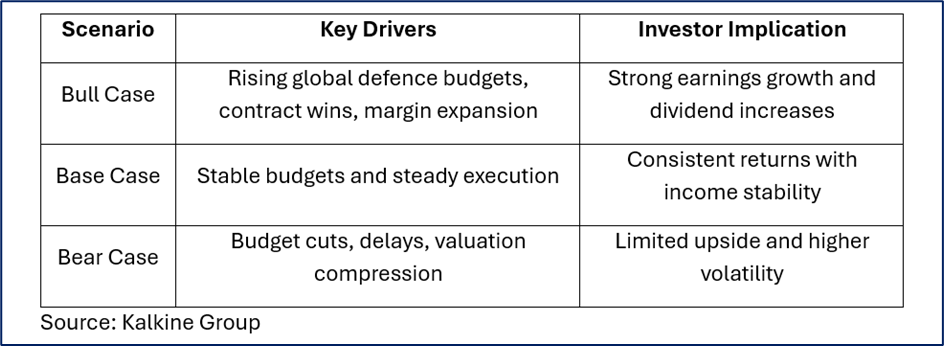
What Does the Bull vs Bear Scenario Matrix Show?
What Are Investors Frequently Asking About BAE Systems?
Is BAE Systems a good long-term investment?
The company offers defensive characteristics, dividend growth potential, and exposure to structural defence spending trends.
Is BAE Systems recession-resistant?
Government defence spending tends to remain stable during economic downturns.
Why is defence spending increasing globally?
Geopolitical tensions and modernization requirements are major drivers.
What Is the Final Investment Perspective for February 2026?
BAE Systems appears positioned as a resilient FTSE 100 defence leader with strong earnings visibility, reliable dividend growth potential, and long-term structural demand tailwinds. While short-term volatility is always possible, the company’s diversified operations, government-backed contracts, and strong backlog provide a solid foundation for sustained shareholder returns over time.
For investors seeking defensive exposure, dividend income, and moderate growth potential, BAE Systems remains a compelling candidate within a diversified investment strategy.


 Jun 29, 2026




 Please wait processing your request...