
 AU
AU
 CA
CA
 US
US
 NZ
NZ
 IND
IND

 UK
UK

 Share
Share
 X (Formerly Twitter)
 Whatsapp
 Facebook
 LinkedIn
 Telegram
 Email This Article
 Copy Link
 Summarize with AI
 Chat GPT
 Perplexity
Is Crest Nicholson Stock a Buy? Massive 7% Surge and 2026 Dividend Forecast Shock the Market!
Quick Take: Crest Nicholson Performance January 2026
- Current Stock Price: 155.80 GBX (Surged 14.81% on Jan 29, 2026).
- FY25 Earnings Beat: Adjusted EPS skyrocketed 56% to 7.8p (Source: Company RNS).
- Dividend Update: Final dividend of 1.8p proposed; Analysts forecast 3.0p for FY26.
- Balance Sheet Strength: Net debt slashed to £38.2m, significantly beating guidance.
- Market Position: Strategic shift to mid-premium housing targeting affluent buyers.
Can Crest Nicholson Lead the FTSE 250 Recovery in 2026?
Investors are flocking to Crest Nicholson (CRST) as the stock ignited a massive rally in January 2026, outperforming many of its FTSE 250 peers. Following the release of its Preliminary Results for FY25 on January 29, the market responded with high-conviction buying, pushing the share price toward its 52-week highs. With the UK housing market showing signs of life amid cooling inflation and the Bank of England signaling a glide path toward 3.25% interest rates, the question for every retail trader and institutional fund manager is: is this the start of a multi-year bull run for Crest Nicholson shares, or just a temporary relief rally?
The global market dynamics in January 2026 are defined by "cautious optimism." While the US S&P 500 continues its AI-driven ascent, the FTSE 100 and FTSE 250 are finally attracting "value hunters" as the GBP/USD pair stabilizes near 1.39. For Crest Nicholson, the tailwinds are clear: a structural housing shortage in the UK, falling mortgage rates, and a leaner, meaner corporate structure under Project Elevate. By closing underperforming divisions and merging operations, the company has successfully returned to profit, posting a £26.5m adjusted pre-tax profit compared to the previous year’s losses (Source: Crest Nicholson FY25 Results).
Why Is the UK Economy Fueling a Housebuilder Renaissance?
The UK economy in 2026 is proving more resilient than many "doomsday" forecasts suggested. CPI inflation is expected to hit the 2% target by April 2026, providing the Bank of England with the cover it needs to continue slashing the base rate. This is the "magic bullet" for housebuilders. Lower rates mean cheaper mortgages, which in turn boosts the Crest Nicholson sales rate, which has already strengthened to over 0.6 in early January 2026.
- FTSE 250 Outlook: Historically, mid-cap stocks like CRST outperform the FTSE 100 when interest rates fall.
- Currency Impact: A stronger GBP (Great British Pound) lowers the cost of imported building materials, helping to stabilize gross margins which are currently targeting a move back above 20% by FY29.
- Industry Dynamics: The merger of Barratt Redrow and the stability of Taylor Wimpey have set a high bar, but Crest Nicholson’s niche in the mid-premium segment allows it to maintain firmer pricing even when bulk sales are scaled back.
What Is the Best Investment Strategy for Crest Nicholson in 2026?
Short-Term Outlook (3 to 6 Months)
- Strategy: Tactical Momentum Play.
- Reasoning: The momentum from the January 2026 earnings beat and the "Boxing Day bounce" in home inquiries suggests a positive sentiment carry-over. Investors should watch for the Bank of England's March meeting; another rate cut could trigger a breakout above the 180p resistance level.
Medium-Term Outlook (6 to 18 Months)
- Strategy: Growth & Recovery Accumulation.
- Reasoning: Crest Nicholson is undergoing a "transformation." With 9 new site openings planned for the second half of 2026, the volume of completions is set to rise. As mortgage affordability improves, the company’s transition to its "New Housing Product" in 2027 will be the key driver for margin expansion.
Long-Term Outlook (2+ Years)
- Strategy: Dividend & Value Play.
- Reasoning: The management is targeting over 2,300 completions by FY29. For the long-term investor, the appeal lies in the restored dividend and the massive strategic land bank (18,461 plots), which provides a "moat" against competitors in the land-constrained UK market.
Is Crest Nicholson Bullish, Bearish, or Neutral?
- Short Term: Bullish. The stock has successfully broken its downward trend. High volume on the latest surge indicates institutional interest. The "better-than-expected" net debt position of £38.2m removes the immediate fear of a dilutive rights issue.
- Long Term: Bullish. While the order book is currently lower (848 units vs 1,051 last year), the quality of the order book is higher, with more open market units and fewer low-margin bulk sales. If the UK avoids a major recession, the supply-demand imbalance in housing remains a structural long-term winner for CRST.
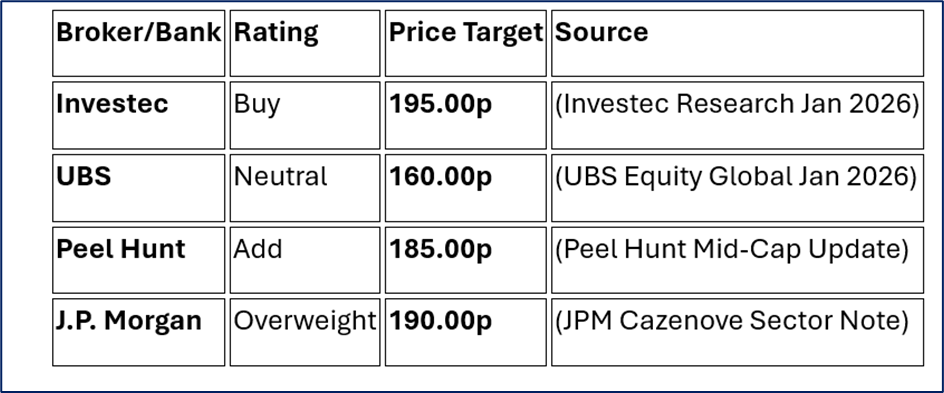
What Do the Experts Say? Top 4 Analyst Forecasts
Source: Market Data
Consensus View: The median price target sits around 189.00p, representing a potential 20-25% upside from the current surge price. Analysts are particularly impressed by the cost-cutting measures which saved £5.7m in overheads this year.
Investor FAQ: Everything You Need to Know About CRST
- Why did the stock jump in January 2026? The company reported significantly higher-than-expected earnings per share (7.8p) and a massive reduction in net debt (£38.2m), proving the "transformation plan" is working.
- Is the dividend back? Yes, a final dividend of 1.8p has been proposed for FY25, with analysts expecting growth in FY26 as profits stabilize.
- What are the key risks? The primary risks include planning delays (outlets dropped from 44 to 40), fire remediation costs (though largely provisioned for), and any potential "sticky" inflation that keeps interest rates higher for longer.
- What is the current business model? The company has shifted from volume-chasing to value-creation, focusing on the mid-premium segment which is less sensitive to interest rate fluctuations.
Investment Conclusion: Buy, Sell, or Hold?
Verdict: Strong Buy (For Growth & Income Recovery)
The data suggests that Crest Nicholson has successfully navigated its most difficult period. With a 56% jump in earnings, a proposed dividend, and a UK economy entering a lower-rate cycle, the stock appears significantly undervalued relative to its historical multiples. While risks in the planning system remain, the company's robust balance sheet and strategic pivot to premium housing make it a top contender for the best-performing FTSE 250 stock of 2026.


 Jun 03, 2026




 Please wait processing your request...