Kalkine’s Global Tariff Report delivers objective, data-driven insights into key global sectors impacted by tariff fluctuations. It assesses how these changes influence equity valuations across affected industries, with a focus on trade-sensitive sectors that often attract increased investor attention during times of tariff-related uncertainty. The report also highlights defensive and countercyclical segments that tend to show resilience—or even outperformance—amid disruptions in global trade dynamics.
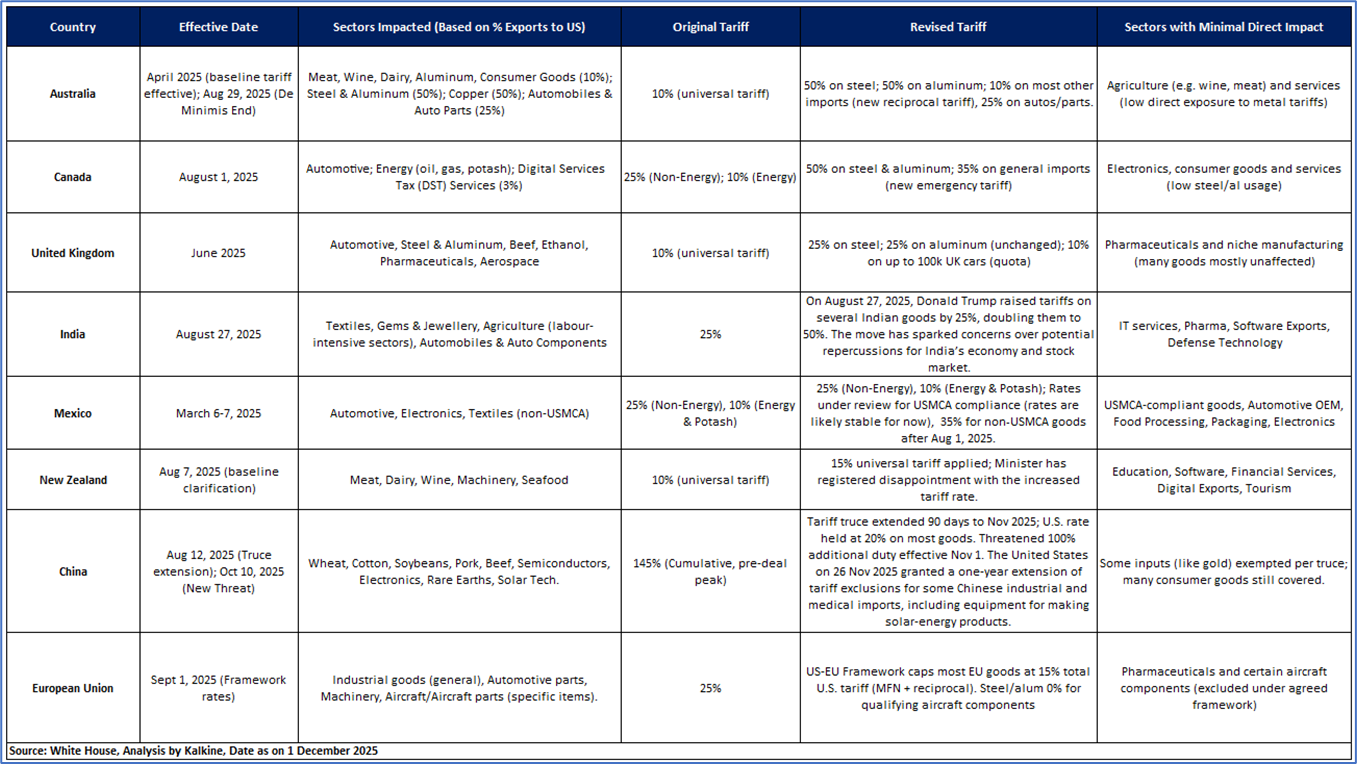
As illustrated in the table below, several key sectors in different countries are directly impacted by the recent tariff announcement from President Trump.

Key Highlights
Latest Key Developments (as of 1 December 2025)
- U.S. Maintains Broad Tariffs on Australia but Signals Selective Relief: The United States has retained a 10% baseline tariff on most Australian exports under the 2025 “Liberation Day tariffs” structure, resulting in additional costs for a range of everyday goods entering the U.S. market. However, the recent U.S. decision to roll back tariffs on Australian beef offers partial relief and is being viewed as a potential opening for further easing on select food-related products.
- China — tariff exclusions extended: On November 26, 2025, the U.S. announced a one-year extension of tariff exclusions for many Chinese industrial and medical products (like solar-energy parts, pump components, printed circuit boards), easing pressure on some supply-chains under the China-U.S. trade truce.
- China — partial tariff reductions after Trump–Xi agreement: As part of the trade deal with Xi Jinping, the U.S. halved tariffs on certain Chinese goods — including those related to fentanyl-precursor chemicals — and China agreed to suspend its own retaliatory trade restrictions.
- Rollback on Brazilian agricultural tariffs: Trump removed 40% tariffs on key Brazilian food imports — including beef, coffee, cocoa and fruits — reversing earlier punitive tariffs aimed at Brazil.
- Latest Market Impacts from Trump Tariff Adjustments: Small U.S. retailers are grappling with tighter supply chains, inventory shortages, and rising costs ahead of the holiday season as tariff-driven price spikes disrupt sourcing and force them to reevaluate suppliers. However, some companies are beginning to soften or delay previously planned price hikes as tariff rules become clearer and new exemptions ease pressure on certain imported goods. Meanwhile, the recent rollback of tariffs on Brazilian beef may provide some relief for consumers through lower prices, but it is creating competitive pressure for U.S. ranchers who had previously benefited from elevated domestic pricing under the earlier tariff regime.
- Broad “baseline + reciprocal” tariff regime still nominally in effect: Under the “Liberation Day” (April 2025) tariff plan, a 10% base tariff on imports from most countries remains, with additional “reciprocal” tariffs for many nations — though exemptions and removals are changing the actual impact.
- U.S. Eases Tariffs on Indian Goods: The U.S. recently imposed steep “reciprocal” tariffs on Indian goods — 25%, plus an additional 25% penalty tied to India’s continued purchases of Russian oil — pushing duties on many exports from India to as high as 50%. As of November 2025, the U.S. has rolled back tariffs on more than 200 food- and agricultural-item categories (tea, coffee, spices, some processed foods, etc.), which offers some relief and renewed opportunity for certain Indian exporters.
- Canada Confronts Escalating U.S. Tariff Pressures: Canada now faces a sharply tightened U.S. tariff landscape, with 50% duties on steel and aluminum and new 10–25% tariffs on lumber and wood furniture set to rise to as high as 50% by early 2026. While Canada has dropped most counter-tariffs on USD 44.2 billion of U.S. goods—retaining only metals and auto-related duties—the ongoing reviews targeting semiconductors, pharmaceuticals, truck parts, and film products signal further risk. Core sectors including energy, metals, automotive manufacturing, and heavy machinery remain most exposed, heightening costs and strain across North American construction, manufacturing, and cross-border supply chains.
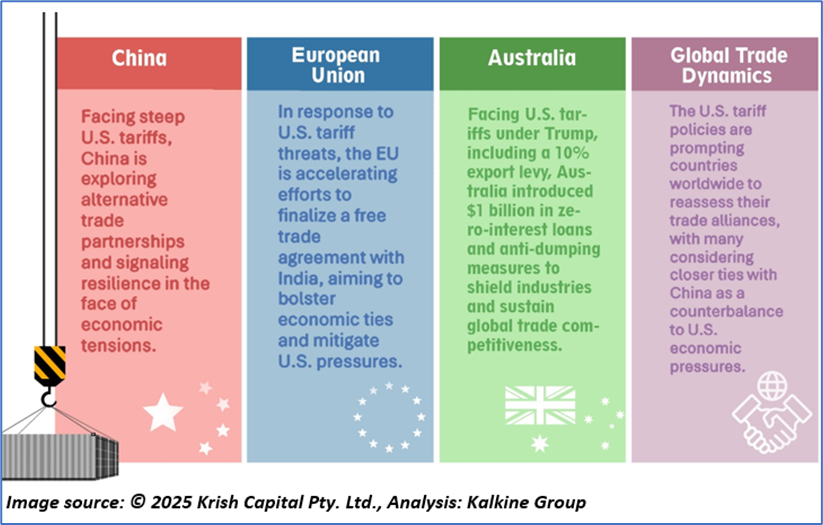
Global Implications of Tariffs

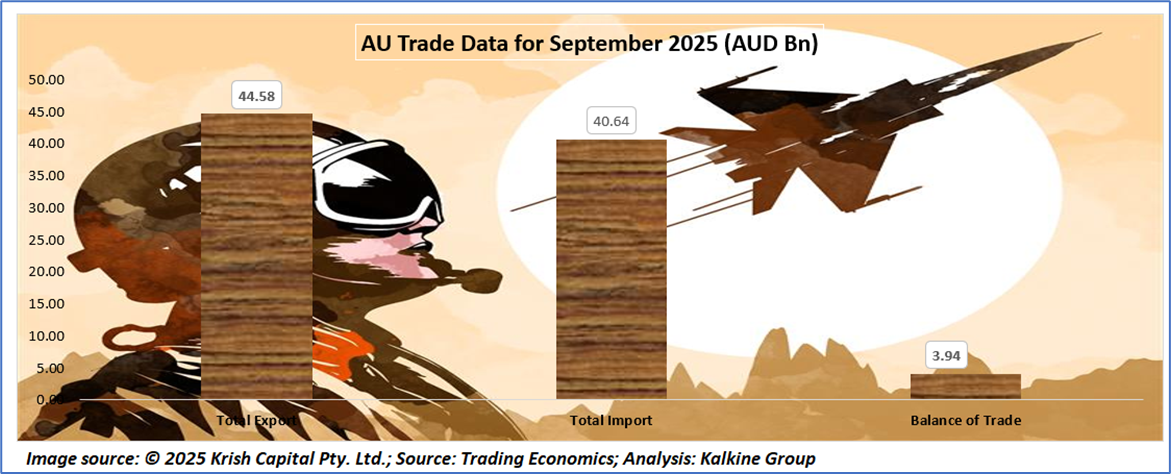
Australia’s latest external sector indicators show a mixed but stabilizing outlook. The trade balance strengthened to AUD 3.94 billion in September 2025, supported by rising exports (AUD 44.6 billion) outpacing imports, which plateaued at a record AUD 40.6 billion. However, the current account remains in deficit at AUD –13.65 billion, reflecting softer services exports and higher income outflows, keeping the ratio steady at –2% of GDP. Capital inflows improved to AUD 17.7 billion, while foreign direct investment surged to AUD 81 billion, signaling renewed investor confidence. Despite stable terms of trade at 114 points and steady gold reserves, external debt remains elevated at AUD 2.68 trillion. Tourist arrivals fell from the previous quarter, indicating ongoing volatility in the services sector.

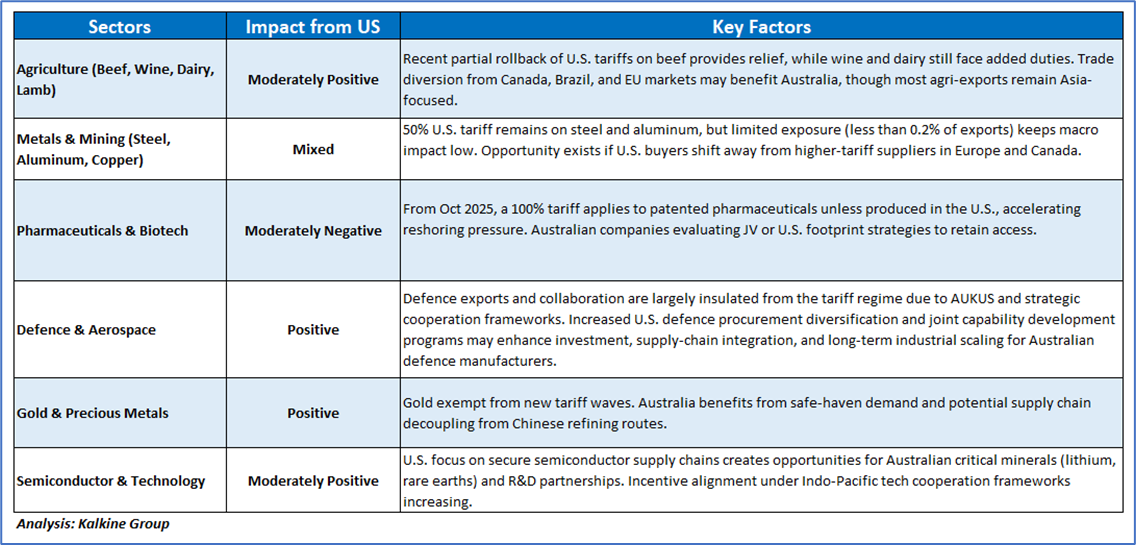

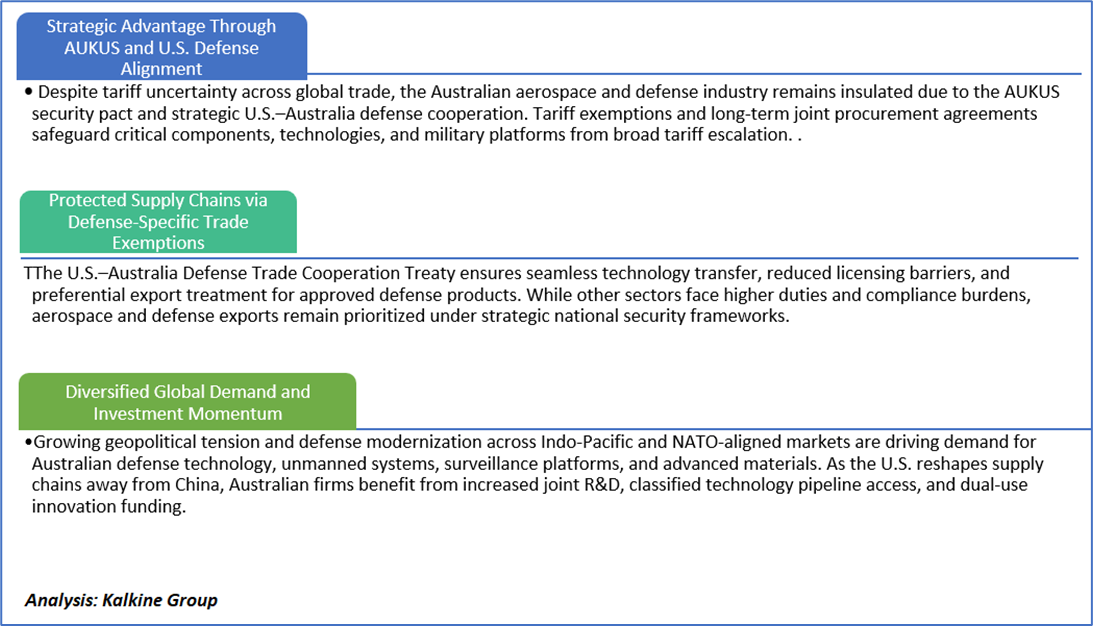
Amid elevated Market Volatility and Tariff pressures, HighCom Limited (ASX: HCL) stands out as a defensive pick within the Aerospace and Defense sector, supported by rigorous fundamental and technical research.
Section 1: Company Overview and Fundamentals Insights
Company Overview: HighCom Limited (ASX: HCL) is an Australia-based defense and security technology company, operating through two segments: HighCom Armor (ballistic protection products) and HighCom Technology (including small, unmanned aircraft systems, sensors, integration, and support).
Kalkine’s Global Tariff Report covers the Investment Highlights, Key Financial Metrics, Risks, and Technical Analysis along with the Valuation, Target Price, and Recommendation on the stock.
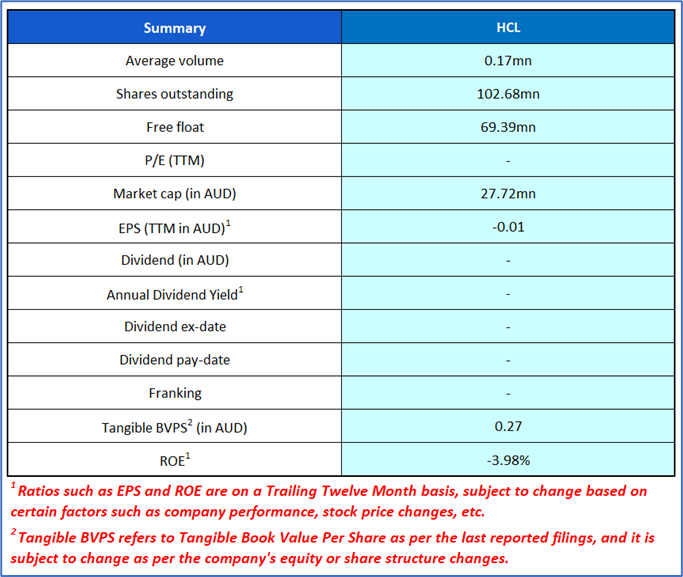
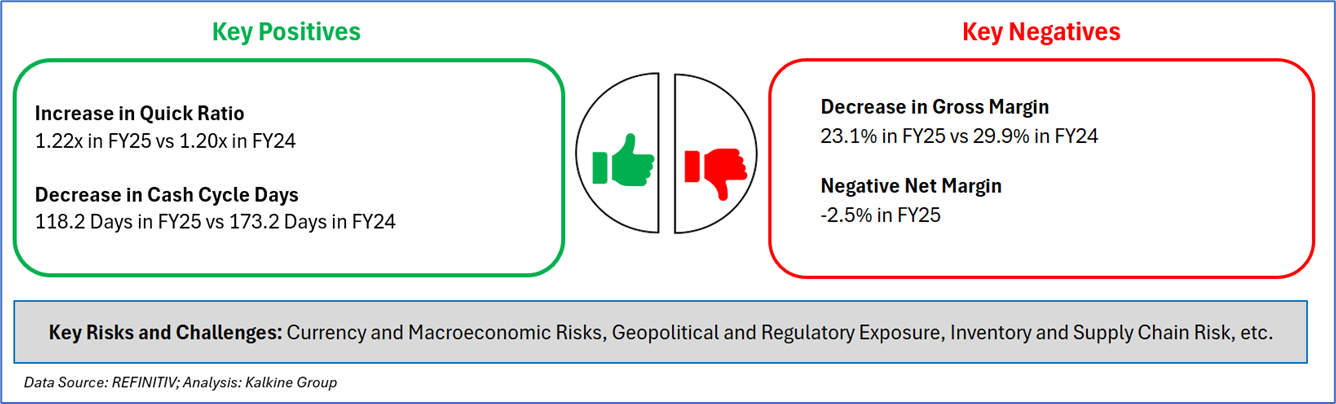
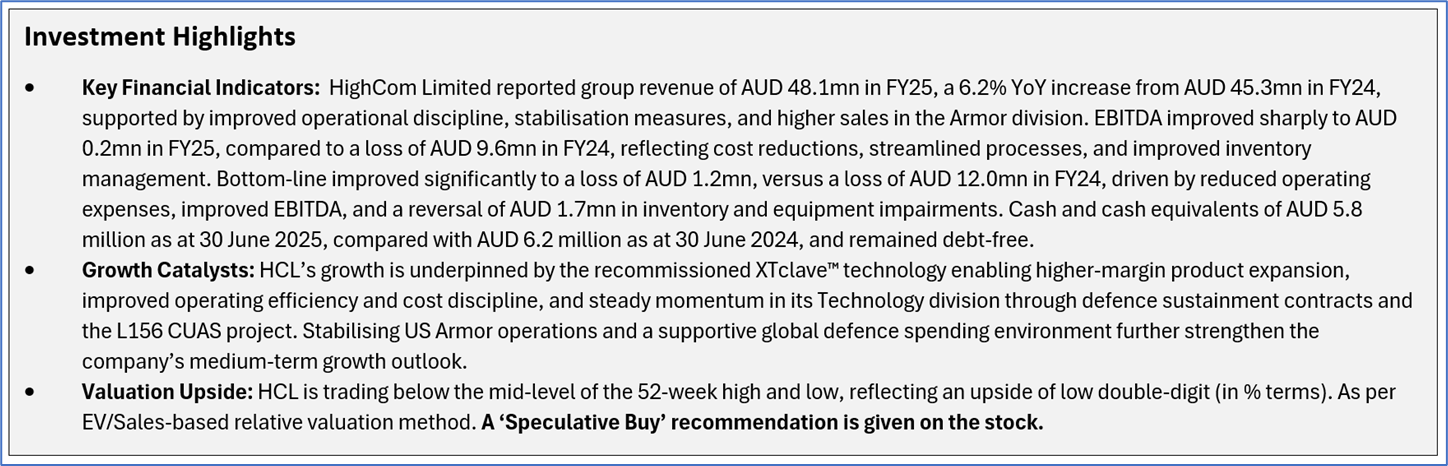
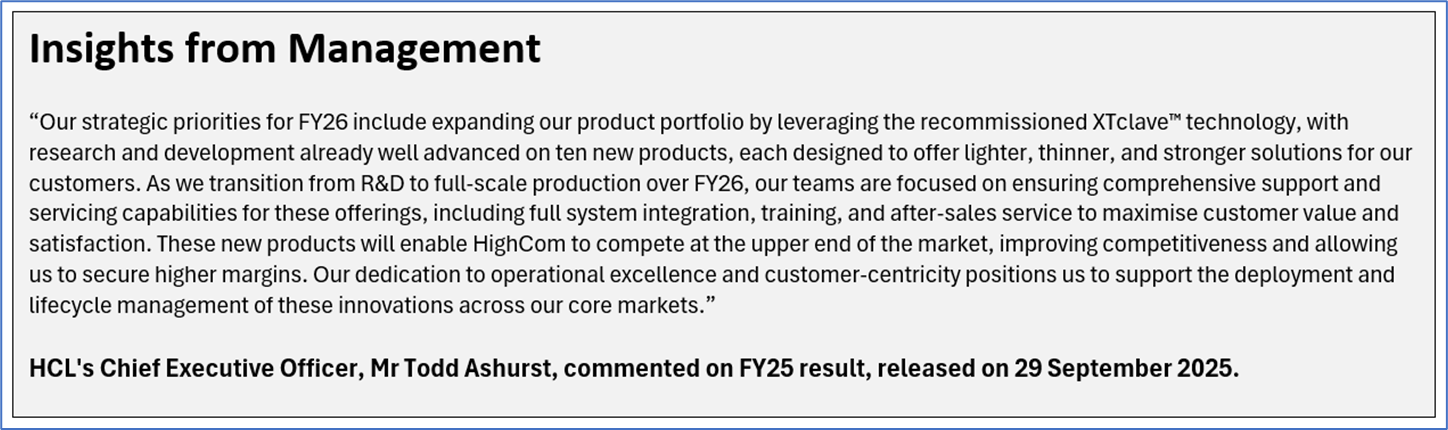
1.2 The Key Positives, Negatives, Investment Highlights, and Risks
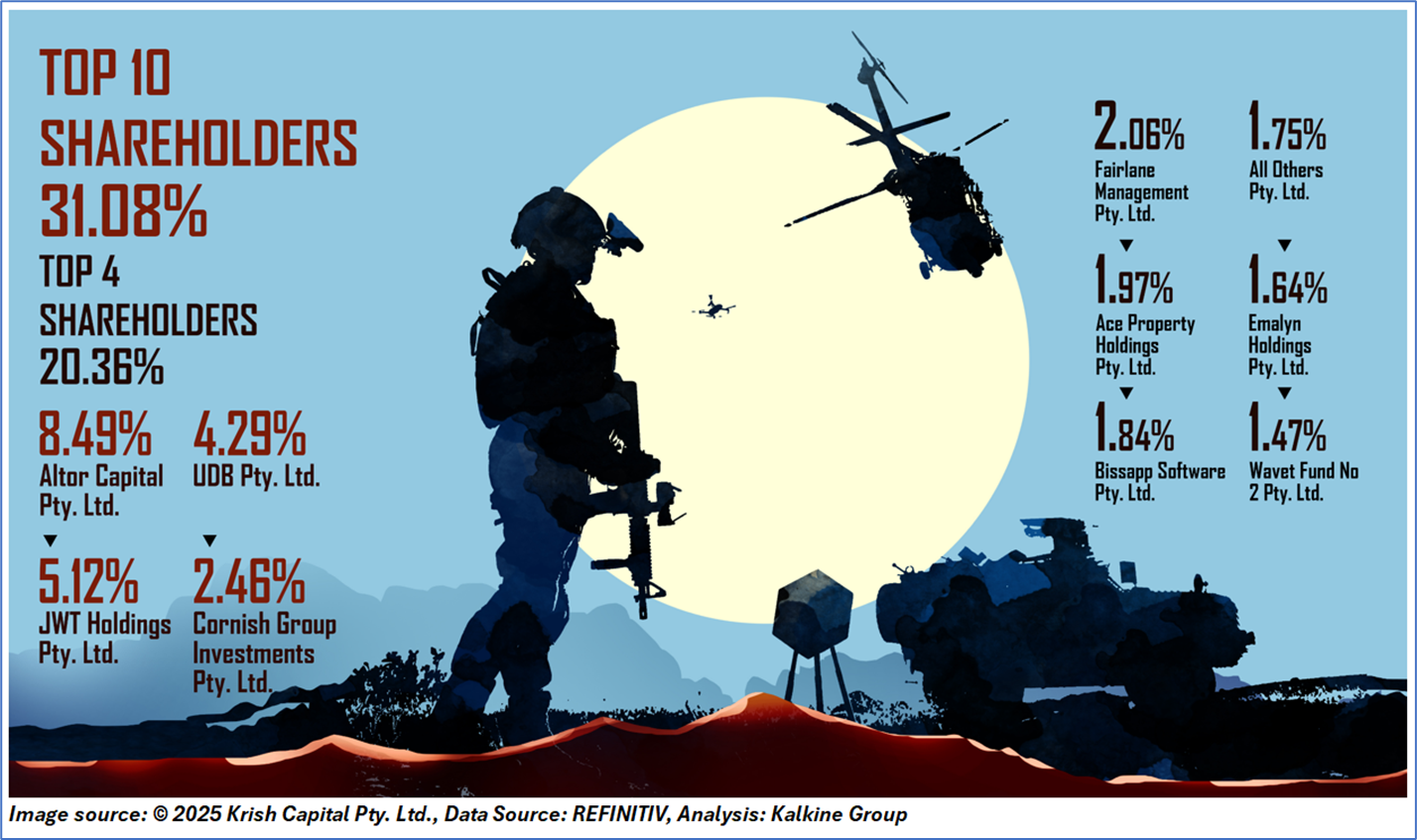
1.3 Top 10 Shareholders:
The top 10 shareholders together form ~31.08% of the total shareholding. Altor Capital Pty. Ltd., and JWT Holdings Pty. Ltd. hold maximum stakes of 8.49% and 5.12%, respectively.
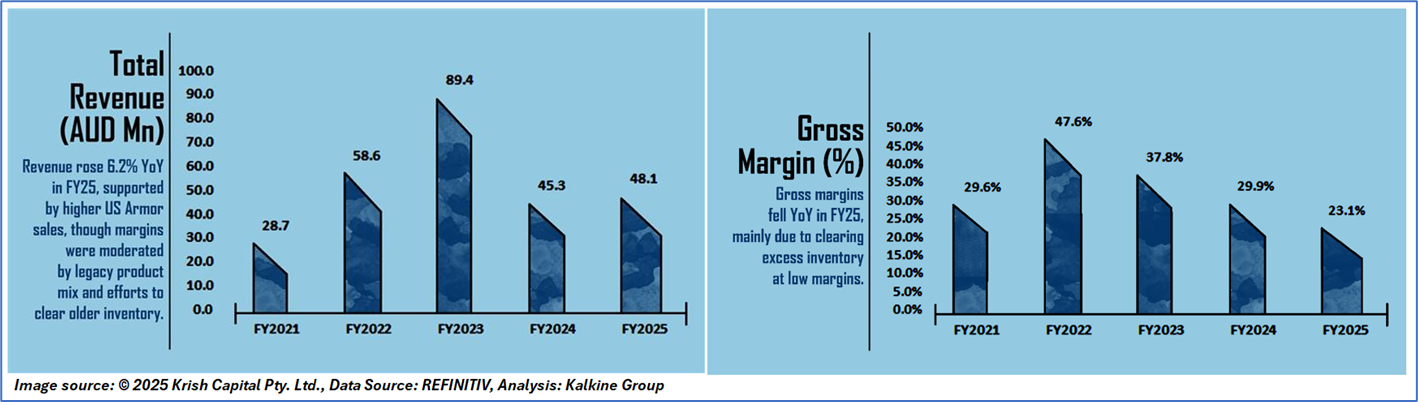
1.4 Key Metrics: HLS’s average accounts receivable days decreased to 30.2 days in FY25 compared to 125.9 days in FY24. Below is captured other metrics:
Section 2: Business Updates, Financial and Operational Highlights
2.1 Recent Business Updates:
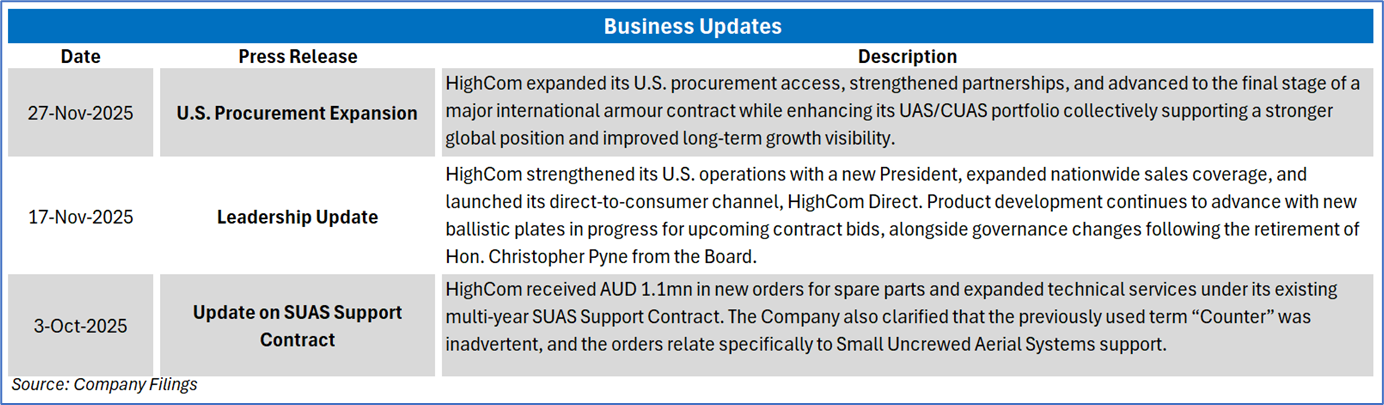
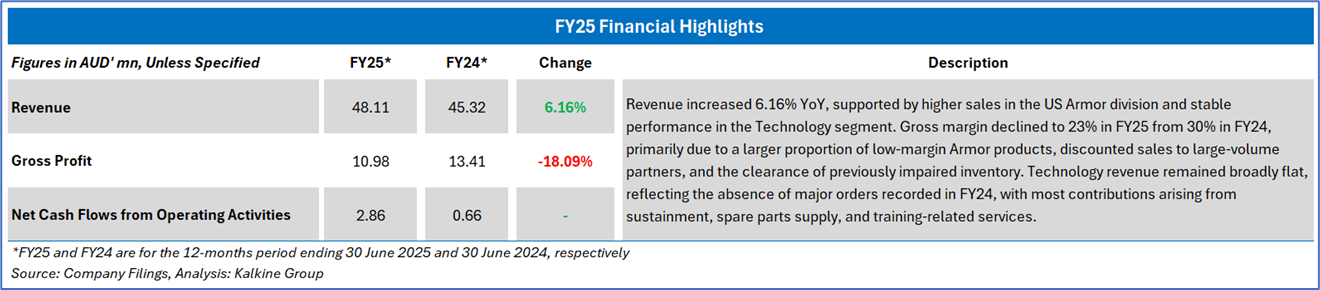
2.2 FY25 Results Highlights (for the 12 months ended 30 June 2025): Below mentioned are some key financial highlights:
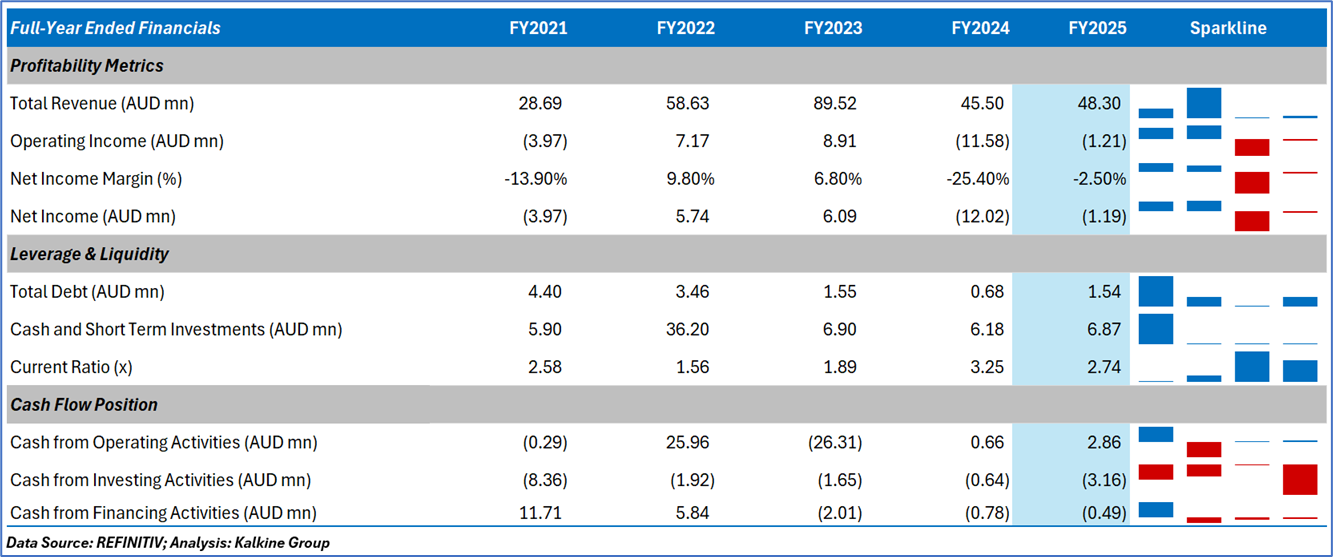
2.3 Historical Financial Trend
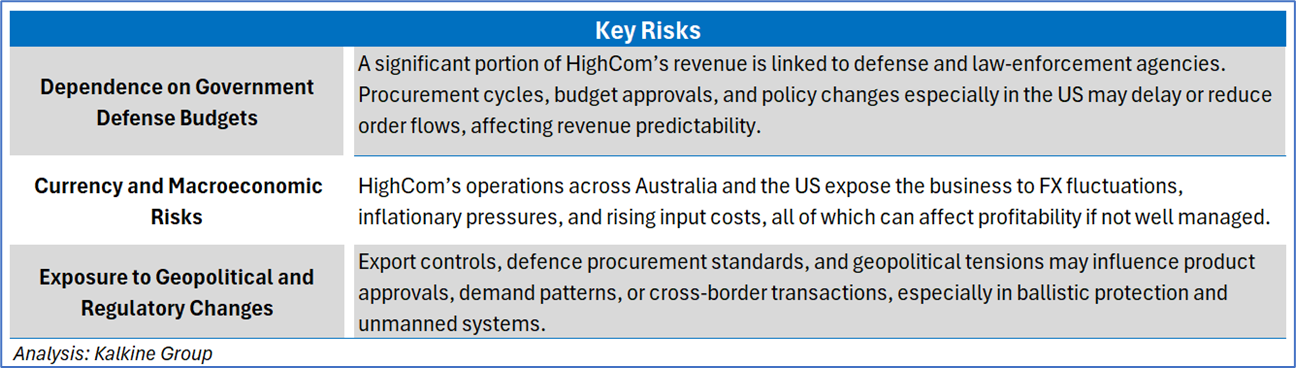
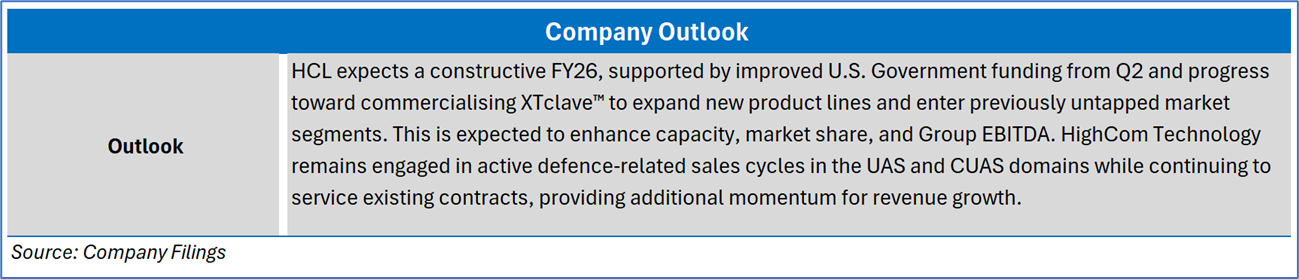
Section 3: Key Risks and Outlook:
Section 4: Stock Recommendation Summary
4.1 Price Performance and Technical Summary
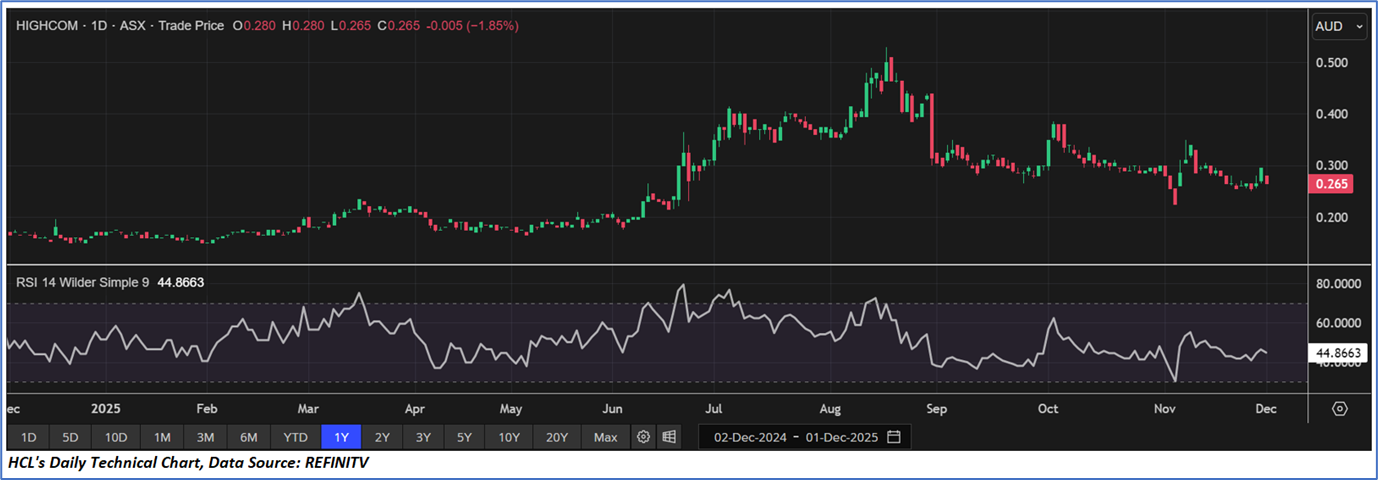
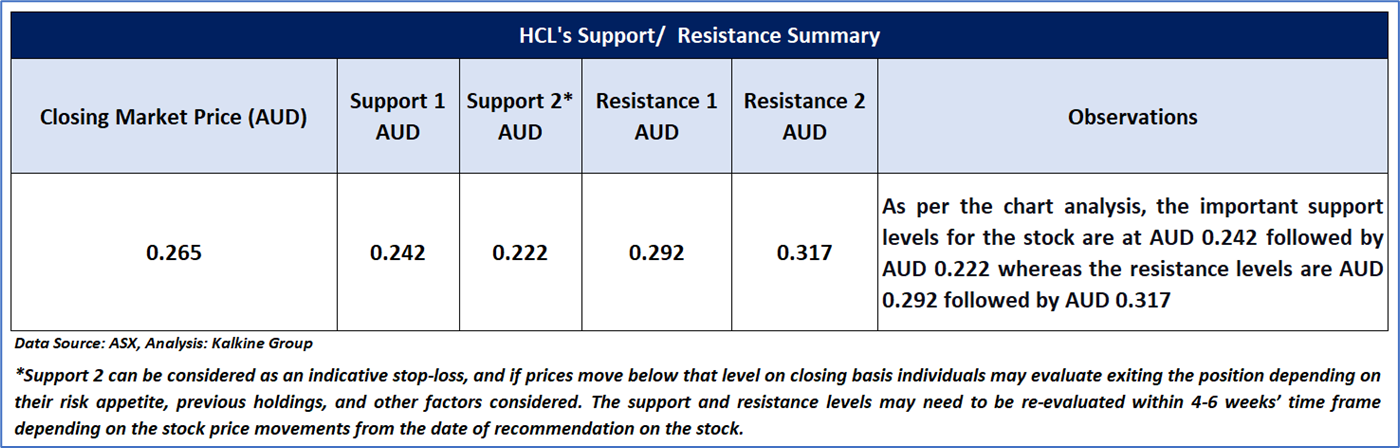
The stock has decreased by ~13.11% in the last three months, and over the past six months, stock has increased by ~32.50%. The stock has a 52-week low and 52-week high of AUD 0.150 and AUD 0.530, respectively, and is currently trading below the 52-week high-low average. HCL was last covered in a report dated ‘07 July 2025’.
4.2 Fundamental Valuation and Stock Recommendation
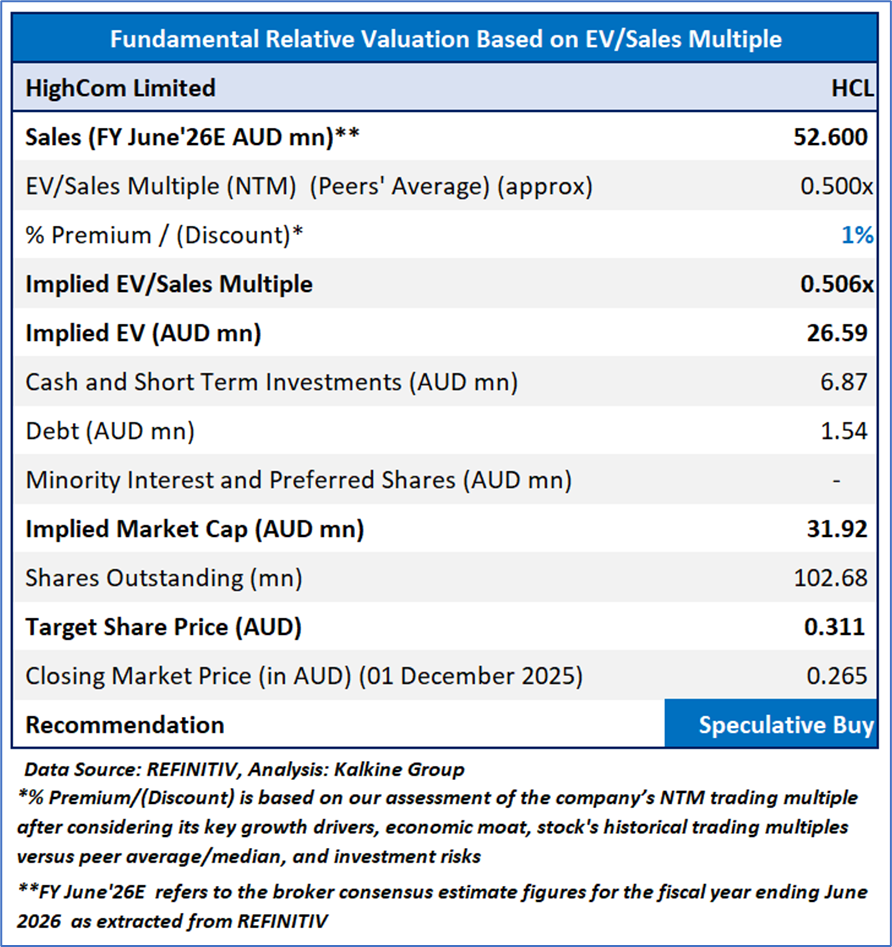
Markets are trading in a highly volatile zone currently due to certain macro-economic issues and geopolitical tensions prevailing. Therefore, it is prudent to follow a cautious approach while investing.
Note 1: Past performance is neither an indicator nor a guarantee of future performance.
Note 2: The reference date for all price data, currency, technical indicators, support, and resistance levels is 01 December 2025. The reference data in this report has been partly sourced from REFINITIV.
Note 3: Investment decisions should be made depending on an individual's appetite for upside potential, risks, holding duration, and any previous holdings. An 'Exit' from the stock can be considered if the Target Price mentioned as per the Valuation and or the technical levels provided has been achieved and is subject to the factors discussed above.
Note 4: Kalkine reports are prepared based on the stock prices captured either from REFINITIV or Trading View. Typically, REFINITIV or Trading View may reflect stock prices with a delay which could be a lag of 25-30 minutes. There can be no assurance that future results or events will be consistent with the information provided in the report. The information is subject to change without any prior notice.
Technical Indicators Defined: -
Support: A level at which the stock prices tend to find support if they are falling, and a downtrend may take a pause backed by demand or buying interest. Support 1 refers to the nearby support level for the stock and if the price breaches the level, then Support 2 may act as the crucial support level for the stock.
Resistance: A level at which the stock prices tend to find resistance when they are rising, and an uptrend may take a pause due to profit booking or selling interest. Resistance 1 refers to the nearby resistance level for the stock and if the price surpasses the level, then Resistance 2 may act as the crucial resistance level for the stock.
Stop-loss: It is a level to protect further losses in case of unfavourable movement in the stock prices.
Disclaimer-
This report has been issued by Kalkine Limited (Company number 07903332), a private limited company, incorporated in England and Wales ("Kalkine”). Kalkine.co.uk and associated pages are published by Kalkine. Kalkine is authorised and regulated by the Financial Conduct Authority under reference number 579414.
The information in this report and on the Kalkine website has been prepared from a wide variety of sources, which Kalkine, to the best of its knowledge and belief, considers accurate. Kalkine has made every effort to ensure the reliability of information contained in its reports, newsletters and websites. All information represents our views at the date of publication and may change without notice. The information in this report does not constitute an offer to sell securities or other financial products or a solicitation of an offer to buy securities or other financial products. Our reports contain non personalized recommendations to invest in securities and other financial products.
Kalkine does not offer financial advice based upon your personal financial situation or goals, and we shall not be held liable for any investment or trading losses you may incur by using the opinions expressed in our reports, publications, market updates, news alerts and corporate profiles. Kalkine does not intend to exclude any liability which it is not permitted to exclude under applicable law or regulation. Kalkine’s non-personalised advice does not in any way endorse or recommend individuals, investment products or services for your personal financial situation. You should discuss your portfolios and the risk tolerance level appropriate for your personal financial situation, with a professional authorised financial planner and adviser. You should be aware that the value of any investment and the income from it can go down as well as up and you may not get back the amount invested.
Please also read our Terms & Conditions for further information. Employees and/or associates of Kalkine and its related entities may hold interests in the securities or other financial products covered in this report or on the Kalkine website. Any such employees and associates are required to comply with certain safeguards, procedures and disclosures as required by law.
Kalkine Media Limited, an affiliate of Kalkine, may have received, or be entitled to receive, financial consideration in connection with providing information about certain entity(s) covered on its website including entities covered in this report.
Past performance is not a reliable indicator of future performance.

 AU
AU
 CA
CA
 US
US
 NZ
NZ
 IND
IND

 UK
UK

 Please wait processing your request...