Section 1: Company Overview and Fundamentals
1.1 Company Overview:
Thermo Fisher Scientific Inc (NYSE: TMO) focuses on advancing life sciences research, addressing intricate analytical problems, enhancing laboratory efficiency, and supporting patient health through diagnostics and the creation and production of transformative therapies.
Kalkine’s Low Carbon Research Report covers the Investment Highlights, Low Carbon Emission Initiatives, Key Financial Metrics, Risks, and Technical Analysis along with the Valuation, Target Price, and Recommendation on the stock.
Stock Performance:
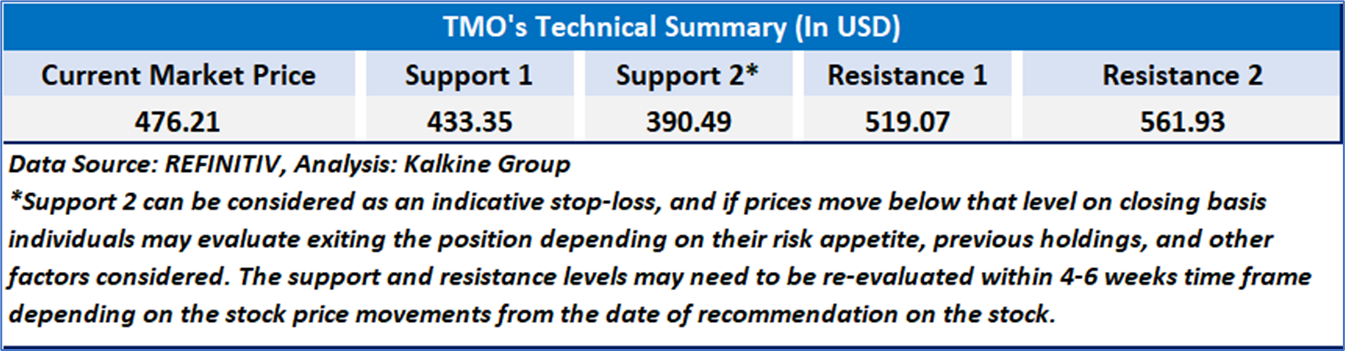
- The stock has recently broken out of a prolonged downtrend that lasted from November 2024 to June 2025. A bullish breakout is observed above the USD 450 resistance level, now acting as support. The current trade price is USD 476.21, indicating strength above both key moving averages.
- 21-day MA is USD 427.84 and 50-day MA is USD 413.95, indicating a cross wherein the 21-day MA has crossed above the 50-day MA, which is a bullish signal. The price is trading well above both moving averages, supporting continued bullish momentum.
- RSI (14) stands at 69.60, approaching overbought territory (above 70). While high, this RSI level is not extreme, indicating room for further upside before a pullback becomes likely.
- A sharp surge in volume on the recent breakout confirms strong buying interest and conviction behind the move. The increased volume suggests institutional participation and validates the breakout.
1.2 Why do Low Carbon Emissions matter?
The shift toward a low-carbon economy is one of the most significant challenges of current time, spurred by the urgent need to combat climate change and reduce the environmental impact of corporate activities. This report covers the US-listed low-carbon emission company Thermo Fisher Scientific Inc (NYSE: TMO), that is committed to sustainability and responsible environmental practices.
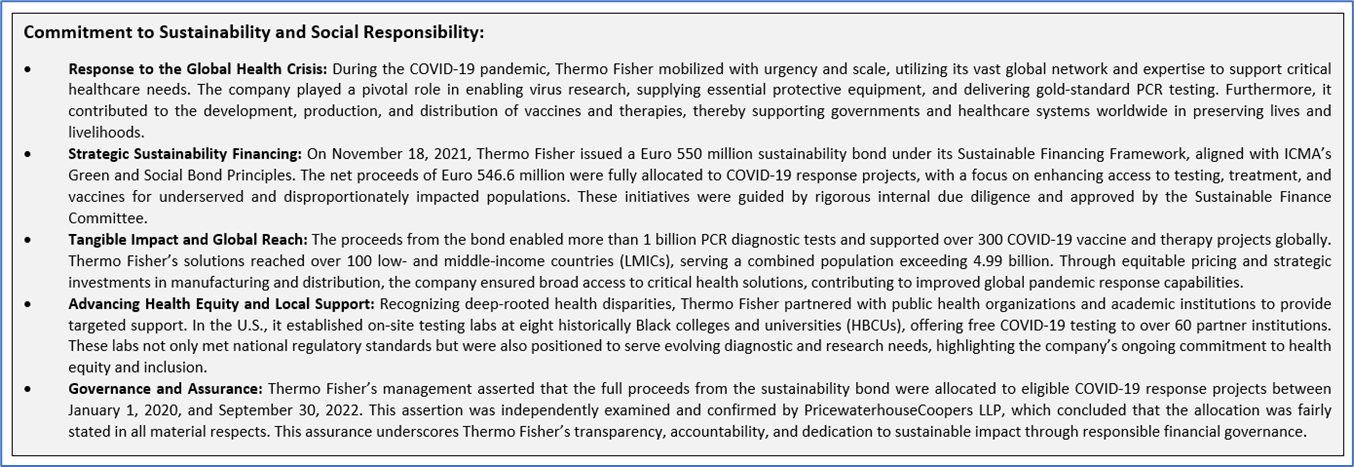
Carbon and Waste Management - Key Metrics
The charts illustrate Thermo Fisher Scientific’s progress in reducing carbon intensity and aligning emission reduction targets over five years. From 2019 to 2023, total CO₂ emissions per million dollars in revenue dropped significantly from 30.43 to 17.72, reflecting improved operational efficiency and sustainability efforts. Despite a slight uptick in 2023, emissions remain well below 2019 levels. Simultaneously, the company elevated its emission reduction target from a consistent 30% (2019–2021) to over 50% in 2022 and 2023, signaling a more aggressive climate strategy. This alignment between measurable performance and ambitious targets underscores Thermo Fisher’s commitment to environmental stewardship.
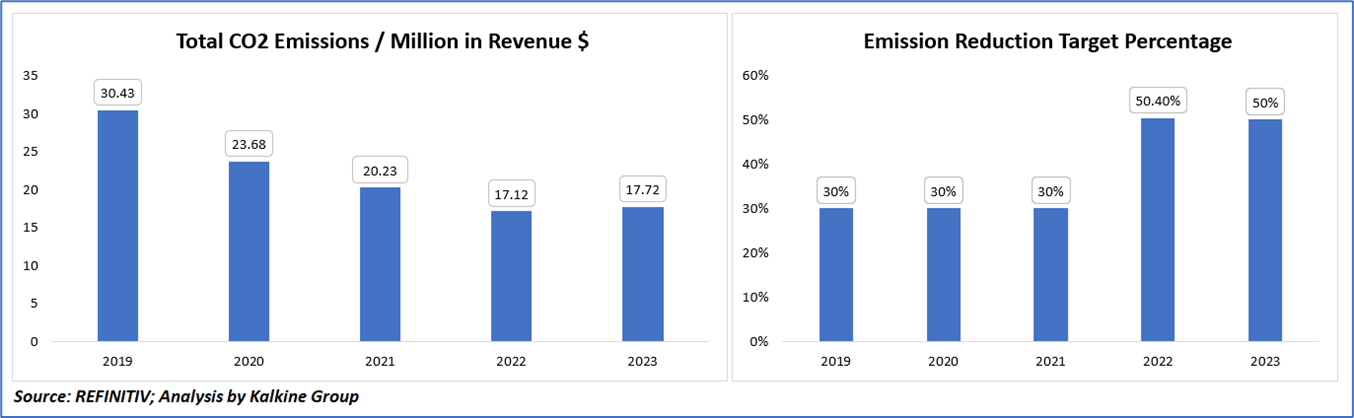
Peer Comparison: Carbon Emission and Waste Management Metrics
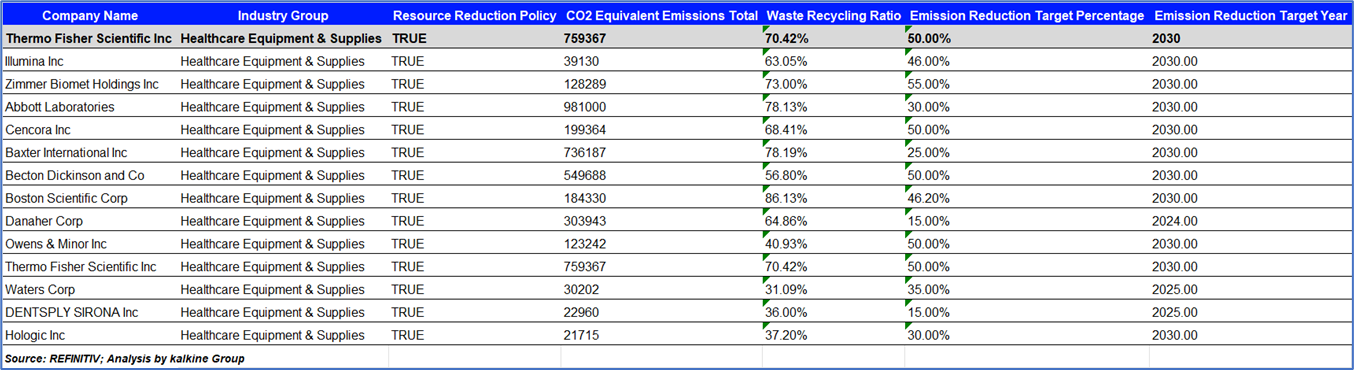
1.2 The Key Positives, Negatives, and Investment summary
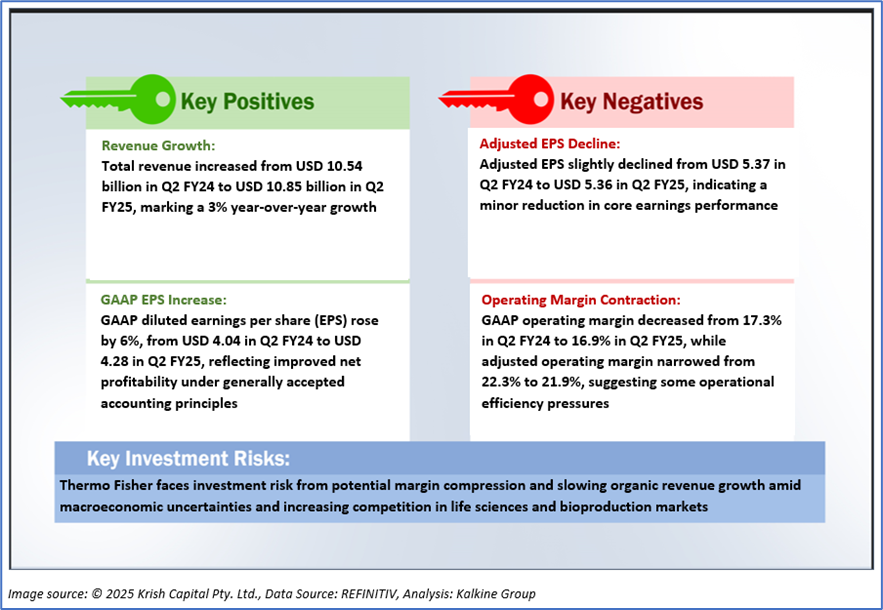
1.3 Top 10 shareholders (As of 31 March 2025):
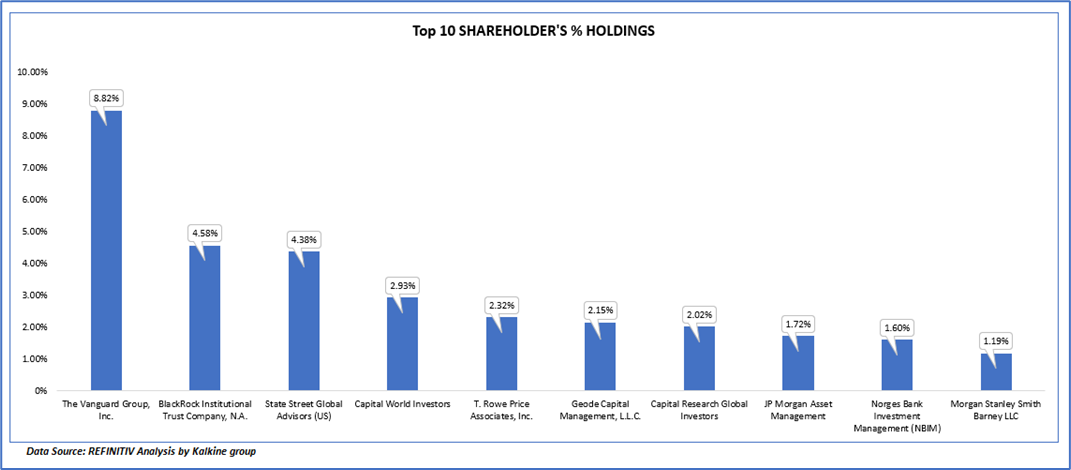
The top 10 shareholders together form ~31.71% of the total shareholding, signifying concentrated shareholding. The Vanguard Group, Inc. and BlackRock Institutional Trust Company, N.A. are the biggest shareholders, holding the maximum stake in the company at 8.82% and 4.58%, respectively.
1.4 Key Metrics
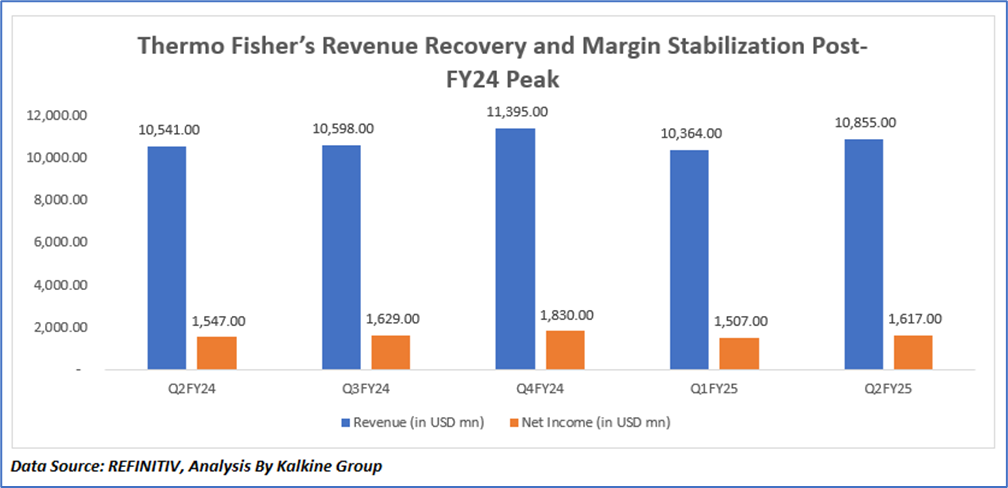
The chart highlights Thermo Fisher Scientific’s revenue and net income trends from Q2 FY24 to Q2 FY25, showing a peak in Q4 FY24 followed by a typical seasonal dip in Q1 FY25 and a recovery in Q2 FY25. Revenue rose from USD 10.54 billion in Q2 FY24 to USD 10.86 billion in Q2 FY25, supported by new product launches and strategic partnerships. Net income followed a similar trajectory, dipping in Q1 FY25 before improving in Q2, though growth remained moderate due to margin compression and increased capital investments. Overall, the trend reflects the company’s resilience and operational adaptability amid macroeconomic headwinds.
Section 2: Business Updates and Corporate Business Highlights
2.1 Business Updates:
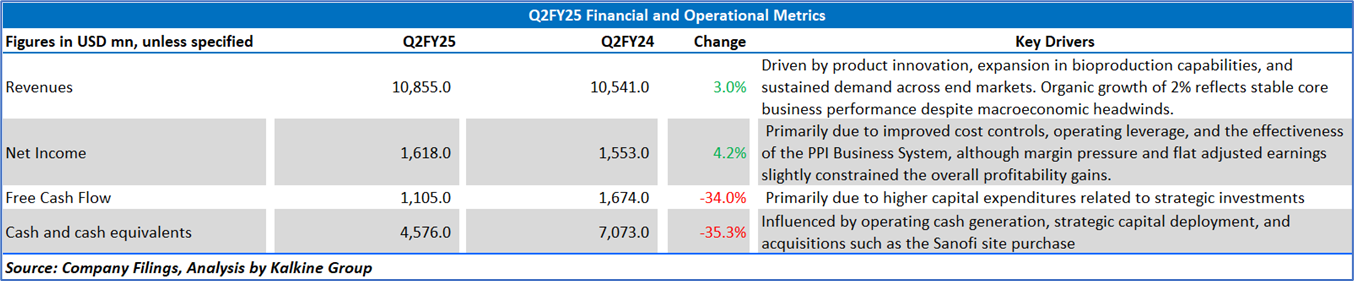
2.2 Insights of Q2 FY25:
Section 3: Key Risks & Outlook
Section 4: Stock Recommendation Summary:
4.1 Price Performance and Technical Summary:
Stock Performance:
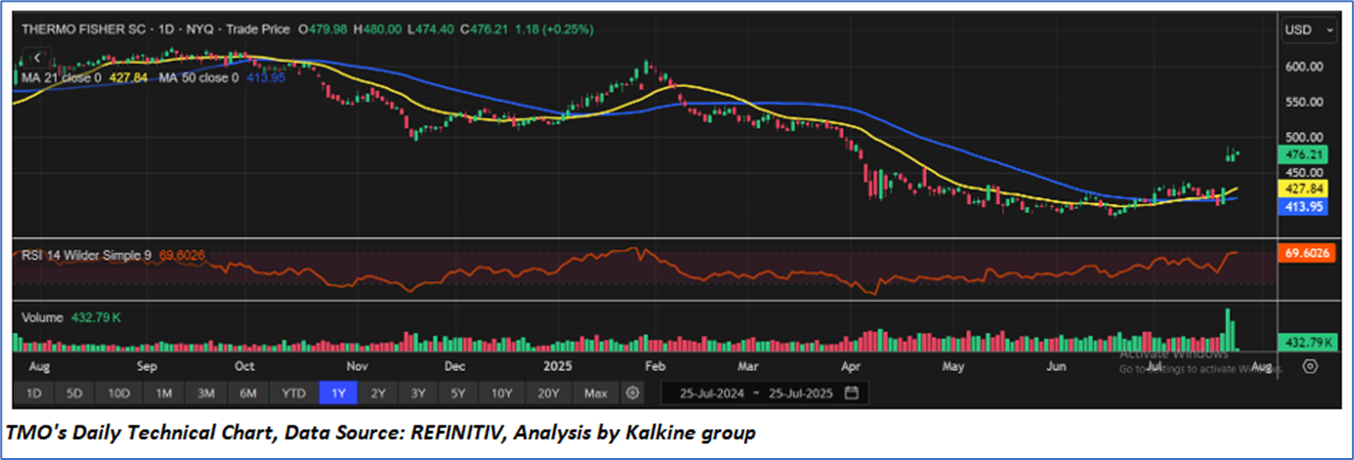
- The stock has recently broken out of a prolonged downtrend that lasted from November 2024 to June 2025. A bullish breakout is observed above the USD 450 resistance level, now acting as support. The current trade price is USD 476.21, indicating strength above both key moving averages.
- 21-day MA is USD 427.84 and 50-day MA is USD 413.95, indicating a cross wherein the 21-day MA has crossed above the 50-day MA, which is a bullish signal. The price is trading well above both moving averages, supporting continued bullish momentum.
- RSI (14) stands at 69.60, approaching overbought territory (above 70). While high, this RSI level is not extreme, indicating room for further upside before a pullback becomes likely.
- A sharp surge in volume on the recent breakout confirms strong buying interest and conviction behind the move. The increased volume suggests institutional participation and validates the breakout.
4.2 Fundamental Valuation
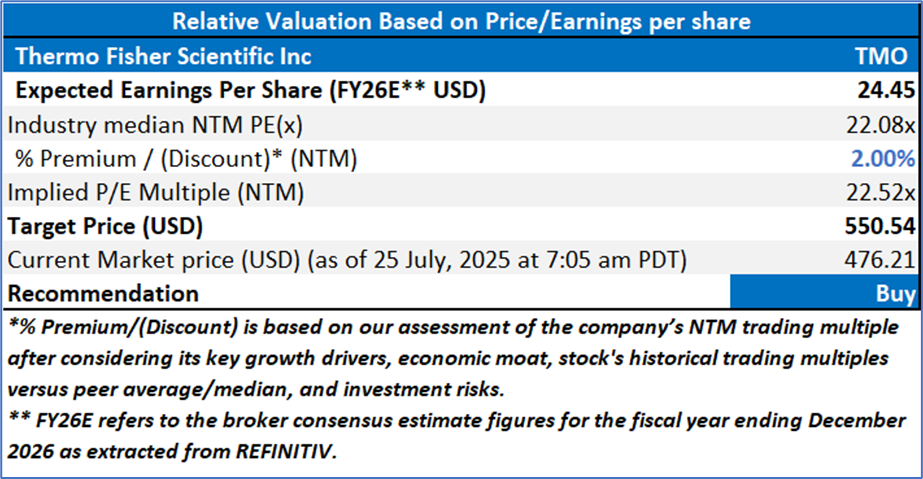
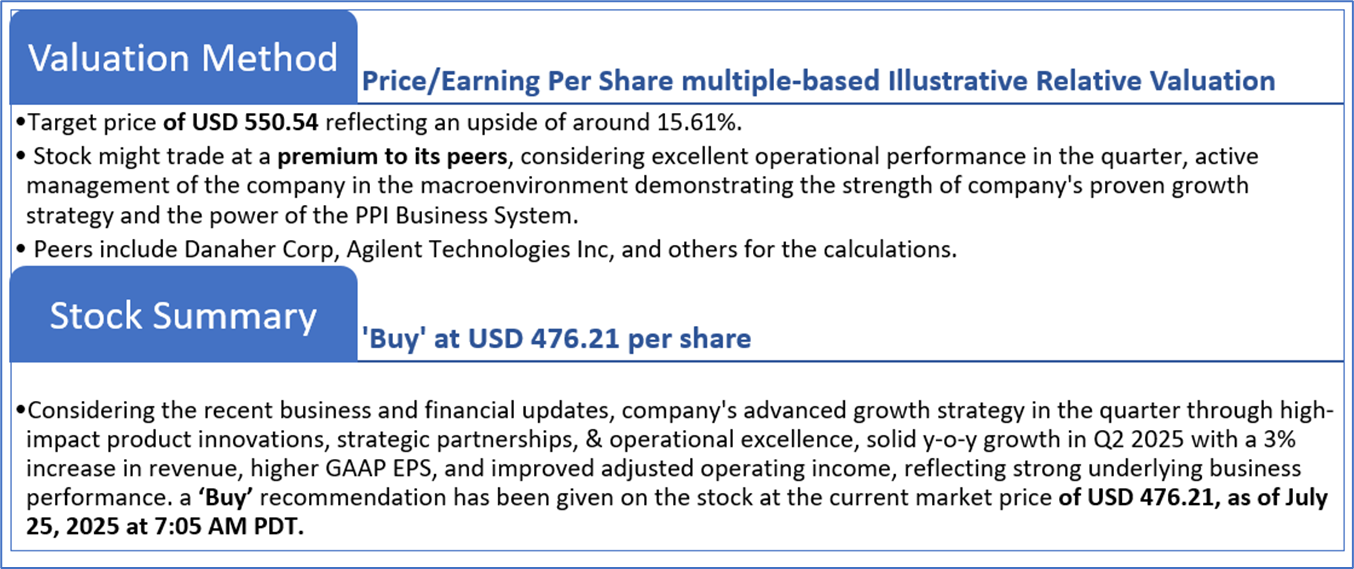
Valuation Methodology: Price/Earnings Per Share Multiple Based Relative Valuation
Markets are trading in a highly volatile zone currently due to certain macroeconomic issues and geopolitical tensions prevailing. Therefore, it is prudent to follow a cautious approach while investing.
Note 1: Past performance is not a reliable indicator of future performance.
Note 2: The reference date for all price data, currency, technical indicators, support, and resistance levels is July 25, 2025. The reference data in this report has been partly sourced from REFINITIV.
Note 3: Investment decisions should be made depending on an individual's appetite for upside potential, risks, holding duration, and any previous holdings. An 'Exit' from the stock can be considered if the Target Price mentioned as per the Valuation and or the technical levels provided has been achieved and is subject to the factors discussed above.
Note 4: The report publishing date is as per the Pacific Time Zone.
Technical Indicators Defined: -
Support: A level at which the stock prices tend to find support if they are falling, and a downtrend may take a pause backed by demand or buying interest. Support 1 refers to the nearby support level for the stock and if the price breaches the level, then Support 2 may act as the crucial support level for the stock.
Resistance: A level at which the stock prices tend to find resistance when they are rising, and an uptrend may take a pause due to profit booking or selling interest. Resistance 1 refers to the nearby resistance level for the stock and if the price surpasses the level, then Resistance 2 may act as the crucial resistance level for the stock.
Stop-loss: It is a level to protect against further losses in case of unfavorable movement in the stock prices.
Disclaimer-
This report has been issued by Kalkine Limited (Company number 07903332), a private limited company, incorporated in England and Wales ("Kalkine”). Kalkine.co.uk and associated pages are published by Kalkine. Kalkine is authorised and regulated by the Financial Conduct Authority under reference number 579414.
The information in this report and on the Kalkine website has been prepared from a wide variety of sources, which Kalkine, to the best of its knowledge and belief, considers accurate. Kalkine has made every effort to ensure the reliability of information contained in its reports, newsletters and websites. All information represents our views at the date of publication and may change without notice. The information in this report does not constitute an offer to sell securities or other financial products or a solicitation of an offer to buy securities or other financial products. Our reports contain non personalized recommendations to invest in securities and other financial products.
Kalkine does not offer financial advice based upon your personal financial situation or goals, and we shall not be held liable for any investment or trading losses you may incur by using the opinions expressed in our reports, publications, market updates, news alerts and corporate profiles. Kalkine does not intend to exclude any liability which it is not permitted to exclude under applicable law or regulation. Kalkine’s non-personalised advice does not in any way endorse or recommend individuals, investment products or services for your personal financial situation. You should discuss your portfolios and the risk tolerance level appropriate for your personal financial situation, with a professional authorised financial planner and adviser. You should be aware that the value of any investment and the income from it can go down as well as up and you may not get back the amount invested.
Please also read our Terms & Conditions for further information. Employees and/or associates of Kalkine and its related entities may hold interests in the securities or other financial products covered in this report or on the Kalkine website. Any such employees and associates are required to comply with certain safeguards, procedures and disclosures as required by law.
Kalkine Media Limited, an affiliate of Kalkine, may have received, or be entitled to receive, financial consideration in connection with providing information about certain entity(s) covered on its website including entities covered in this report.
Past performance is not a reliable indicator of future performance.

 AU
AU
 CA
CA
 US
US
 NZ
NZ
 IND
IND

 UK
UK

 Please wait processing your request...