
 AU
AU
 CA
CA
 US
US
 NZ
NZ
 IND
IND

 UK
UK

 Share
Share
 X (Formerly Twitter)
 Whatsapp
 Facebook
 LinkedIn
 Telegram
 Email This Article
 Copy Link
 Summarize with AI
 Chat GPT
 Perplexity
Why Is FTSE 100 Defence Giant BAE Systems (LON: BA.) Stock Down 5.24% on 5 March 2026 Despite Strong Global Defence Spending?
Key Takeaways (March 2026)
- BAE Systems stock fell about 5.24% on 5 March 2026, making it one of the notable FTSE 100 decliners despite strong long-term defence demand.
• Profit-taking after a strong rally in defence stocks remains a key driver of the short-term correction.
• Broader FTSE 100 market weakness and GBP volatility have triggered temporary risk-off sentiment.
• Global defence spending remains structurally bullish, driven by NATO commitments, geopolitical tensions and defence modernisation.
• BAE Systems continues to maintain a strong order backlog, stable dividend policy and long-term contracts, supporting its investment case.
Why Is BAE Systems Stock Trending in Google Searches and Stock Market News in March 2026?
BAE Systems stock (LON: BA.) is currently trending across Google Finance, FTSE 100 market news, defence sector analysis and dividend stock searches in March 2026 after the share price dropped about 5.24% on 5 March 2026.
Investors tracking FTSE 100 defence stocks, UK aerospace stocks, dividend growth stocks, and geopolitical defence plays are closely watching BAE Systems after the sudden pullback.
Despite the short-term decline, BAE Systems remains one of the most searched defence stocks in the UK stock market, driven by strong global themes including NATO defence spending increases, European military modernisation, US defence contracts and geopolitical tensions in Eastern Europe and the Indo-Pacific.
The sudden fall in the BAE Systems share price has triggered questions among retail investors and institutional investors:
- Is the BAE Systems stock drop just profit-taking?
• Is the FTSE 100 defence rally cooling off?
• Or is this a buy-the-dip opportunity for long-term dividend investors?
Why Did BAE Systems Shares Fall 5.24% on 5 March 2026?
Several macro and company-specific factors contributed to the decline.
Profit Taking After Strong Defence Sector Rally
Defence stocks have been among the best-performing sectors globally over the last two years, driven by rising military spending.
BAE Systems stock had rallied significantly in the past 12–18 months, prompting investors to lock in gains.
Key drivers of profit-taking:
- Defence stocks trading near multi-year highs
• Institutional portfolio rebalancing
• Rotation into undervalued cyclical sectors
Broader FTSE 100 Weakness
The FTSE 100 index also faced pressure in early March 2026 amid:
- Global equity market volatility
• Rising bond yields
• Weak commodity sentiment
• Currency fluctuations
When broader market sentiment weakens, even strong defensive stocks like BAE Systems often decline temporarily.
GBP Strength Impact
The British pound strengthening against the US dollar can sometimes impact FTSE 100 exporters.
BAE Systems generates significant revenue from US defence contracts, so currency movements influence investor sentiment.
Defence Sector Rotation
Some investors rotated from defence into other sectors like:
- Energy transition stocks
• AI and technology stocks
• Commodity producers
This rotation created temporary pressure on defence sector valuations.
How Are Global Defence Spending Trends Supporting BAE Systems Long Term?
The structural demand for defence spending remains extremely strong.
Key global drivers include:
- NATO countries increasing defence spending to 2% of GDP target
• European rearmament initiatives
• US military modernisation
• Rising geopolitical tensions
• Indo-Pacific defence alliances
According to NATO and defence spending projections, global military spending could exceed $3 trillion annually by the early 2030s.
This creates a strong long-term demand pipeline for companies like BAE Systems.
What Is BAE Systems’ Current Business Model and Competitive Advantage?
BAE Systems is one of the world’s largest defence contractors with operations across:
- Aerospace systems
• Combat vehicles
• Naval ships
• Electronic warfare systems
• Cyber security
• Missile systems
Major revenue segments include:
- Air sector – combat aircraft programs including Eurofighter
• Maritime – naval ships and submarines
• Land systems – combat vehicles and artillery
• Electronic systems – sensors, radar and electronic warfare
The company benefits from long-term government contracts, which provide predictable revenue visibility.
BAE Systems reported strong operational performance in its latest update:
- Growing order backlog
• Stable margins
• Strong defence program pipeline
• Continued dividend growth (Company Annual Results)
How Does the UK Economy and FTSE Market Environment Affect BAE Systems Stock?
The broader UK macroeconomic environment also influences investor sentiment.
UK Economy
The UK economy currently faces:
- Moderate GDP growth
• Sticky inflation
• Interest rate uncertainty
However defence spending remains relatively insulated from economic cycles because governments prioritise national security.
FTSE 100 Market Trends
The FTSE 100 index is heavily weighted toward:
- Energy companies
• Mining companies
• Financial institutions
• Defence contractors
BAE Systems benefits from global revenue exposure, which reduces domestic economic risk.
How Does BAE Systems Compare With Global Defence Peers?
Peer benchmarking highlights BAE Systems’ strong competitive position.
Major global competitors include:
- Lockheed Martin
• Northrop Grumman
• RTX Corporation
• Leonardo
• Thales
Key competitive strengths:
- Strong presence in both US and European defence markets
• Long-term government relationships
• Diversified defence portfolio
• Strong order backlog
What Is the Sector Outlook for Defence Stocks?
Short Term Outlook
Short-term sentiment may remain volatile due to:
- Market corrections
• Interest rate concerns
• sector rotation
However structural demand remains intact.
Medium Term Outlook
Over the next few years:
- NATO defence spending expansion
• European military modernisation
• US defence budgets
These trends strongly support defence contractors.
Long Term Outlook
The long-term outlook appears structurally bullish because of:
- geopolitical competition
• cyber warfare
• AI-enabled defence technologies
• autonomous weapons systems
Is BAE Systems Stock Bullish or Bearish Right Now?
Short Term Sentiment
Short term outlook appears neutral to slightly bearish due to:
- profit-taking
• broader market volatility
Long Term Sentiment
Long term outlook remains bullish driven by:
- structural defence demand
• strong order backlog
• government contracts
• dividend stability
What Strategies Could Investors Consider?
Short Term Strategy (3–6 Months)
Investors may consider:
- monitoring volatility
• watching macroeconomic indicators
• tracking defence contract announcements
Medium Term Strategy
Medium-term investors may focus on:
- defence spending trends
• NATO budgets
• new weapons programs
Long Term Strategy
Long-term investors typically focus on:
- dividend growth potential
• structural defence demand
• geopolitical drivers
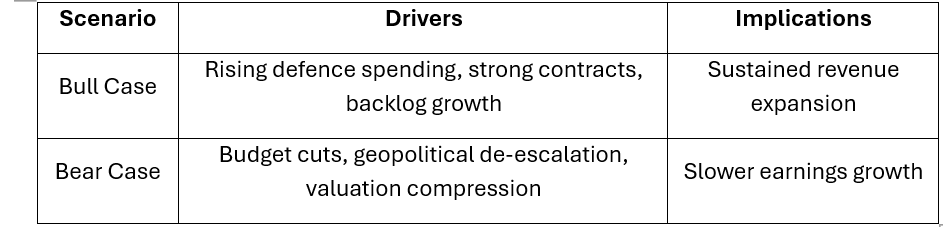
What Are the Bull vs Bear Scenarios for BAE Systems Stock?
What Do Top Analysts Forecast for BAE Systems?
Analyst sentiment remains broadly positive.
Major broker views include:
- Goldman Sachs – Positive outlook on defence sector
• JP Morgan – Strong long-term demand visibility
• Barclays – Defence spending tailwinds remain strong
• UBS – Stable earnings outlook
Consensus analyst sentiment remains largely positive for the defence sector.
What Are the Key Risks Investors Should Watch?
Important risks include:
- Government defence budget changes
• geopolitical de-escalation
• supply chain disruptions
• currency fluctuations
How Does BAE Systems Score on ESG Factors?
ESG performance is increasingly important.
Environmental
- Investments in sustainable manufacturing
• Reduced carbon footprint initiatives
Social
- Strong workforce safety standards
• global employment programs
Governance
- transparent reporting
• strong board oversight
FAQ Schema
Why did BAE Systems stock fall on 5 March 2026?
Profit taking, broader market weakness and sector rotation contributed to the decline.
Is BAE Systems a dividend stock?
Yes, the company has historically maintained a stable dividend policy.
Is defence spending increasing globally?
Yes, NATO and global defence budgets are expanding significantly.
Is the BAE Systems long-term outlook positive?
Most analysts believe structural defence demand supports long-term growth.
Final Investment Conclusion: Is BAE Systems a Buy After the Drop?
The 5.24% drop in BAE Systems stock on 5 March 2026 appears largely driven by short-term market factors rather than a fundamental deterioration in the business.
The company continues to benefit from:
- strong global defence spending
• long-term government contracts
• growing order backlog
• stable dividend policy
While short-term volatility may persist, the long-term structural demand for defence technologies suggests that BAE Systems remains one of the most strategically positioned defence companies in the FTSE 100.


 Jun 05, 2026




 Please wait processing your request...