
 AU
AU
 CA
CA
 US
US
 NZ
NZ
 IND
IND

 UK
UK

 Share
Share
 X (Formerly Twitter)
 Whatsapp
 Facebook
 LinkedIn
 Telegram
 Email This Article
 Copy Link
 Summarize with AI
 Chat GPT
 Perplexity
Key Takeaways
- UK economy grew only 0.1% in Q3 2025, signalling a mild slowdown tied to manufacturing disruptions.
- Consumer spending has softened as households delay purchases ahead of Black Friday and the upcoming budget.
- Fintech and trading apps continue to gain popularity, pointing to a new wave of retail-driven investing in the UK.
- FTSE 100 and LSE-listed stocks in manufacturing, retail, and fintech could see mixed moves as sentiment shifts.
UK Economy Crawls Ahead — Cyber Hit Dampens Q3 Growth
The latest data show that the UK economy expanded by just 0.1% in the third quarter, falling short of expectations. The slowdown was largely blamed on a cyber-attack at Jaguar Land Rover (JLR) that temporarily disrupted car manufacturing. Industrial output dropped sharply in September, raising questions about how secure supply chains are across the manufacturing sector.
UK GDP Crawls to Just 0.1% Growth in Q3 2025 — Investors Eye Bank of England for the Next Move
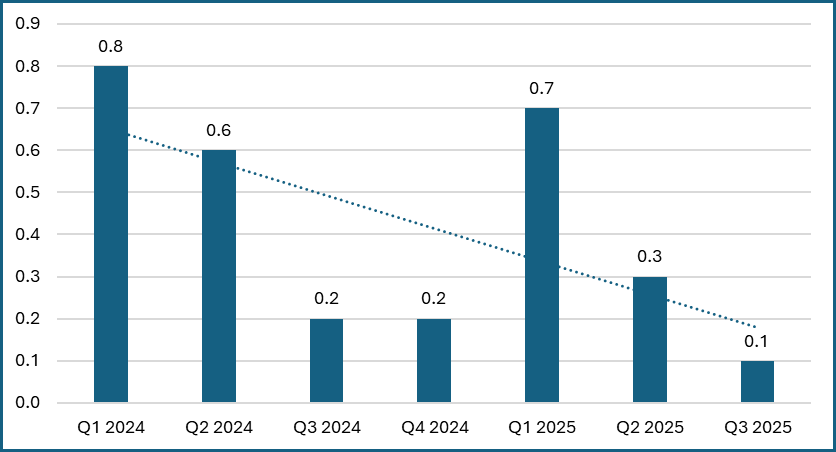
Source: ONS, Analysis: Kalkine Group
For investors, this minor GDP gain signals a balancing act for the Bank of England. Markets are now watching closely for any hint of a rate cut to support growth. Lower rates could lift interest-sensitive stocks such as Taylor Wimpey (LSE: TW.), Barratt Developments (LSE: BDEV), and Berkeley Group Holdings (LSE: BKG) — all of which benefit when borrowing costs ease.
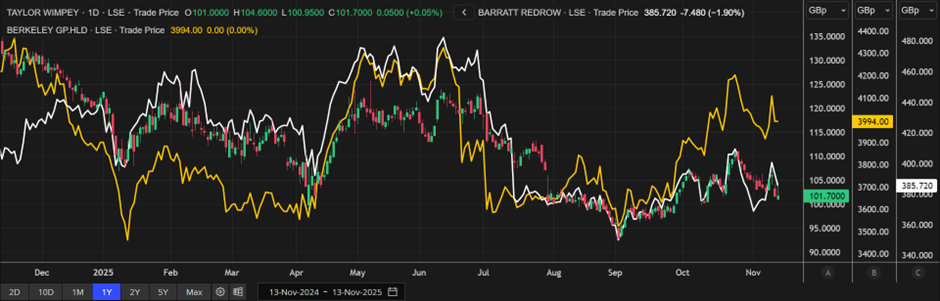
Source: EODHD/Others; Date: 13 November 2025
At the same time, export-linked names like Rolls-Royce Holdings (LSE: RR.) and BAE Systems (LSE: BA.) may gain from a potentially weaker pound, improving their global competitiveness.
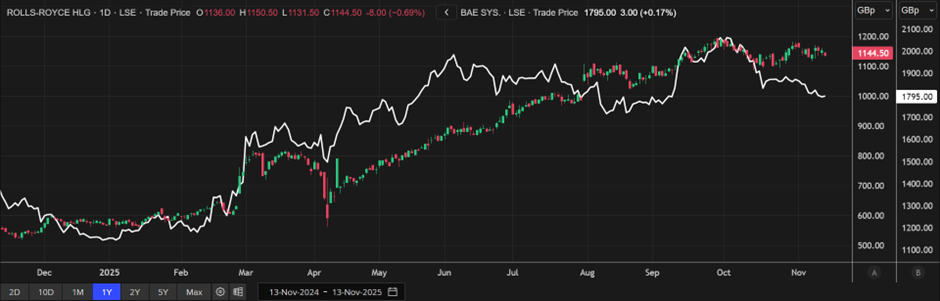
Source: EODHD/Others; Date: 13 November 2025
UK Consumers Tighten Spending Ahead of Budget Season
With Black Friday approaching, shoppers are treading carefully. Reports show a clear slowdown in household spending, with many consumers waiting for deeper discounts or policy cues from the government’s forthcoming budget.
This cautious tone has weighed on retail and consumer discretionary stocks such as Next (LSE: NXT), Marks & Spencer Group (LSE: MKS), and Tesco (LSE: TSCO). Analysts note that while big retailers are offering aggressive promotions, margins remain under pressure due to high logistics costs.
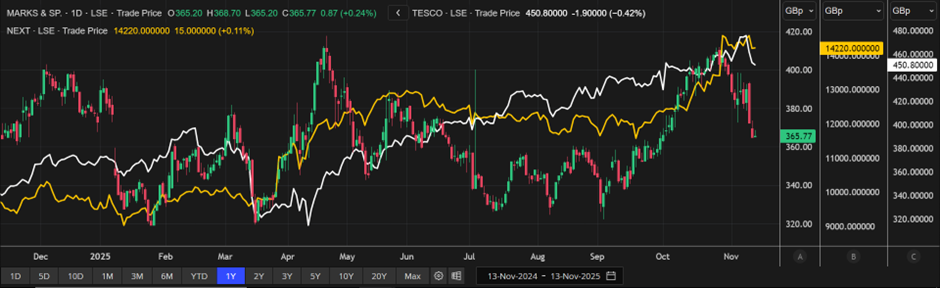
Source: EODHD/Others; Date:13 November 2025
On the flip side, value-focused or defensive plays — like Unilever (LSE: ULVR) and Diageo (LSE: DGE) — could see steadier demand, as shoppers prioritise essentials and trusted brands.
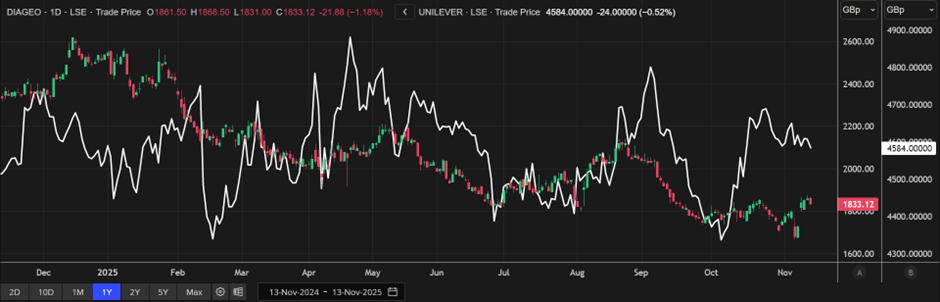
Source: EODHD/Others; Date: 13 November 2025
Investors watching the FTSE 250 may also find opportunities among companies catering to online commerce or payment tech, which benefit from digital-shopping trends even during spending slowdowns.
Fintech & Trading Apps Surge — Retail Investors Stay Active
While the broader economy slows, digital finance is on the rise. Trading and investment platforms such as Freetrade, Revolut, and eToro have seen a surge in UK user engagement in 2025. Younger investors are using these apps not only for stocks but also for ETFs, commodities, and fractional shares.
This shift is boosting visibility for listed fintech enablers like Plus500 (LSE: PLUS), and IG Group (LSE: IGG). The growing retail investor base also helps increase liquidity across the LSE mid-cap space.
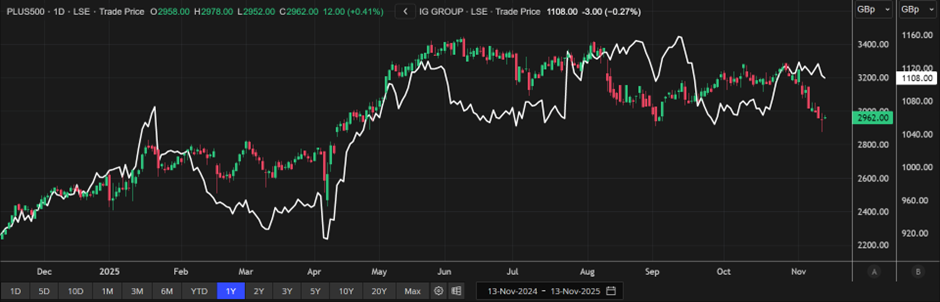
Source: EODHD/Others; Date: 13 November 2025
However, regulators are increasingly focusing on investor education and transparency, which could redefine how fintech firms balance accessibility and compliance.
Investor View
The UK’s financial landscape in late 2025 is a blend of soft growth, careful consumers, and vibrant fintech momentum. For investors, the key is positioning:
- Cyclical exposure in housing, manufacturing, and retail may stay volatile.
- Fintech and digital-platform stocks could continue to outperform as financial participation broadens.
- Rate-sensitive plays might find a tailwind if the Bank of England adopts a more accommodative stance in early 2026.
Final Thought
Despite near-term headwinds, the UK market remains diverse and adaptable. The slowdown may create selective entry points for patient investors who balance risk with growth potential — particularly in fintech innovators, value-retailers, and export-driven names.


 Jun 24, 2026




 Please wait processing your request...